
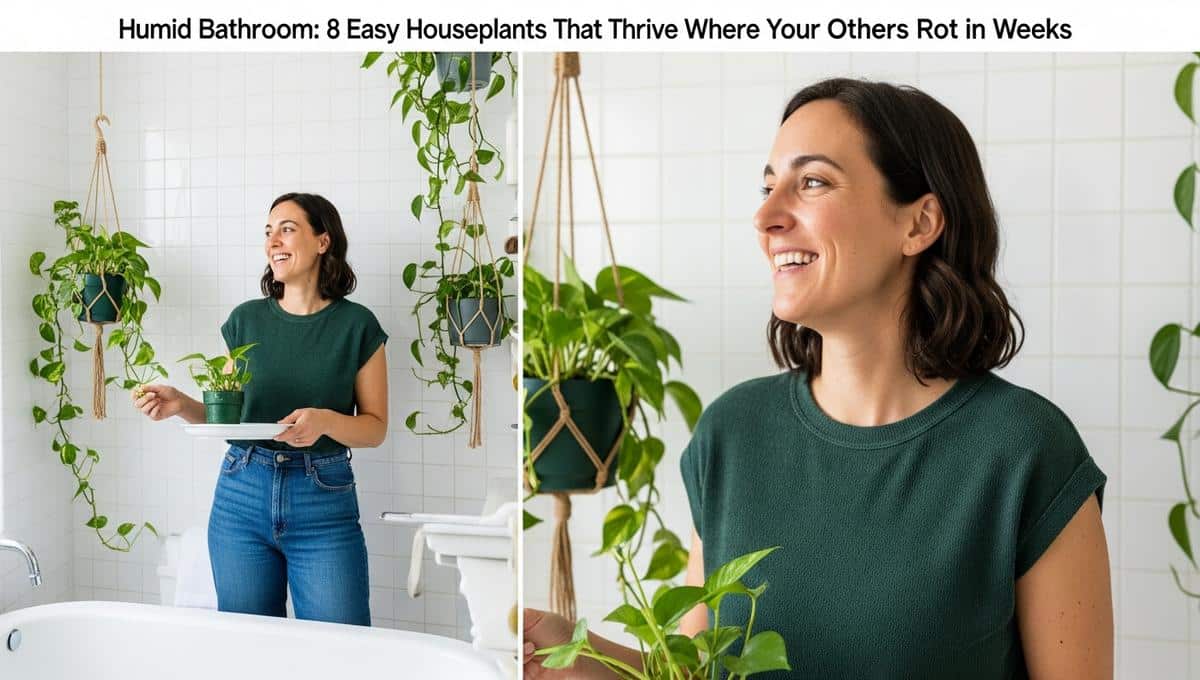
If your bathroom feels like a steam room every morning, you are not alone. High humidity, low light, and warm air create a hostile environment for most houseplants. Yet a handful of resilient species actually thrive in these exact conditions, turning a damp corner into a lush green retreat in 2026.
Why most houseplants fail in a humid bathroom
Many popular houseplants need dry soil between waterings. In a moisture-rich room, their roots stay soggy for too long. As a result, root rot sets in within a few weeks, and leaves turn yellow before dropping off entirely.
Ventilation also plays a key role. Most bathrooms have a single small window, or none at all. Consequently, air circulation remains poor, which encourages mold growth on both soil and foliage. Plants bred for arid climates simply cannot cope with this combination.
Temperature swings add another challenge. A hot shower can raise the room to 30 °C in minutes, then the air cools rapidly once the fan kicks in. This constant fluctuation stresses species that prefer stable warmth, so choosing the right plant matters more than any care routine.
The traits that make a plant bathroom-proof
Resilient species share a few common features. They tolerate indirect or low light with ease. Moreover, they absorb moisture through their leaves rather than only through their roots, which prevents waterlogging in humid air.
« A plant that loves humidity will do in a few months what a decade of tiles and paint never could — make a small, windowless room feel alive. »
Thick, waxy leaves also help. They resist fungal spores that float freely in damp spaces. In addition, compact root systems allow these plants to grow in small pots on shelves or hanging planters, which is ideal when counter space is limited.
To readBest bathroom plants for low light and high humidityHedera helix, commonly known as English ivy, is a perfect example. This climbing vine adapts to low light and actually prefers the moist air found near a shower. Drape it over a high shelf, and it will cascade gracefully while filtering airborne pollutants at the same time.
Eight plants that survive where others rot
- Boston fern — thrives in high humidity and indirect light
- Pothos — nearly indestructible, even in dim corners
- Peace lily — blooms in low light and absorbs excess moisture
- English ivy (Hedera helix) — purifies air while tolerating damp conditions
- Spider plant (Chlorophytum comosum) — fast-growing and forgiving of neglect
The Boston fern is perhaps the most classic pick. Its feathery fronds love steam and stay vibrant without direct sunlight. Place it in a hanging basket near the shower, and mist it once a week during dry spells for best results.
Pothos, sometimes called devil’s ivy, grows in water alone if needed. Its heart-shaped leaves trail beautifully from a shelf. Because it tolerates near-darkness, it works well in a windowless bathroom with only artificial light.
The peace lily stands out for its elegant white blooms. It prefers warm, humid air and can signal when it needs water by drooping slightly. Within hours of a good soak, it perks right back up, making it a forgiving choice for busy households.
Chlorophytum comosum, widely known as the spider plant, is another excellent option for a damp room. It produces cascading offshoots that root on their own, so one plant can quickly fill an empty shelf with fresh green life.
Tropical palms and air plants for a spa-like feel
If you want your bathroom to feel like a resort spa, tropical species deliver that vibe instantly. Chamaedorea elegans, the parlor palm, stays compact and tolerates shade remarkably well. Its soft, arching fronds bring a calming texture that pairs naturally with wood accents and neutral tiles.
For something truly unusual, consider Tillandsia, often called an air plant. This rootless species draws all its moisture and nutrients directly from the surrounding air. As a result, it needs no soil at all — simply set it on a piece of driftwood or mount it on a wall for a striking display.
Both species require very little maintenance. A brief weekly misting is enough for the parlor palm. Tillandsia, meanwhile, gets most of what it needs from shower steam alone, which makes it arguably the lowest-effort plant you can own.
Practical tips for keeping plants healthy in your bathroom
Light remains the biggest limiting factor. Even humidity-loving plants need some photons to survive. If your room lacks a window, a small LED grow light running for six to eight hours a day can make all the difference. These fixtures cost under €15 in 2026 and use minimal energy.
Drainage is equally critical. Always choose pots with holes at the base, and set them on saucers to catch excess water. Without proper drainage, even the toughest species will develop root rot over time. Porous terracotta pots work especially well because they wick away surplus moisture.
Soil choice deserves attention too. A well-draining mix with perlite or orchid bark prevents the substrate from staying saturated. For this reason, avoid standard potting soil on its own; it compacts easily and holds water like a sponge in a steamy room.
To readBathroom habit can slow your heart after 40 by triggering a vagal reflexFinally, rotate your plants every two to three weeks. Turning them ensures even growth and stops stems from leaning toward the single light source. This simple habit keeps foliage full and symmetrical, so your green bathroom oasis looks its best all year round.
Crédit photo © DivertissonsNous