
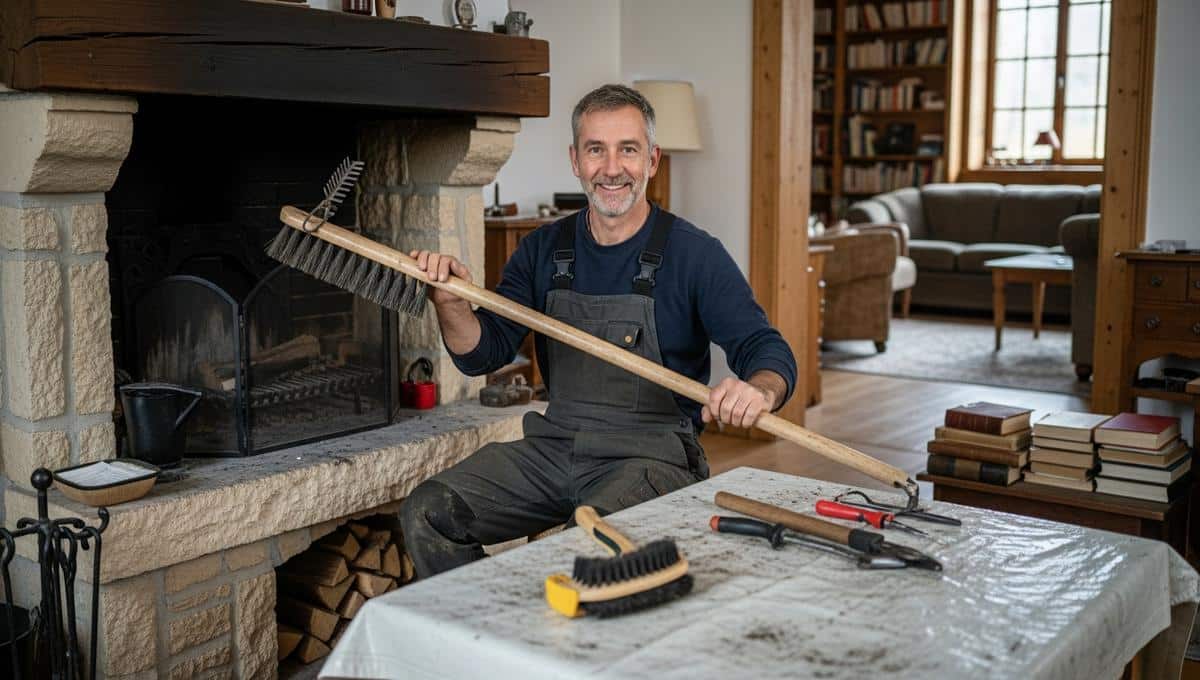
Every year, thousands of homeowners wonder whether they can grab a brush and clean their own chimney flue. The idea sounds simple: save money, skip the wait for a professional, and feel self-reliant. Yet the legal reality in France — and in many other countries — may surprise you.
Why regular flue maintenance matters more than you think
A blocked or dirty flue is one of the leading causes of house fires. Soot and creosote build up over time, and they can ignite without warning. According to fire safety data, poorly maintained heating systems cause several thousand domestic fires each year in France alone.
Beyond fire risk, a clogged chimney can also lead to carbon monoxide poisoning. This invisible, odourless gas kills dozens of people annually across Europe. Therefore, cleaning the flue is never just about keeping your home tidy — it is a genuine safety issue.
In France, the law requires homeowners to have their flue swept at least once a year, and in some municipalities twice. Local prefectoral orders, known as arrêtés préfectoraux, spell out the exact frequency. Ignoring these rules can result in fines and insurance complications.
What French law actually says about doing it yourself
Here is where things get tricky. No national statute explicitly forbids you from sweeping your own flue. However, the annual certificate of sweeping — the certificat de ramonage — can only be issued by a qualified professional. As a result, a self-performed sweep has no legal value in the eyes of insurers.
« If a fire starts and you cannot produce a valid sweeping certificate, your home insurance company is entitled to reduce or deny your claim entirely. »
In practice, this means you may physically clean the flue yourself, but you still need a certified sweep to inspect and validate the work. Otherwise, you risk a fine of up to €450 under certain local regulations. So the supposed saving can quickly become a costly mistake.
To readAuxiliary heating: the most efficient type that actually saves energy in 2026Some homeowners choose a middle path: they do a light maintenance sweep between professional visits. This approach is not prohibited, and it can help keep the flue in good shape. Still, it must never replace the mandatory annual inspection by a certified chimney sweep.
The real costs of professional sweeping versus the DIY approach
A professional sweep typically charges between €50 and €120 per visit, depending on the region and the type of installation. For a wood-burning fireplace, prices tend to sit at the higher end. Gas flues, by contrast, often cost less to maintain.
Doing it yourself requires buying or renting a set of rods and a brush. Initial costs can range from €30 to €80. Yet you also need proper safety gear, dust sheets, and a good understanding of your flue’s layout. Moreover, any mistake could damage the flue liner, leading to repair bills that dwarf the cost of hiring a professional.
- A valid sweeping certificate protects your insurance coverage.
- Professional sweeps detect cracks, blockages, and dangerous deposits.
- DIY cleaning cannot replace the legally required annual inspection.
- Fines for non-compliance can reach €450 in some areas.
- Carbon monoxide detectors are strongly recommended alongside regular maintenance.
When you factor in time, equipment, and risk, the savings from a DIY sweep are modest at best. For most households, paying a certified professional once or twice a year remains the most sensible option. The peace of mind alone is worth the expense.
How to choose a qualified chimney professional in 2026
Look for a sweep who holds a recognised qualification, such as the French qualification Qualibat or an equivalent certification. A reputable professional will always provide a written certificate after the visit. This document should include the date, the type of installation inspected, and any observations about the flue’s condition.
Ask neighbours or consult your local town hall for recommendations. Many municipalities keep a list of approved sweeps. In addition, your home insurer may suggest vetted professionals in your area, which can speed up the search.
Be wary of door-to-door offers promising extremely low prices. Unqualified operators sometimes issue fake certificates that hold no legal weight. Consequently, you could find yourself uninsured despite believing you followed the rules.
Insurance, liability, and the hidden risks of skipping proper chimney care
French home insurance policies almost universally require proof of annual sweeping. If a fire breaks out and your chimney was the cause, the insurer’s first request will be the certificat de ramonage. Without it, they may invoke negligence and slash your payout by up to 100 %.
Landlords carry an extra layer of responsibility. In rental properties, the obligation to arrange sweeping often falls on the tenant, yet the landlord must ensure the flue is safe at the start of the lease. Disputes over who should pay for maintenance are common, so both parties should clarify the arrangement in the rental agreement.
To readClean walls and ceilings in minutes with this effortless technique that leaves them spotlessFor those who heat with wood, the stakes are even higher. Wood-burning systems produce more creosote than gas or oil appliances. As a consequence, they demand more frequent attention. Many local regulations require two sweeps per year for wood-fired chimneys — one during the heating season and one outside it.
Installing a carbon monoxide detector near your fireplace or stove adds another safety layer. Since 2026, awareness campaigns across Europe have pushed for wider adoption of these devices. They cost very little, yet they can save lives when a chimney malfunction goes unnoticed.
Crédit photo © DivertissonsNous