
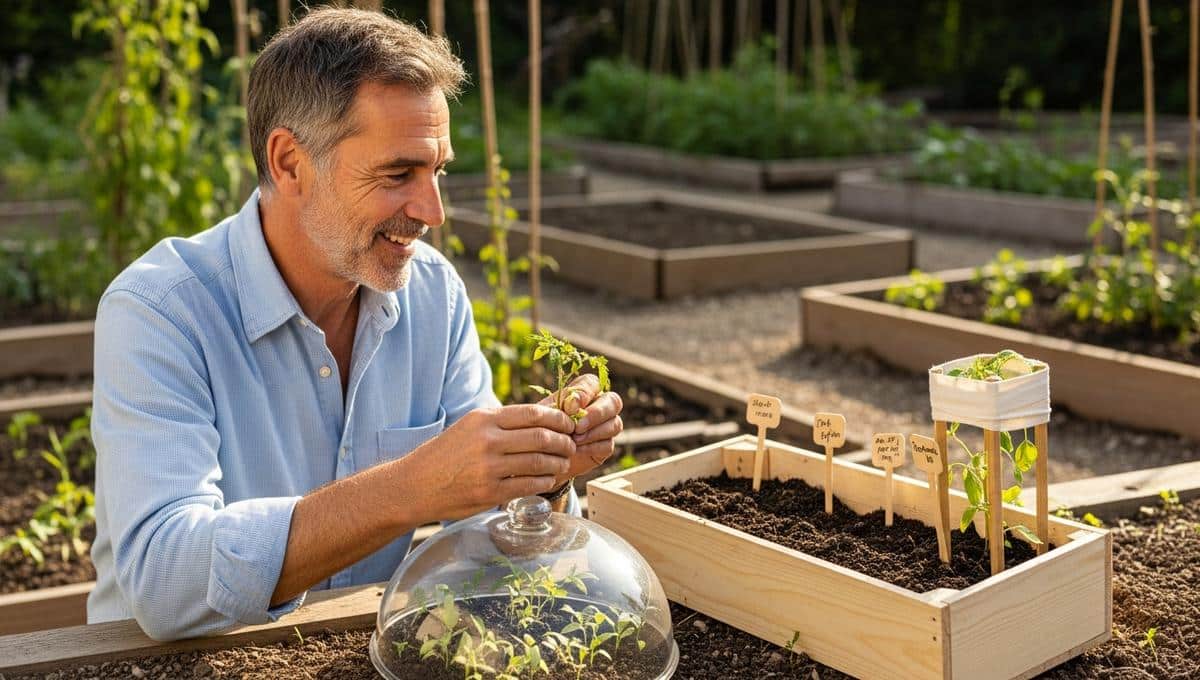
For many growers in 2026, the vegetable garden has become a space of quiet rebellion against single-use plastic. One French gardener recently shared a simple yet powerful trick: he replaced every piece of plastic in his plot with materials he already had at home. His approach is gaining attention, and for good reason.
Why plastic has become a problem in the vegetable garden
Plastic pots, trays, ties, and row covers have long been standard tools for home growers. They are cheap, light, and easy to find. Yet they crack after one season, pile up in sheds, and end up in landfill or worse.
Moreover, microplastic contamination in garden soil is a growing concern among researchers. Tiny fragments break down from degraded pots and mulch films, then seep into the earth. Over time, these particles can affect soil biology and even the crops we eat.
As a result, many gardeners now look for alternatives that are both practical and kind to the land. The shift does not require a big budget. In fact, it often costs nothing at all.
One gardener’s plastic-free method explained
The gardener featured in the original report took a hard look at every plastic item in his plot. He found seed trays, plant labels, twine, and protective cloches. Then he swapped each one for a household equivalent he already owned.
« I realized I had everything I needed in my kitchen, my recycling bin, and my firewood pile. »
Wooden crates replaced plastic seed trays. Strips of old cotton fabric took over from nylon ties. Cut-off glass jars served as mini cloches for tender seedlings. Even plant labels became simple wooden sticks marked with pencil.
To readVegetable garden: this summer, boost seed germination and save water with a simple wet clothConsequently, his vegetable garden went from a patchwork of fading plastic to a clean, natural-looking space. The cost was zero, and the aesthetic improved overnight. His neighbors soon asked how they could do the same.
- Wooden crates and boxes for starting seeds indoors
- Cotton or jute strips instead of plastic ties and clips
- Glass jars as protective cloches for young plants
- Pencil-marked wooden sticks as plant labels
- Cardboard and straw mulch to replace plastic weed barriers
Practical benefits of ditching plastic in your plot
Beyond the environmental argument, going plastic-free brings real gardening advantages. Wood and cardboard break down slowly and feed the soil as they decompose. Natural ties flex with the plant, so stems are less likely to snap in wind.
In addition, glass cloches hold heat better than thin plastic on cold spring nights. They also let light through without yellowing over time. A simple jam jar can protect a tomato seedling for weeks.
Straw and cardboard mulch suppress weeds just as well as plastic sheeting. They also encourage earthworm activity beneath the surface. Healthy worm populations improve drainage and nutrient cycling, which directly helps crops thrive.
Therefore, the switch is not a sacrifice. It is an upgrade that respects both the soil and the grower’s wallet. Many community gardens across Europe are now adopting similar rules for 2026 growing seasons.
Tips to start your own plastic-free transition
First, do a simple audit of your vegetable garden shed. Sort every item into “plastic” and “non-plastic” piles. You may be surprised how many things can be replaced right away with what you already have.
Next, prioritize the items you use most often. Seed trays and plant labels are easy wins. Swap them first, then move on to ties, mulch, and protective covers as the season progresses.
Also, ask friends and family for unwanted wooden crates, old sheets, or glass jars. Most people are happy to pass these along rather than throw them out. This turns waste into a shared resource.
A broader movement shaping how we grow food in 2026
This single gardener’s story reflects a much wider trend. Across France and beyond, growers are rethinking every material that enters their vegetable garden. Local councils now offer compost bins and natural mulch to reduce plastic waste at the source.
Similarly, seed companies have started shipping in paper packaging instead of plastic pouches. Garden centers stock more terracotta and wood fiber pots each year. Consumer demand is clearly driving this change.
Still, the most powerful shift happens at ground level—literally. When one person shows that a productive, beautiful plot needs no plastic at all, others follow. The idea spreads from fence to fence, plot to plot.
To readFork trick keeps cats and birds away from your vegetable garden seedlingsBy embracing materials that already exist in our homes, we can keep our vegetable garden healthy without adding to the plastic crisis. The answer, as this gardener proved, was never far away. It was sitting in the kitchen drawer all along.
Crédit photo © DivertissonsNous