
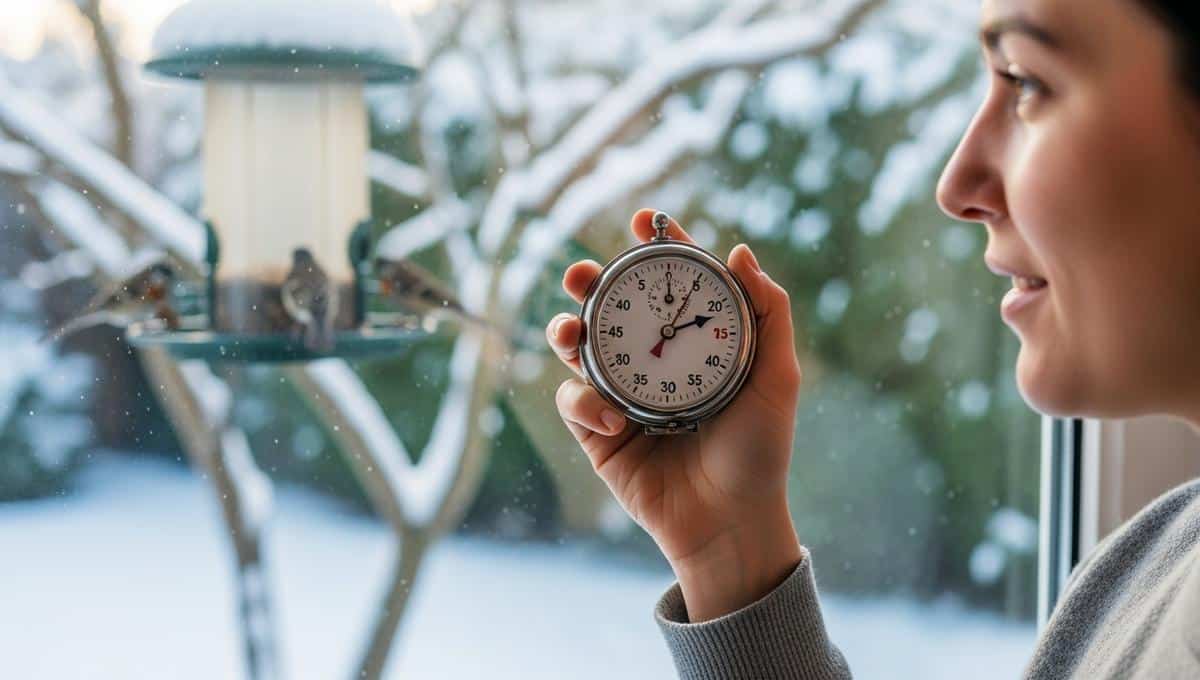
As temperatures drop across much of Europe and North America in early 2026, a surprisingly simple tool has become a must-have for backyard birders. The humble kitchen timer now plays a vital role in feeding and watching wild birds during winter. Yet most people would never guess why a cooking gadget ends up near a bird feeder.
A small device with a big purpose for bird welfare
Every autumn, passionate birdwatchers face the same challenge. They want to feed wild birds, yet they also need to keep food fresh and safe. Stale seeds or fat balls left too long in cold, damp air can grow mold and harm the very creatures people hope to help.
That is where a kitchen timer proves so useful. By setting it to 15 to 20 minutes, birders remind themselves to check the feeder at regular intervals. This simple habit ensures that food stays clean and that no predator lingers near the feeding station.
In practice, the routine is easy to adopt. You place fresh food outside, start the timer, and wait for the ring. When it sounds, you observe, clean, and refill as needed. Over time, birds learn the schedule and arrive on cue.
« Setting a timer changed the way I care for garden birds — I waste less food, spot more species, and feel genuinely connected to nature each morning. »
How timed feeding protects birds from hidden dangers
Leaving seeds or suet out for hours may seem generous, yet it carries real risks. Moisture from frost and rain can turn wholesome food into a breeding ground for bacteria. As a result, birds that feed on spoiled grains may develop respiratory infections.
To readHydrangeas covered in blooms this spring start with one simple winter pruning stepBy contrast, timed intervals keep each serving short and fresh. Birders remove uneaten food before it degrades, then offer a new batch later. This cycle, guided by a reliable countdown, mirrors the advice given by ornithology groups across Europe in 2026.
Predators pose another concern. Cats and sparrowhawks quickly notice a busy feeder. Rotating the feeding window with a timer forces gaps that make the pattern less predictable and, therefore, safer for smaller songbirds.
Choosing the right timer and setting up your station
Not every countdown device suits outdoor birding routines. A mechanical kitchen timer with a loud ring works best because it needs no phone or app. You can hang it on a hook near the window and hear it from any room.
Digital models are fine too, as long as the alarm is audible from your garden door. Some birders prefer a timer with a magnetic back that sticks to a metal tray. Whichever style you pick, keep it within arm’s reach so you never skip a cycle.
- Use a timer ring of 15 to 20 minutes per feeding window
- Clean the feeder tray after every session to prevent mold
- Offer high-fat foods like suet balls during the coldest weeks
- Place the feeder at least 2 meters from any fence or bush where cats hide
- Log each session in a notebook to track which species visit and when
The Silvercrest Monsieur Cuisine Smart SKMS 1200 is a multifunction robot with a maximum bowl capacity of 3 liters, and it comes with its own built-in timer. While designed for cooking, its countdown feature has inspired some resourceful birders to repurpose kitchen gadgets for outdoor routines.
When and how often to set your countdown
Experts recommend two to three feeding windows per day during peak cold spells. Early morning is critical because birds burn energy overnight and need fast fuel at dawn. A second session around midday helps them build reserves before the next long night.
On milder days, one session may be enough. Adjusting frequency with your kitchen timer prevents overfeeding, which can attract rodents. Flexibility matters, so pay attention to the weather forecast each evening.
During heavy snowfall, you may shorten the gap between sessions. Snow covers natural food sources, and birds depend more on garden feeders. In those moments, a timer set to 10-minute checks can make a real difference for survival rates.
The broader trend: mindful birding in 2026
Birdwatching has grown steadily over recent years. In 2026, conservation groups report a 12 percent rise in garden bird counts across Western Europe compared to the previous year. Part of that success comes from better feeding habits promoted online and through local workshops.
The kitchen timer trick, once shared quietly among veteran birders, went viral on social media during the winter of 2025. By now, it has become standard advice in beginner guides published by wildlife charities. Its appeal lies in its simplicity: no special gear, no cost, and immediate results.
To readOutdoor materials that age badly and waste your money: 5 to avoid in 2026Community science projects have embraced timed observation too. Volunteers record which species appear during each countdown window, then upload data to national databases. This structured approach improves the quality of citizen-led research and helps scientists track migration shifts.
Beyond data, the practice fosters a deeper emotional bond with nature. Sitting by a window, waiting for a timer to ring, slows the pace of a busy morning. Many participants describe it as a small act of mindfulness that brightens even the darkest winter day. For anyone who owns a kitchen timer and a handful of seeds, the invitation to join in has never been more open.
Crédit photo © DivertissonsNous