
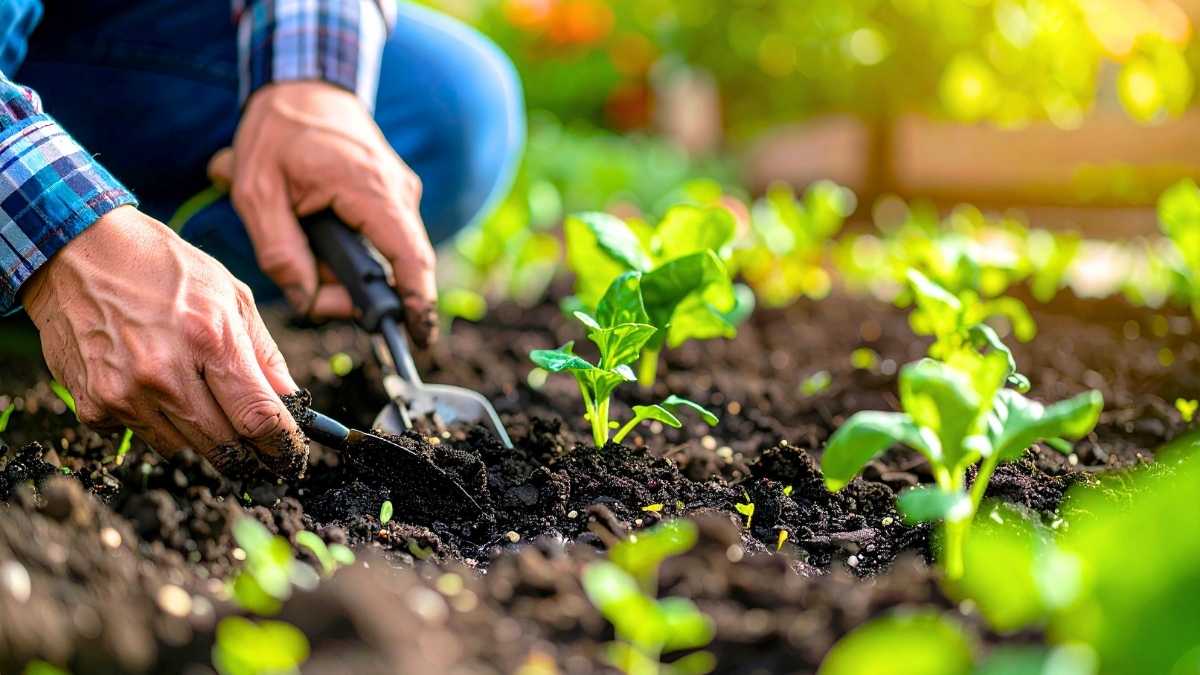
Across Europe, seasoned gardeners and beginners alike are rediscovering a surprisingly simple method to protect young seedlings during the cold months. This old-fashioned tip involves planting wooden forks into the soil, and it has nothing to do with luck. In fact, the practice is rooted in decades of practical wisdom that modern science now supports.
Why wooden forks are suddenly everywhere in winter gardens
Every January, frost threatens the delicate life stirring beneath the soil. Seeds planted in late autumn struggle to push through frozen ground. For many growers, losing early crops to a harsh cold snap feels almost inevitable. Yet a growing number of people are turning to a remedy their grandparents once swore by.
The idea is disarmingly simple. You press wooden forks or wooden cutlery into the earth around freshly sown beds. These small utensils act as miniature stakes that subtly break the surface crust. As a result, they help regulate moisture and air flow right where the seeds need it most.
This approach gained fresh attention on French gardening forums in early 2026. Blogs, social media groups, and even regional newspapers began sharing the trick once more. Consequently, garden supply shops in France reported a noticeable uptick in sales of biodegradable wooden cutlery sets — not for picnics, but for potagers.
« By planting these wooden utensils, you protect the nascent life under the cold January soil, thus ensuring the generous harvests of the months to come. »
How this old-fashioned tip actually works beneath the surface
Wooden forks inserted at slight angles create tiny channels in compacted soil. These channels allow rainwater to seep downward rather than pooling on the surface and freezing. Moreover, the wood itself absorbs small amounts of moisture, then releases it slowly as the surrounding earth dries. This gentle cycle keeps the top layer from becoming an impenetrable crust.
To readHydrangeas covered in blooms this spring start with one simple winter pruning stepBeyond moisture management, the forks serve another purpose. Birds and small rodents often dig up freshly sown seeds. The visible prongs sticking up from the ground act as a physical deterrent. While not foolproof, this barrier discourages casual foraging. Therefore, fewer seeds are lost before they ever have a chance to germinate.
The science and tradition behind an age-old garden practice
Older gardeners in western France recall their parents using this very method in the 1950s and 1960s. Back then, wooden forks were cheap and widely available. Families saved them from meals and repurposed them in the garden without a second thought. The practice faded as plastic mulches and synthetic row covers became popular in the 1980s.
Now, however, a renewed interest in low-waste and organic gardening has brought the old-fashioned tip back into the spotlight. Gardeners in 2026 are actively seeking methods that avoid plastic and chemical intervention. Wooden cutlery fits that ethos perfectly, since it biodegrades within a single growing season. By spring, the forks have softened and begun to break down, enriching the soil with organic matter.
Horticultural researchers have noted similar principles at work in established techniques. Straw mulching, for instance, also aims to regulate temperature and moisture at the soil surface. The wooden fork method, though less studied formally, operates on comparable logic. Still, experts caution that it works best as a complement to other protective measures, not a replacement for proper mulching or cold frames.
- Moisture regulation — wooden forks absorb and slowly release water near seed level
- Frost protection — small channels prevent surface ice from crushing emerging shoots
- Pest deterrent — visible prongs discourage birds and rodents from digging up seeds
- Zero waste — biodegradable wood breaks down and feeds the soil by spring
- Low cost — a pack of wooden forks costs far less than synthetic garden covers
Choosing the right wooden forks for your garden beds
Not all wooden cutlery performs equally in soil. Forks made from untreated birch or beech hold up well through several weeks of frost and rain. Conversely, very thin or varnished forks may snap or leach unwanted chemicals. Always check that the packaging states “uncoated” and “compostable” before buying.
Spacing matters as well. Experienced practitioners recommend placing forks roughly 10 to 15 centimeters apart in a grid pattern across the bed. Push each fork about halfway into the ground at a gentle angle. This arrangement provides consistent coverage without overcrowding the planting area. In addition, angled placement increases the surface area exposed to rain, improving the moisture-wicking effect.
Why this old-fashioned tip resonates so strongly in 2026
The return of this practice reflects a broader cultural shift. More people want to grow their own food, yet many feel overwhelmed by the complexity of modern gardening advice. An old-fashioned tip that requires nothing more than a handful of wooden forks feels accessible and real. It strips away the noise and returns focus to the basics.
Social media has played a significant role in this revival. Short video clips showing gardeners pressing forks into frosted soil have gathered millions of views on various platforms. The visual simplicity of the method makes it instantly shareable. As a consequence, people who never considered gardening before are now trying it for the first time.
Community gardens across France and the United Kingdom have started recommending the technique in their 2026 planting guides. Several local councils now include wooden fork kits in starter packs for new allotment holders. This institutional support gives the old-fashioned tip a credibility boost that word-of-mouth alone could not achieve.
To readOutdoor materials that age badly and waste your money: 5 to avoid in 2026Perhaps most importantly, the method reconnects people with a lineage of garden knowledge that nearly disappeared. Grandparents who once felt their ways were outdated now find eager listeners at family gatherings. That exchange — part practical, part emotional — is precisely why this simple trick with wooden forks is far more than a passing trend. It is a quiet act of remembering what the soil has always needed.
Crédit photo © DivertissonsNous