
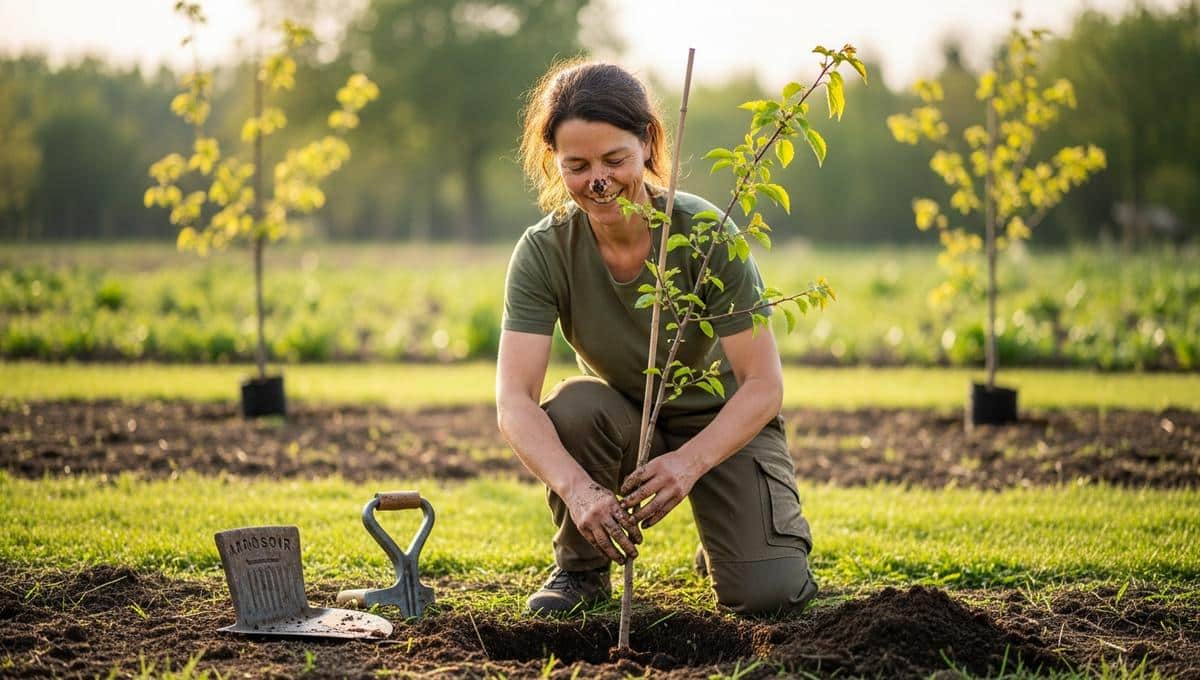
Imagine stepping into your garden on a warm summer morning and picking a ripe peach straight from the branch. That dream is closer than you think, and it begins with a single decision today. Planting fruit trees right now sets the stage for years of fresh, homegrown harvests.
Why early spring is the perfect window for planting
In 2026, mild late-winter temperatures across many regions have created ideal conditions for bare-root planting. The soil is moist yet workable, and trees can settle their roots before the first heat wave arrives. As a result, early planters often see stronger growth in the very first season.
Bare-root fruit trees are also more affordable than container-grown specimens. They adapt quickly because they haven’t circled inside a pot for months. Moreover, nurseries ship their widest selection during this narrow planting window, so acting early gives you the best choice.
Timing matters for another reason: pollination partners need to be in the ground at the same time. If you plan to grow pears or plums that benefit from cross-pollination, planting them together ensures they bloom in sync. Consequently, your future yields will be far more generous.
« A fruit tree planted today is a gift you give yourself for the next twenty years. »
Peach trees: sun-loving stars for every palate
Few fruit trees reward a gardener as quickly as a peach. Most varieties produce their first meaningful crop within three to four years. They thrive in full sun and well-drained soil, and their blossoms add beauty long before any fruit appears.
To readOutdoor materials that age badly and waste your money: 5 to avoid in 2026The Dixired peach is a classic choice for those who love yellow-fleshed fruit with a sweet, balanced flavour. It ripens early in the season, giving you a head start on summer snacking. Similarly, the J.H. Hale peach delivers large, golden-fleshed fruit prized for both fresh eating and canning.
For a mid-season harvest, Redhaven remains one of the most reliable yellow-fleshed peaches in home orchards worldwide. Its firm texture holds up well in pies and preserves, making it a true all-rounder. On the other hand, if you prefer white-fleshed peaches, Amsden offers a delicate, aromatic sweetness that melts on the tongue.
Choosing varieties that match your climate and taste
Not every variety suits every garden, so matching a tree to your local conditions is essential. Soil pH, winter chill hours, and rainfall patterns all influence how well a tree performs. Therefore, spending a few minutes on research now can save years of frustration later.
White-fleshed peaches like Redwing are especially popular in temperate zones with moderate winters. Their juicy, fragrant flesh is best enjoyed fresh, straight off the tree. Meanwhile, Reine des Vergers is a heritage white peach known for its vigorous growth and generous crops even in slightly cooler climates.
- Full sun — most fruit trees need at least six hours of direct light each day
- Well-drained soil — standing water around roots causes rot and disease
- Proper spacing — allow three to five metres between standard trees
- Chill hours — check your region’s average to match the right variety
- Pollination plan — pair compatible cultivars or choose self-fertile types
For something truly unique, consider the Sanguine Vineuse, a red-fleshed peach that surprises guests with its deep crimson interior. Its tangy-sweet profile works beautifully in salads and cocktails. Because it is less common in shops, growing your own is often the only way to taste it.
Climate also shapes how you care for fruit trees after planting. In drier areas, drip irrigation during the first two summers helps roots establish deeply. In wetter regions, raised planting beds can prevent waterlogging and fungal issues.
Pear and plum trees: low-effort options with high rewards
Pears and plums deserve a spot in every home orchard because they demand less fussing than many people expect. Once established, they tolerate a range of soils and need only moderate pruning. As a bonus, several popular cultivars are self-fertile, so a single tree can still bear fruit.
The Guyot pear is one such self-fertile gem, producing buttery, aromatic fruit by late summer. It stores well and tastes superb both fresh and poached. Likewise, the Conférence pear is a self-fertile variety celebrated for its long, slender shape and reliably sweet flesh that improves in storage.
Plum lovers will find the Mirabelle de Nancy hard to resist; its small, golden fruits burst with honeyed flavour perfect for jams and tarts. This variety has deep roots in French tradition and adapts well to various European and North American climates. In contrast, Opal is a Swedish-bred plum that ripens early, offering reddish-purple fruit with a rich, complex sweetness ideal for fresh eating.
Practical steps to give your new trees the best start
Preparation begins before the tree even arrives. Dig a hole roughly twice the width of the root spread and only as deep as the root collar. Loosening the surrounding soil encourages roots to fan out quickly, which anchors the tree and improves nutrient uptake.
After placing the tree, backfill with native soil rather than heavy compost. Too much organic matter in the planting hole can create a “bathtub effect” that traps moisture. Instead, spread a thin layer of mulch on the surface, keeping it a few centimetres away from the trunk to prevent rot.
Watering deeply once a week during the first spring and summer is far better than light daily sprinkling. Deep watering pushes roots downward, which builds drought resilience over time. By the second year, most fruit trees need supplemental water only during extended dry spells.
To readFruit trees stay frost-safe this winter with a 2-ingredient mud mix few use todayStaking is another detail worth getting right. Use a short, flexible stake that allows the trunk to sway gently in the wind. This movement stimulates the tree to grow a thicker, stronger trunk. After one to two years, you can remove the stake entirely and let the tree stand on its own.
Crédit photo © DivertissonsNous