
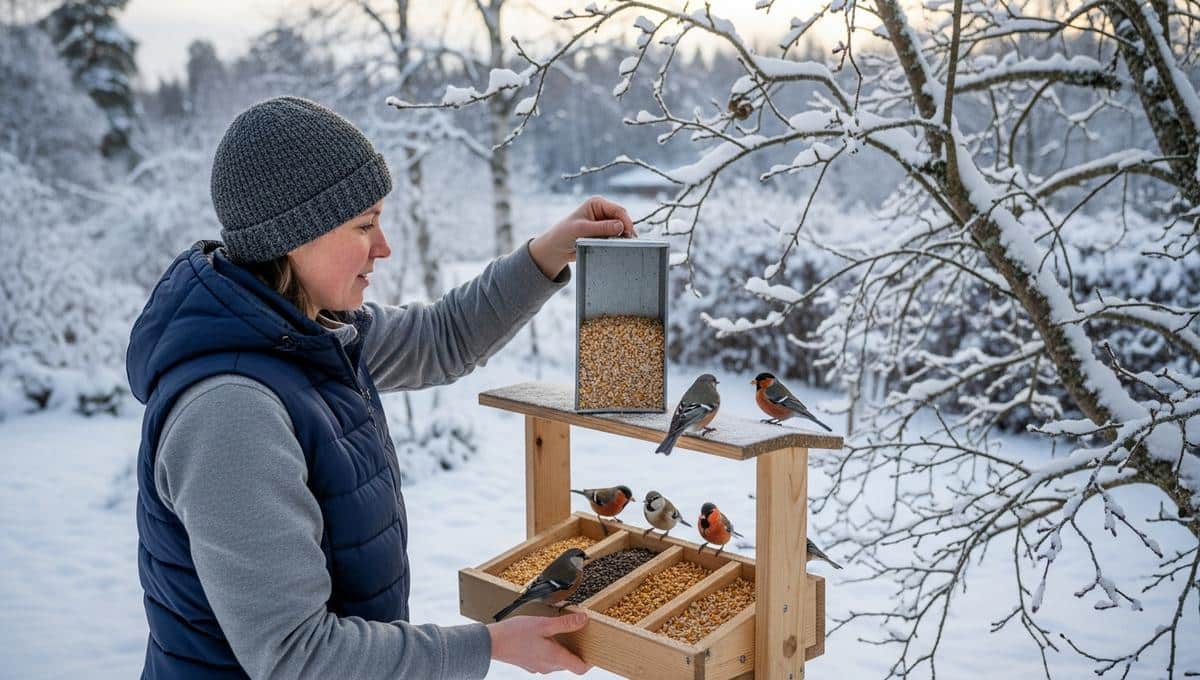
Every winter, millions of people across Scandinavia step outside to protect the birds that visit their gardens. Yet their approach differs greatly from what most of us do. In Nordic countries, feeding wild birds follows a careful method designed to help them survive harsh months without making them reliant on human handouts.
Nordic countries have a unique way to protect the birds in winter
In Sweden, Finland, and Norway, bird feeding is a beloved tradition. Families set up feeding stations as early as October, when temperatures start to drop. However, the goal is never to replace natural food sources. Instead, the idea is to offer a temporary boost during the coldest weeks of the year.
This approach is rooted in decades of observation by Nordic ornithologists. They noticed that birds given constant access to feeders sometimes stopped foraging on their own. As a result, researchers developed guidelines that encourage short feeding windows rather than year-round supply. The method has since gained traction across northern Europe.
Local wildlife agencies in these countries actively promote this balanced practice. They publish seasonal calendars that tell residents when to start and, just as importantly, when to stop feeding. By following these simple cues, households can protect the birds without disrupting their natural behavior.
« The best way to help wild birds is to feed them only when nature truly cannot provide, and to step back as soon as conditions improve. »
Why dependency is a real risk for wild bird populations
When feeders stay full all year, certain species lose their instinct to search for insects, seeds, and berries. Studies from the University of Helsinki show that up to 30 % of urban birds in heavily fed areas display reduced foraging skills over time. This shift can weaken entire local populations.
To readHydrangeas covered in blooms this spring start with one simple winter pruning stepDependency also creates clustering. Dozens of birds gathering at the same spot increases the spread of diseases like avian salmonellosis. Nordic veterinarians have documented outbreaks linked directly to poorly maintained or overstocked feeders. For that reason, hygiene and timing are central to the Scandinavian method.
Moreover, species competition at feeders can push smaller birds away. Aggressive species like magpies or jays often dominate, leaving finches and tits with less access. Rotating feeder types and food varieties helps protect the birds that are most vulnerable during cold snaps.
Practical steps to feed birds responsibly in 2026
The Nordic model is surprisingly easy to adopt, no matter where you live. First, choose high-energy foods such as sunflower seeds, unsalted peanuts, and fat balls. These give birds the calories they need without filling them with processed ingredients. Avoid bread, which offers little nutrition and can cause digestive problems.
Next, limit feeding to the harshest period. In most temperate climates, this means late November through early March. Once spring arrives and insects become plentiful again, gradually reduce the amount you offer. This tapering approach gives birds time to shift back to natural sources.
- Use feeders with drainage holes to prevent mold and bacteria buildup
- Clean feeding stations with hot water at least once every two weeks
- Place feeders near shrubs or trees so birds can flee from predators
- Offer water alongside food, especially when temperatures drop below freezing
- Rotate food types to attract diverse species and reduce competition
Placement matters more than most people think. A feeder positioned in open ground leaves small birds exposed to cats and hawks. On the other hand, placing it too close to a window increases the risk of fatal collisions. A distance of about two meters from dense vegetation strikes the right balance between safety and visibility.
Consistency during the feeding window is also key. If you start, commit to the full season. Birds quickly learn to rely on a feeder and may struggle if it suddenly goes empty during a cold spell. So plan ahead and stock enough supplies to last through late winter.
How garden design can naturally protect the birds
Beyond feeders, Nordic homeowners focus on creating bird-friendly habitats. Planting native berry bushes like rowan, elderberry, and hawthorn provides food well into autumn. These natural larders reduce the need for artificial feeding and support a wider range of species.
Leaving parts of the garden slightly wild also helps. Piles of dead wood shelter insects, which in turn feed wrens, robins, and woodpeckers. Dense hedgerows offer nesting sites and protection from wind. As a result, the garden itself becomes a year-round refuge.
Installing nest boxes is another simple yet effective step. In Finland alone, over 1.5 million nest boxes are maintained by volunteers each spring. These structures compensate for the loss of natural tree cavities in urban and suburban areas. Combined with responsible feeding, they form a complete support system for local bird life.
A growing movement to protect the birds across Europe in 2026
The Nordic method is no longer confined to Scandinavia. Conservation groups in the United Kingdom, Germany, and France now recommend similar seasonal feeding protocols. The Royal Society for the Protection of Birds, for instance, updated its guidelines in recent years to reflect this evidence-based approach.
Citizen science projects are accelerating the trend as well. Apps that track feeder visits help researchers map bird movements and health in real time. Data collected in 2026 already suggests that neighborhoods following structured feeding schedules see higher species diversity than those with constant, unregulated supply.
Schools in several European countries have also joined the effort. Children learn to build feeders, identify species, and understand seasonal cycles. These programs instill a sense of care early on, ensuring the next generation will continue to protect the birds with knowledge rather than just good intentions.
To readOutdoor materials that age badly and waste your money: 5 to avoid in 2026Adopting this mindful approach does not require much time or money. A simple feeder, the right food, and a clear schedule can make a real difference. What sets the Nordic model apart is its respect for the bird’s own ability to thrive. By helping only when truly needed, we support wildlife without reshaping it in our image.
Crédit photo © DivertissonsNous