
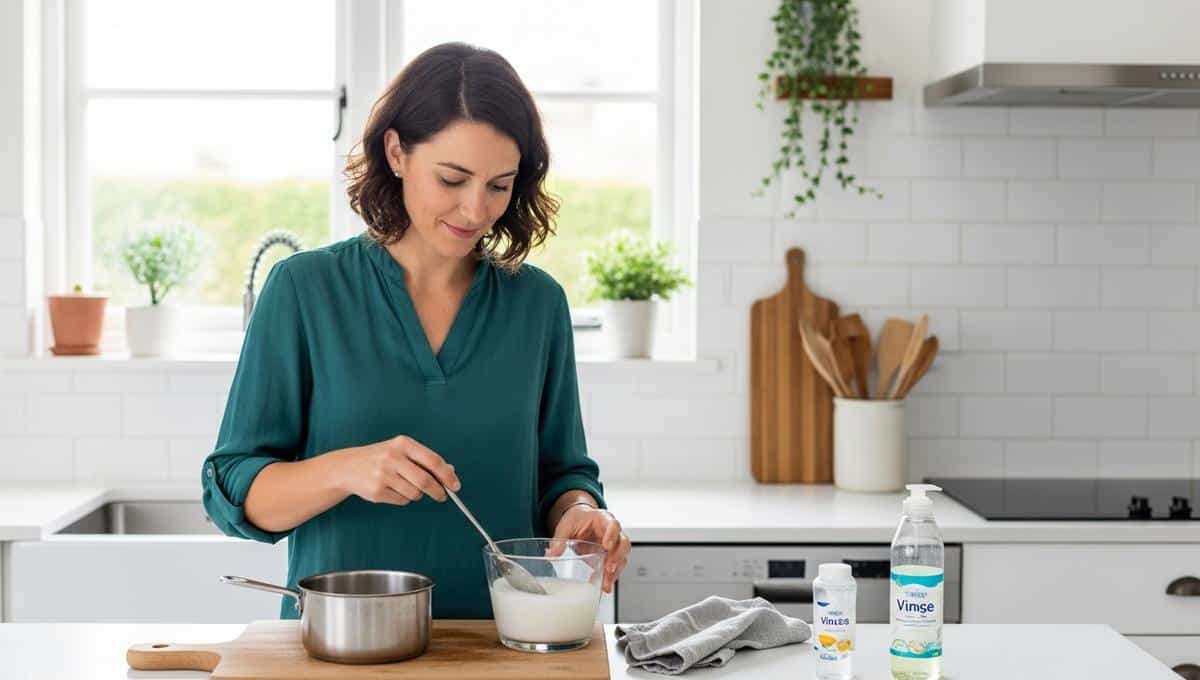
Opening your dishwasher to find cloudy glasses and streaky plates is a frustrating way to start the day. Most of us reach for a commercial rinse aid without thinking, yet that small bottle can cost several euros each month. Fortunately, a simple homemade method promises sparkling results for less than 30 cents per use.
The hidden cost of store-bought rinse aid
Walk down any supermarket aisle in 2026 and you will notice that dishwasher products keep getting more expensive. A standard bottle of rinse aid now ranges between 3 and 6 euros depending on the brand. For a household running its dishwasher daily, that bottle barely lasts a month or two.
Beyond the price tag, many commercial formulas contain surfactants, synthetic fragrances, and preservatives. These chemicals wash straight into wastewater after every cycle. As a result, eco-conscious consumers are actively looking for greener options that protect both their budget and the environment.
Price hikes on household goods have accelerated across Europe over the past year. Consequently, DIY cleaning solutions are no longer a niche hobby but a genuine money-saving strategy. The homemade rinse aid approach fits perfectly into this trend.
What a rinse aid actually does inside your machine
A rinse aid works by lowering the surface tension of water during the final cycle. This allows water to slide off dishes in thin sheets rather than forming droplets. Those droplets are exactly what causes the white spots and streaks we all dislike.
« A few drops of the right acid can do the same job as any branded product, at a fraction of the cost. »
Without any rinsing agent, minerals in hard water cling to glass and cutlery. Over time, this buildup becomes permanent and impossible to scrub away. Therefore, skipping the dispenser entirely is not a wise long-term choice for your dishes.
To readLentil salad: this filling end-of-month recipe takes 15 minutes and rivals any slow-cooked mealThe good news is that the active principle is remarkably simple. An acid, such as white vinegar or citric acid, achieves the same water-sheeting effect. That is the backbone of every homemade recipe gaining popularity in 2026.
A homemade recipe for sparkling dishes at under 30 cents
The method shared by home-care experts relies on just two or three common pantry ingredients. You need white vinegar, citric acid, and optionally a few drops of essential oil for a fresh scent. Mixing them takes less than five minutes.
Start by combining 200 ml of white vinegar with one tablespoon of citric acid. Stir until the powder dissolves completely. Pour this blend into a clean, reusable bottle and store it at room temperature away from direct sunlight.
- White vinegar — roughly 0.10 € per dose
- Citric acid — about 0.15 € per tablespoon
- Optional essential oil — a single drop costs almost nothing
- No synthetic fragrance, dye, or preservative
- Total cost per refill: under 0.30 €
To use, simply fill your dishwasher’s rinse aid compartment with this liquid as you would with any commercial product. One batch typically lasts 15 to 20 cycles, depending on your machine’s settings. By comparison, that same number of cycles with a store-bought formula would cost well over one euro.
Many users report that their glasses come out clearer than before. Hard-water deposits diminish noticeably after the very first wash. In short, the switch pays for itself from day one.
Precautions to keep your dishwasher safe
Some appliance manufacturers warn against pouring pure vinegar directly into the machine on a regular basis. Acetic acid, in high concentrations, can corrode rubber seals over time. Diluting the vinegar with water or relying more on citric acid helps mitigate that risk.
It is also wise to avoid mixing vinegar with baking soda inside the dispenser. The two neutralise each other and produce little more than fizzy water. Instead, use baking soda separately as a wash-cycle booster if needed.
Check your dishwasher manual before making any change to the products you use. Most modern machines sold in 2026 handle mild acid solutions without any issue. Still, a quick look at the warranty terms can save you worry down the road.
Why more households are ditching commercial rinse aid in 2026
The shift toward homemade cleaning products goes far beyond saving a few coins. Environmental awareness is at an all-time high, and consumers want to reduce plastic waste. A single reusable bottle replaces dozens of disposable ones over a year.
Social media platforms have amplified the trend as well. Short recipe videos showing streak-free results gather millions of views each week. Consequently, even people who never considered DIY cleaning are now curious enough to try.
Health concerns play a role too. Families with young children prefer to avoid synthetic residues on plates and cups. A vinegar-based rinse aid leaves behind no chemical film, only clean, dry surfaces ready for the next meal.
To readChickpea tortilla express takes just 15 minutes and saves lazy weeknight dinnersFrom an economic standpoint, the savings add up quickly. Replacing your store-bought product with a homemade version can save 30 to 50 euros per year for an average household. That modest sum, combined with the environmental and health benefits, makes the switch genuinely worthwhile for anyone willing to spend five minutes in the kitchen.
Crédit photo © DivertissonsNous