
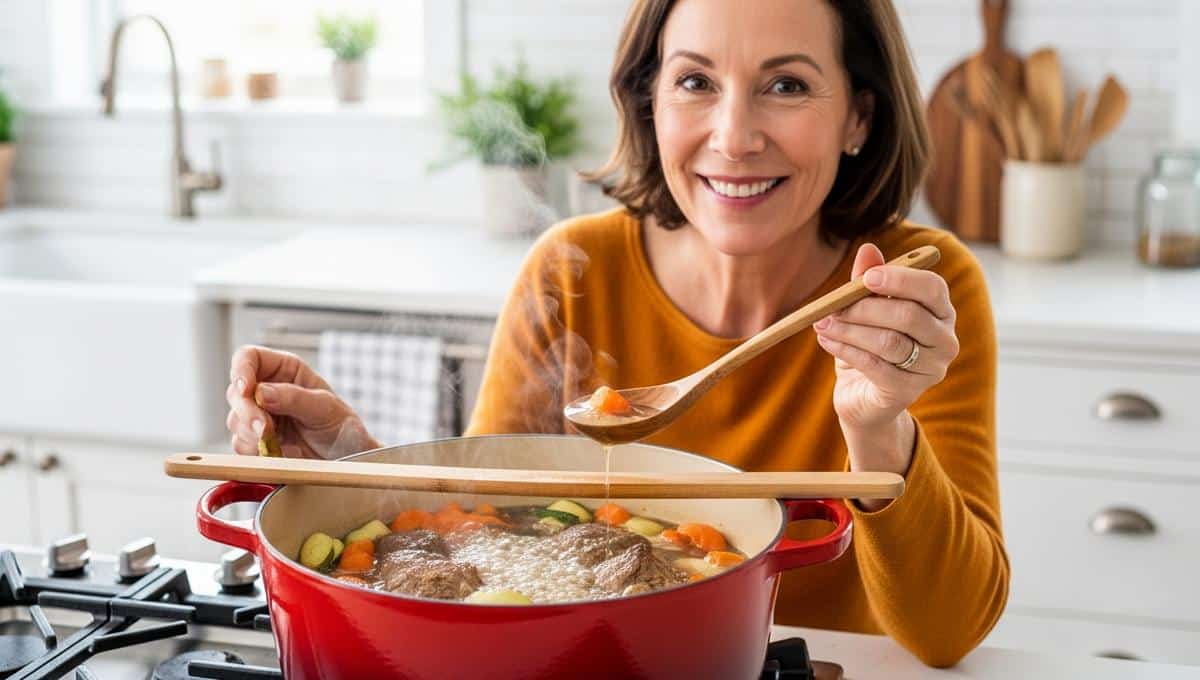
Winter is here, and nothing beats a warm, comforting meal after a long cold day. The perfect pot-au-feu remains one of the most cherished French dishes, yet many home cooks struggle to achieve that melt-in-your-mouth texture. A simple kitchen trick involving a spoon could change everything you know about this classic recipe.
Why traditional pot-au-feu often disappoints home cooks
Many people attempt this beloved French dish at home with mixed results. The meat turns out tough, the vegetables become mushy, and the broth lacks depth. These common problems stem from poor timing and heat control during the cooking process.
Pot-au-feu requires patience and proper technique to succeed. Traditional recipes call for several hours of slow simmering, which can feel daunting for busy families. As a result, cooks often rush the process and end up with disappointing results.
The choice of meat also plays a crucial role in the final dish. Cuts like beef shank, short ribs, and marrow bones need specific handling. Without the right approach, even quality ingredients fail to deliver that sought-after tenderness.
« The secret to tender meat lies not in expensive cuts, but in understanding how collagen breaks down during slow cooking. »
Understanding the science behind tender meat
Collagen, the tough connective tissue in meat, transforms into gelatin when heated properly. This process requires low temperatures maintained over time. Rushing this step will leave you with chewy, fibrous results instead of fork-tender pieces.
To readCooking tip every neat freak needs: this simple trick cuts mess, waste and extra dishes in the kitchenThe ideal cooking temperature sits between 80°C and 90°C for optimal collagen breakdown. At this range, the meat slowly relaxes while retaining its moisture. Many home cooks make the mistake of boiling their pot-au-feu, which actually toughens the protein fibers.
The magic spoon technique revealed for perfect pot-au-feu
French grandmothers have passed down a brilliant trick for generations. Placing a wooden spoon across the top of your pot helps regulate temperature and prevents boiling over. This simple tool acts as a natural thermostat for your perfect pot-au-feu.
The wooden spoon disrupts the surface tension of the bubbling liquid. Consequently, it keeps the temperature just below boiling point. This gentle simmer is exactly what your meat needs to become incredibly tender.
- Use a wooden spoon rather than metal for best results
- Position the spoon across the pot’s diameter
- Keep the lid slightly ajar to allow steam release
- Maintain consistent heat throughout cooking
- Check the liquid level every thirty minutes
Beyond temperature control, this technique also prevents foam from overflowing. The porous nature of wood absorbs excess moisture from rising bubbles. Thus, your stovetop stays clean while your dish cooks perfectly.
Some experienced cooks combine this method with other approaches. Adding a splash of vinegar to the water helps break down tough fibers faster. Similarly, starting with cold water allows proteins to release gradually into the broth.
Timing your vegetables for optimal texture
A perfect pot-au-feu requires careful vegetable timing. Root vegetables like carrots and turnips need about forty-five minutes of cooking time. Potatoes and leeks, being more delicate, should join the pot later.
Adding vegetables in stages ensures each component reaches ideal doneness. The aromatics like onions and celery go in first with the meat. Later additions of cabbage and other tender vegetables prevent them from becoming soggy.
This layered approach creates distinct textures in every bowl. Your guests will appreciate vegetables that retain their shape and flavor. Meanwhile, the broth gains complexity from each ingredient’s contribution.
Expert tips to elevate your perfect pot-au-feu experience
Start with high-quality bones and meat from a trusted butcher. Marrow bones add richness and body to your broth that store-bought cuts cannot match. Ask for a mix of lean and fatty pieces for the best flavor balance.
Skimming the surface regularly removes impurities that cloud your broth. Do this especially during the first hour of cooking. A clear, golden broth signals proper technique and careful attention to detail.
To readOven hack: this simple trick turns your regular oven into an air fryer in secondsSeasoning deserves patience in this dish. Salt lightly at the start, then adjust before serving. The long cooking time concentrates flavors, so early over-salting can ruin an otherwise perfect pot-au-feu.
Resting the finished dish for fifteen to twenty minutes improves both texture and flavor. This allows the meat fibers to relax and reabsorb some liquid. Serving immediately after cooking often results in drier meat than necessary.
Serving suggestions that honor tradition
Traditional French service presents the components separately. The broth comes first as a warming starter, often with crusty bread. Following this, the meat and vegetables arrive on a large platter for sharing.
Condiments play an essential role in the complete experience. Coarse sea salt, cornichons, and strong mustard are classic accompaniments. Horseradish cream adds a pleasant kick that cuts through the richness.
Leftover broth becomes liquid gold in your kitchen. Use it as a base for soups, risottos, or cooking grains. A well-made perfect pot-au-feu keeps giving for days after the initial meal.
Crédit photo © DivertissonsNous