
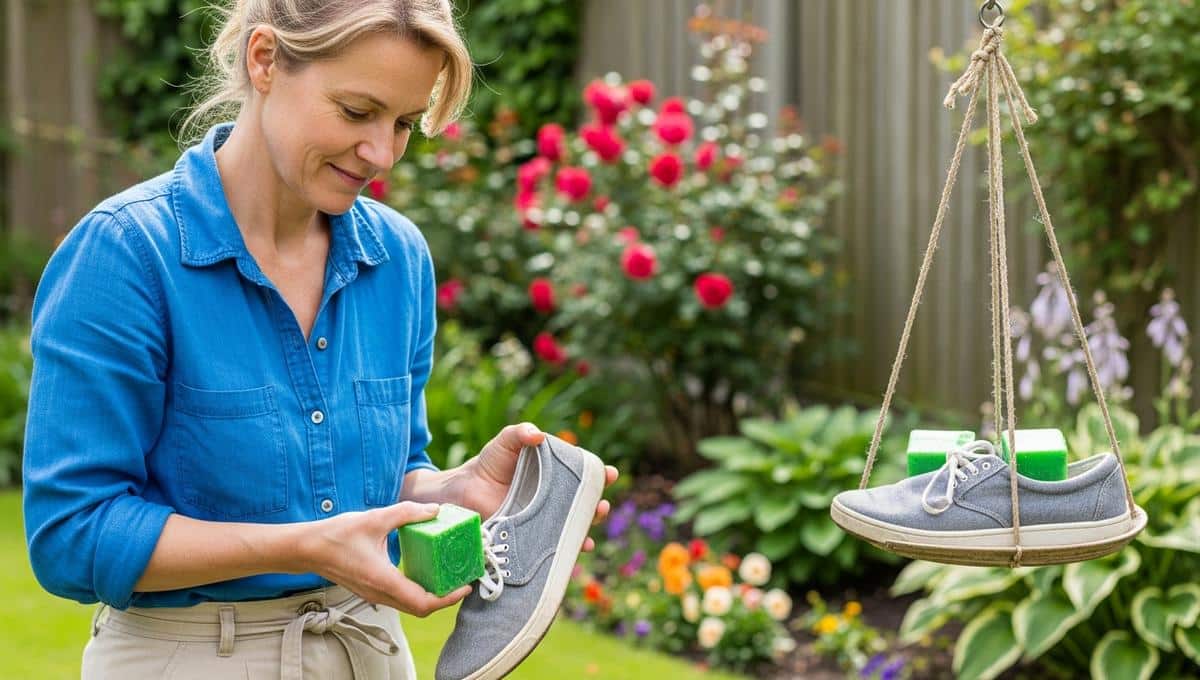
Every year, homeowners face the same frustrating challenge: keeping unwanted animals away from their precious plants. A simple yet surprising trick has been gaining attention online, and it involves nothing more than soap and an old sock. This clever method could transform how you protect your garden without harsh chemicals or expensive equipment.
Why soap in a sock works as a natural repellent
Deer, rabbits, and other wildlife often cause significant damage to outdoor spaces. These animals rely heavily on their sense of smell to navigate and find food. Strong scents can therefore confuse them and discourage them from entering certain areas.
The idea is straightforward: place a bar of heavily scented soap inside an old sock or stocking. Then, hang it from a tree branch, fence post, or stake near vulnerable plants. The fragrance disperses slowly and creates an invisible barrier that many animals prefer to avoid.
Irish Spring is a heavily scented soap bar that many households already have in their bathrooms. Its strong, distinctive fragrance makes it particularly effective for this purpose, according to numerous gardeners who have tested the method.
« The smell is simply too overwhelming for deer and rabbits, so they stay away from the area entirely. »
How to set up this simple deterrent system
First, gather your materials: one or more bars of fragrant soap and some old socks or mesh bags. Cut each bar into smaller pieces if you want to cover a larger area. This also helps the scent spread more effectively throughout your outdoor space.
To readWhite vinegar in the garden: I test if it really replaces all your usual gardening productsNext, place the soap pieces inside the sock and tie it securely at the top. Hang each sock at a height of about one to two feet above the ground. Position them near plants that animals frequently target, such as roses, hostas, or vegetable beds.
For best results, replace the soap every three to four weeks or after heavy rainfall. Rain can wash away the fragrance and reduce the deterrent effect. Consequently, regular maintenance ensures consistent protection throughout the growing season.
- Use strongly scented soap bars for maximum effectiveness
- Hang multiple socks around the perimeter of your space
- Replace soap after rain or once the scent fades
- Position deterrents near your most vulnerable plants
- Combine with other natural methods for better results
Understanding the science behind scent-based animal control
Animals like deer have an extremely developed olfactory system. In fact, their sense of smell is up to 1,000 times more sensitive than that of humans. This sensitivity explains why strong artificial fragrances can be so effective at keeping them at bay.
Moreover, unfamiliar scents signal potential danger to wildlife. When an animal encounters an unusual smell, its instinct is to retreat rather than investigate. Thus, the soap creates a psychological barrier without causing any physical harm to the creatures.
Irish Spring soap bars have been used for this purpose for decades by rural homeowners and farmers. The particular combination of oils and fragrances in this product seems especially off-putting to deer, rabbits, and even some rodents.
However, results may vary depending on local wildlife populations and their previous experiences. Some animals in areas with high human activity might be more tolerant of unusual smells. Therefore, combining multiple deterrent strategies often yields the best outcomes.
Additional benefits of using soap in your garden
Beyond animal deterrence, this method offers several practical advantages. First, it is remarkably affordable compared to commercial repellent sprays or fencing solutions. A single bar of soap costs only a few dollars and can last for weeks.
Second, the approach is completely non-toxic and safe for children, pets, and the environment. Unlike chemical sprays, soap does not contaminate soil or harm beneficial insects. As a result, you can maintain an organic growing space while still protecting your plants.
Third, installation requires minimal effort and no special tools. Anyone can set up this system in under ten minutes. The simplicity makes it accessible to gardeners of all experience levels and physical abilities.
Common mistakes to avoid when using this technique
Some people make the error of using unscented or lightly fragranced soap. This simply will not work because the scent is the active deterrent component. Always choose the most heavily perfumed options available at your local store.
To readVinegar on garden beds sterilizes soil and kills plants for monthsAnother frequent mistake involves placing the soap too high or too far from vulnerable plants. The fragrance needs to reach ground level where animals browse for food. Consequently, strategic placement matters just as much as the product you select.
Additionally, some gardeners give up too quickly if they do not see immediate results. Wildlife may take several days to learn that a particular area now smells unpleasant. Patience and consistency are therefore essential for long-term success with this method.
Finally, relying solely on one deterrent technique rarely provides complete protection. Experts recommend combining soap barriers with other strategies like motion-activated sprinklers or companion planting. This multi-layered approach addresses the habits of different animal species more effectively in your garden.
Crédit photo © DivertissonsNous