
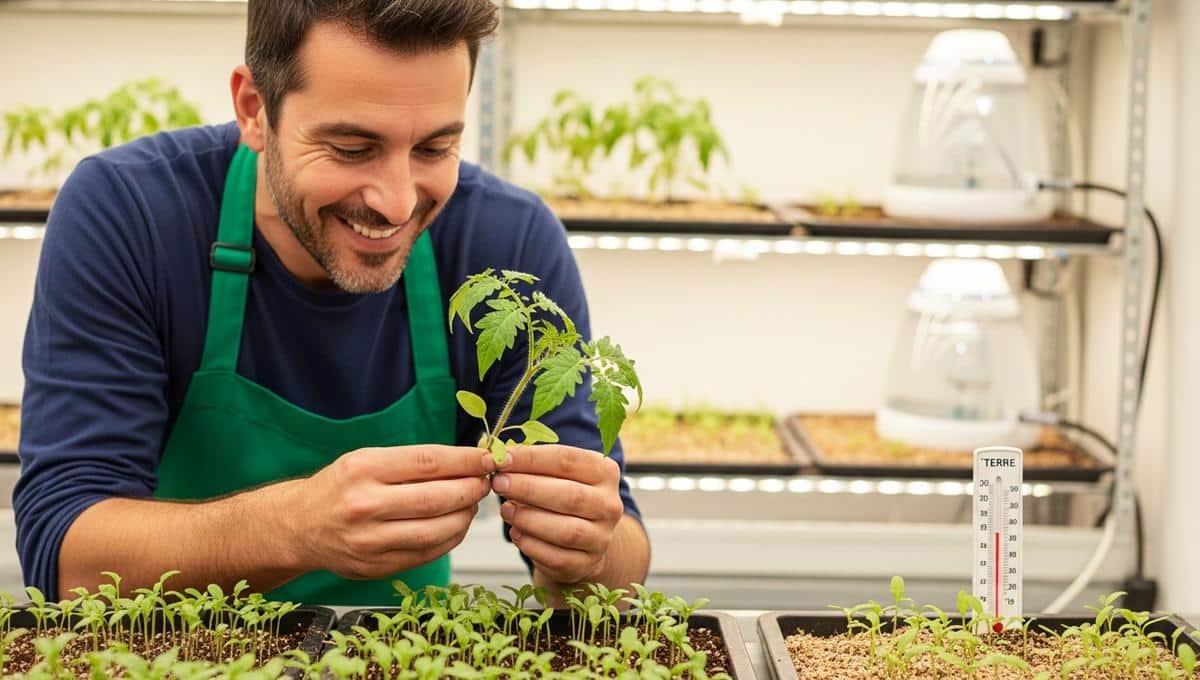
Growing your own tomatoes starts long before the warm days of summer arrive. Professional market gardeners know that the first few days after sowing are crucial for developing strong, healthy tomato seedlings. Yet most home growers overlook these early steps, missing out on techniques that could transform their harvest.
Why the first days matter most for your young plants
The initial phase of growth sets the foundation for everything that follows. During this time, the tiny embryo inside each seed awakens and begins its journey toward becoming a productive plant. Market gardeners pay close attention to every detail during these critical hours.
Temperature plays a vital role in this early stage. Seeds need consistent warmth, ideally between 20°C and 25°C, to germinate properly. A cold windowsill or an unheated greenhouse simply won’t provide the conditions your seeds require.
Moisture levels must remain steady without becoming excessive. Too much water leads to rot, while too little prevents the seed coat from softening. Professional growers use fine misting rather than heavy watering to maintain this delicate balance.
« The secret to robust tomato seedlings lies not in what you do after they emerge, but in the care you provide before you even see the first green shoot. »
Choosing the right growing medium for success
Not all soil works well for starting seeds. Regular garden soil often contains pathogens and drains poorly. Instead, experienced growers opt for special seed-starting compost that offers the perfect texture and nutrient balance.
To readVertical shoe storage DIY frees up an entire mat in your entryway: the simple trick for a clutter-free homeThis specialized mix stays light and airy, allowing tiny roots to spread easily. It also retains moisture without becoming waterlogged. Your tomato seedlings will develop stronger root systems in this environment compared to standard potting soil.
Some gardeners add a thin layer of vermiculite on top of their seeds. This material helps regulate moisture and prevents the surface from crusting over. As a result, the emerging sprouts face less resistance when pushing through.
Professional techniques that home growers often forget
Market gardeners follow specific practices that seem small but make a significant difference. One key technique involves sowing depth. Seeds planted too deep struggle to reach the light, while those too shallow dry out quickly.
The ideal depth for tomato seeds sits around 0.5 to 1 centimeter below the surface. This positioning gives them enough coverage for moisture retention without burying them so far that emergence becomes difficult. Many home growers simply scatter seeds without measuring, reducing their success rate.
Another overlooked practice involves pre-warming the growing medium. Cold soil shocks seeds and slows germination significantly. Professionals bring their containers indoors a day or two before sowing to ensure the temperature is right.
- Use seed-starting compost rather than regular garden soil
- Maintain consistent warmth between 20°C and 25°C
- Mist gently instead of pouring water directly
- Sow seeds at a depth of 0.5 to 1 centimeter
- Pre-warm your growing medium before planting
Light becomes important once the first leaves appear. Before that moment, seeds don’t need light at all. However, as soon as green shows, bright conditions prevent your tomato seedlings from becoming leggy and weak.
Creating the perfect humidity environment
Humidity control separates successful growers from frustrated beginners. Covering seed trays with clear plastic or glass creates a mini greenhouse effect. This approach keeps moisture levels high and stable during the critical germination period.
Once sprouts emerge, you must remove this cover gradually. Sudden exposure to dry air stresses young plants. Instead, lift the cover for a few hours each day, increasing the duration over several days.
Ventilation matters just as much as humidity. Stagnant, overly moist air encourages fungal diseases like damping off. A gentle airflow helps strengthen stems and prevents these common problems from destroying your efforts.
Building strength from the very beginning
Strong tomato seedlings don’t happen by accident. They result from deliberate care during every stage of early growth. Professional growers understand that weak starts lead to disappointing harvests later in the season.
One technique involves brushing your hand gently over the tops of young plants. This action mimics wind and encourages stems to grow thicker. You can also use a small fan on the lowest setting for similar results.
Feeding should wait until the first true leaves develop. The seed itself contains enough nutrients for initial growth. Adding fertilizer too early can actually burn delicate roots and set your plants back.
To readLeftover beer saves your plants in 2026: the surprising garden hack to try nowTransplanting at the right time proves equally important. Waiting too long causes roots to become cramped and tangled. Moving plants too early exposes them to shock they may not survive. Watch for the second set of true leaves as your signal to transplant into larger containers.
Crédit photo © DivertissonsNous