
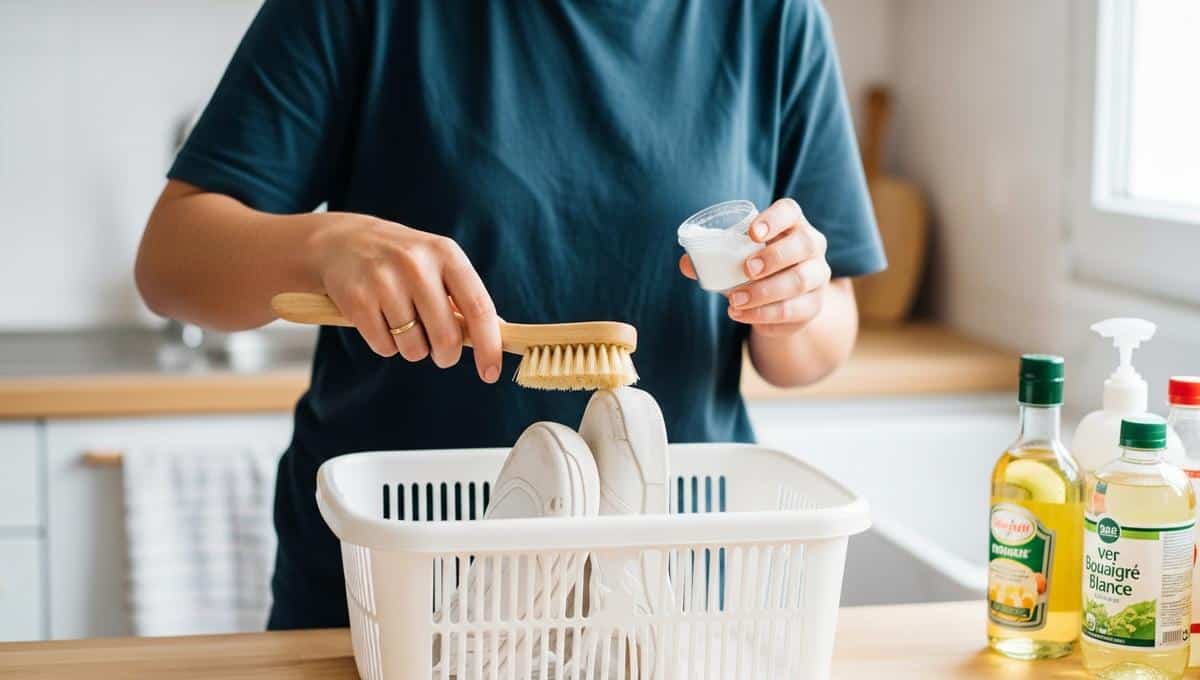
Your favorite white sneakers have lost their shine. Stains, yellowing, and everyday dirt can make them look tired and worn. Fortunately, you can whiten your sneakers using simple household products you probably already own.
Why white sneakers turn yellow over time
White shoes face constant challenges from the environment. Dust, mud, and grass stains accumulate with every step you take. Moreover, exposure to sunlight causes oxidation, which leads to that frustrating yellow tint on rubber soles and fabric.
Sweat and moisture also play a significant role in discoloration. When your feet perspire, the salt and oils seep into the material. As a result, this creates stubborn marks that regular wiping cannot remove.
Many people avoid wearing their white kicks because they fear permanent damage. However, with the right techniques, you can restore them to their original brightness. The key lies in acting quickly and using proven methods.
« Taking care of white sneakers requires consistency, but the results are always worth the effort. »
The power of baking soda for shoe cleaning
Baking soda remains one of the most effective products to whiten your sneakers at home. This natural powder works as a gentle abrasive that lifts dirt without damaging delicate materials. Simply mix it with water to create a thick paste.
To readChia seeds helped me lose 4 kg in one month: 7 simple tips to add them to your dietApply the mixture using an old toothbrush and scrub in circular motions. Focus on heavily stained areas like the toe cap and sides. Then, let it sit for 15 to 20 minutes before rinsing thoroughly.
For tougher stains, combine baking soda with white vinegar. The fizzing reaction helps break down grime trapped in fabric fibers. This combination works particularly well on canvas sneakers.
Household products that restore sneaker brightness
Your bathroom and kitchen hold surprising cleaning solutions. Marseille soap, for instance, offers gentle yet powerful cleaning properties. Rub a damp brush against the soap bar, then work it into the shoe surface.
White vinegar serves multiple purposes when you want to whiten your sneakers effectively. It removes odors, kills bacteria, and dissolves mineral deposits. Dilute it with equal parts water for best results.
- Baking soda paste for fabric and mesh materials
- White vinegar solution for rubber soles and trim
- Marseille soap for leather and synthetic uppers
- Makeup remover milk for scuff marks on smooth surfaces
- Nail polish remover for stubborn spots on rubber only
Makeup remover milk might seem unusual, but it works wonders on light scuffs. Apply a small amount to a cotton pad and gently rub the affected area. This product is especially safe for delicate leather sneakers.
Nail polish remover should be used carefully and sparingly. It contains acetone, which can damage certain materials. Therefore, test it on a hidden spot first and use it only on rubber parts.
Step-by-step cleaning process for best results
Start by removing the laces and insoles from your shoes. Wash the laces separately in warm soapy water or replace them entirely. Meanwhile, shake out loose dirt and debris from inside the sneakers.
Next, brush off dried mud using a soft-bristled brush. Work from top to bottom to avoid spreading dirt around. This preparation step makes the actual cleaning much more effective.
After applying your chosen cleaning product, always rinse with clean water. Leftover residue can attract more dirt or cause discoloration over time. Pat dry with a clean towel rather than rubbing harshly.
Drying and maintaining your refreshed sneakers
Proper drying prevents damage and maintains the shape of your shoes. Never place wet sneakers near direct heat sources like radiators or hairdryers. Instead, stuff them with newspaper or use shoe trees to absorb moisture naturally.
Air drying takes 24 to 48 hours depending on the material thickness. Position your shoes in a well-ventilated area away from direct sunlight. This patience pays off by preventing shrinkage and cracking.
Once completely dry, consider applying a protective spray. This barrier helps repel water and stains before they set in. Consequently, you will need to whiten your sneakers less frequently.
To readTV screen cleaning: the simple method to remove dust and fingerprints without damageRegular maintenance extends the life of your white footwear significantly. Wipe them down after each wear with a damp cloth. Store them in a cool, dry place away from humidity and dust.
Common mistakes to avoid during the cleaning process
Using bleach directly on sneakers often causes more harm than good. It can weaken fibers and create uneven yellow patches over time. Opt for gentler alternatives that achieve similar brightening effects.
Machine washing seems convenient, but it risks damaging glue and structure. The agitation can separate soles from uppers permanently. Hand cleaning gives you better control and produces superior results when you whiten your sneakers.
Skipping the drying time creates conditions for mold growth. Damp shoes develop unpleasant odors that are difficult to eliminate. Always ensure complete dryness before wearing or storing your freshly cleaned sneakers.
Crédit photo © DivertissonsNous