
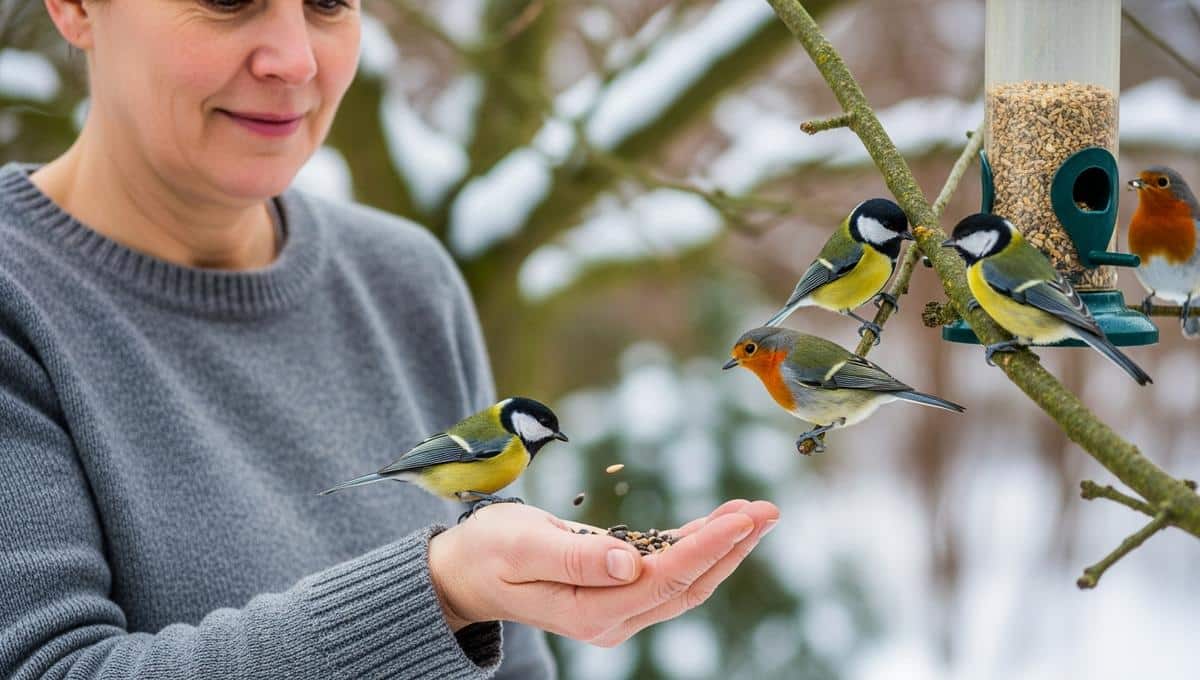
When temperatures drop, many of us feel the urge to help wild birds survive the harsh season. Feeding the birds seems like a simple act of kindness, yet common mistakes can actually harm them. Understanding what to offer and what to avoid makes all the difference for our feathered friends.
Why winter feeding matters for wild birds
Cold months present real challenges for birds in our gardens. Natural food sources become scarce as insects disappear and plants stop producing seeds. During this period, a single cold night can be fatal for small species like robins or blue tits.
Birds need up to 10% of their body weight in food daily just to maintain their energy levels. Consequently, your garden feeder can become a vital lifeline. Many species rely on human help to get through until spring arrives.
However, good intentions are not always enough. Experts warn that improper feeding practices cause more harm than good. For this reason, knowing the right approach is crucial before you start.
« The goal is to support birds, not to make them dependent on us or to put their health at risk with unsuitable food. »
The right time to start and stop
Bird protection organizations recommend starting in late November when frost becomes regular. You should continue until mid-March when natural food sources return. Starting too early can disrupt birds’ natural foraging habits.
Consistency matters greatly once you begin feeding the birds in your area. Stopping suddenly in the middle of winter forces birds to search for new food sources during their most vulnerable time. Therefore, commit to regular refilling throughout the season.
Common mistakes that put birds at risk
Salted foods top the list of dangerous items to avoid. Bread, while popular, offers almost no nutritional value and can swell in birds’ stomachs. Similarly, cooked rice and leftover meals contain salt and spices that are toxic to small birds.
To readGarden bugs gone in days: this natural method eliminates them without chemicalsFat balls wrapped in plastic nets pose another serious threat. Birds can trap their feet or beaks in the mesh, causing injuries or death. Always remove netting and place fat balls in proper feeders instead.
Spoiled or moldy food spreads diseases rapidly through bird populations. In fact, dirty feeders can cause outbreaks of salmonella and other infections. Clean your feeding stations at least once every two weeks with hot water.
- Avoid salted peanuts and roasted nuts of any kind
- Never offer milk or dairy products to wild birds
- Remove plastic nets from commercial fat balls
- Keep feeders away from areas where cats can hide
- Change water in bird baths daily to prevent freezing and bacteria
Placing feeders too close to windows causes fatal collisions. Birds need a clear flight path to escape predators quickly. Position your feeding station at least three meters from glass surfaces or use window stickers to prevent accidents.
What about fruit and kitchen scraps
Fresh fruit can be offered safely to certain species. Blackbirds and thrushes enjoy apple halves placed on the ground. Yet citrus fruits should be avoided as they are too acidic for most garden birds.
Leftover cooking fat seems like a good idea but causes problems. It sticks to feathers and reduces their insulating properties. Pure suet or lard remains the safest option for homemade fat treats.
Best foods for feeding the birds safely
Sunflower seeds rank among the most nutritious choices available. They provide essential fats and proteins that birds desperately need. Black sunflower seeds have thinner shells, making them easier for small birds to open.
Unsalted peanuts attract a wide variety of species to your garden. Tits, nuthatches, and woodpeckers particularly enjoy this high-energy food. Always use a mesh feeder that prevents birds from taking whole nuts that could choke young birds.
Niger seeds appeal specifically to finches like goldfinches and siskins. These tiny seeds require special feeders with small openings. As a result, you can target specific species while reducing waste from larger birds.
Mixed seed blends work well for ground-feeding birds such as sparrows and dunnocks. Scatter them on a flat surface or low platform rather than in hanging feeders. This approach mimics natural foraging behavior and reduces competition at elevated stations.
Creating a bird-friendly water source
Fresh water proves just as important as food during freezing weather. Birds need to drink and bathe even in winter to maintain their feathers. A shallow dish with a stone in the center provides safe access for small species.
Never add antifreeze or salt to prevent ice formation. Instead, replace frozen water with fresh supplies each morning. Feeding the birds properly means addressing all their survival needs, not just hunger.
Setting up your feeding station correctly
Multiple feeding points reduce aggression between different species. Place at least two or three feeders at varying heights around your garden. Ground feeders, hanging stations, and platform tables each attract different birds.
To readFeeding birds in winter: 12 simple and smart tips to help them survive the coldShelter nearby helps birds feel secure while they eat. A hedge or bush within a few meters offers quick escape routes from predators. However, avoid placing feeders directly under dense cover where cats might ambush visitors.
Regular observation helps you adjust your approach over time. Note which foods disappear fastest and which species visit most often. This knowledge improves your success at feeding the birds throughout the winter months.
Patience remains key when starting a new feeding routine. Birds may take several weeks to discover and trust a new food source. Once they do, your garden will become an essential stop on their daily survival route.
Crédit photo © DivertissonsNous