
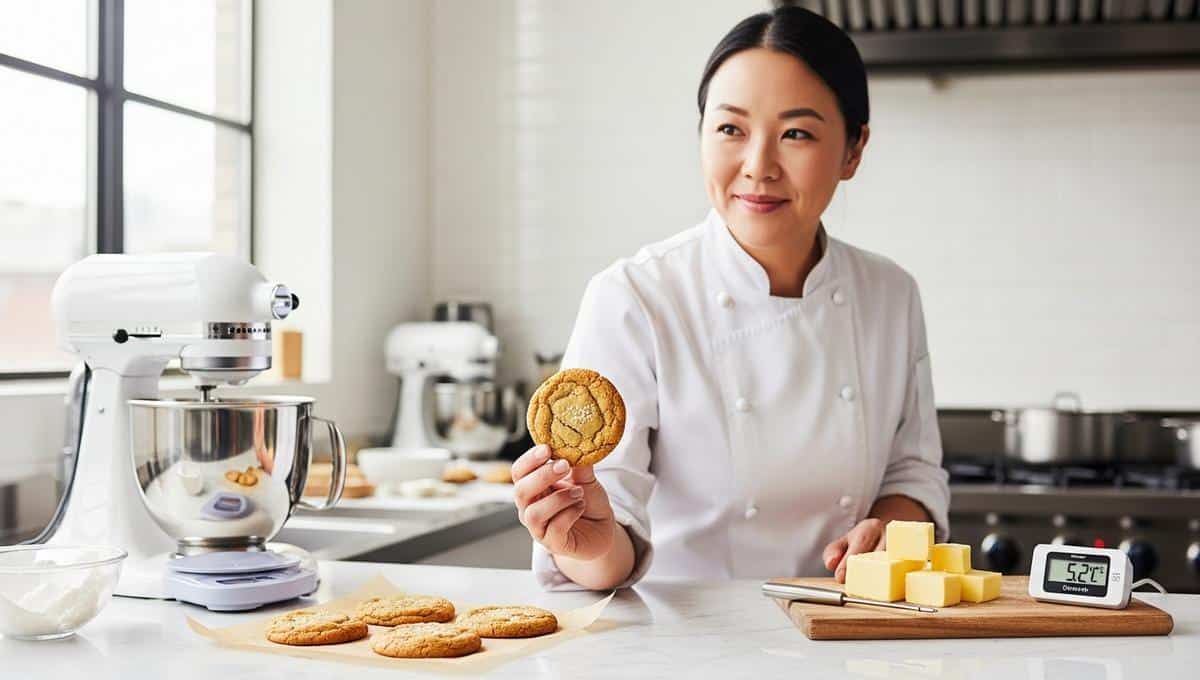
There is something deeply comforting about the smell of homemade cookies wafting through your kitchen. Yet achieving that perfect texture—crispy on the edges, soft in the center—often feels elusive. Chef Narae Kim, a pastry expert known for her refined techniques, recently shared her secrets for baking flawless cookies at home.
Why your cookies never turn out quite right
Many home bakers follow recipes carefully but still end up with flat, hard, or unevenly baked results. In fact, the problem rarely lies in the recipe itself. Instead, small details in technique and ingredient handling make all the difference. Understanding these nuances can transform your baking.
Temperature plays a crucial role that most people overlook. Butter that is too warm will cause your dough to spread excessively during baking. Conversely, butter that is too cold will not cream properly with sugar. Chef Narae Kim emphasizes that butter should be at exactly 15°C for optimal results.
Mixing time matters more than you might think. Over-mixing develops too much gluten, resulting in tough cookies rather than tender ones. Therefore, stopping as soon as ingredients are combined preserves that delicate texture everyone craves. This simple adjustment alone can revolutionize your homemade cookies.
« The secret is not in exotic ingredients but in respecting each step of the process with patience and precision. »
The butter technique that changes everything
Chef Narae Kim recommends a specific approach to butter preparation. First, cut your butter into small cubes and let it sit at room temperature for exactly 30 minutes. This controlled softening ensures even incorporation without melting. As a result, your dough maintains structure during baking.
To readMirrors stay fog-free with these 5 simple household tricksBeyond temperature, the creaming process deserves attention. Beat butter and sugar together for 3 to 4 minutes until the mixture turns pale and fluffy. This step incorporates air, which creates lift and lightness. Many bakers rush this stage, but patience here pays off significantly.
Essential techniques for perfect texture
Achieving bakery-quality results at home requires attention to several key factors. Flour measurement, for instance, causes more failures than any other variable. Scooping directly from the bag compacts the flour, adding too much to your recipe. Instead, spoon flour into your measuring cup and level it with a knife.
Chilling your dough before baking is another game-changer. Resting the dough for at least one hour in the refrigerator allows gluten to relax. Additionally, this step solidifies the fat, preventing excessive spreading. Your homemade cookies will hold their shape beautifully as a result.
- Use room-temperature eggs for better emulsion with butter
- Measure flour by weight rather than volume for accuracy
- Rotate your baking sheet halfway through cooking time
- Remove cookies when edges are golden but centers look slightly underdone
- Let cookies rest on the hot pan for five minutes before transferring
Oven calibration often goes unnoticed as a source of baking problems. Home ovens can vary by 10 to 15 degrees from their displayed temperature. Thus, investing in an oven thermometer provides valuable accuracy. This small tool prevents countless batches of over or under-baked treats.
Salt enhances flavor in ways that sugar alone cannot achieve. Chef Kim suggests using flaky sea salt sprinkled on top just before baking. This addition creates delightful contrast and depth in each bite. Even sweet homemade cookies benefit from this savory touch.
Common mistakes and how to avoid them
Opening the oven door too frequently causes temperature fluctuations that affect results. Each opening can drop the temperature by several degrees. Consequently, resist the urge to check until at least two-thirds of the baking time has passed. Trust the process and let heat do its work.
Using dark baking sheets accelerates browning on the bottom of your cookies. Light-colored aluminum pans distribute heat more evenly. Furthermore, lining with parchment paper provides consistent release and cleanup. These choices influence your final product more than most realize.
Advanced tips from chef Narae Kim’s kitchen
Resting your dough overnight produces remarkably better flavor development. During this extended chill, proteins and starches hydrate fully. Moreover, complex flavors emerge that fresh dough simply cannot provide. Professional bakeries often use this technique for their signature recipes.
The size of your cookie scoops should remain consistent across each batch. Uneven portions lead to uneven baking times and inconsistent textures. Using an ice cream scoop or kitchen scale ensures uniformity. This attention to detail separates amateur efforts from professional homemade cookies.
To readStreaming subscriptions: how to pay less for Netflix, Disney+ and other services in 2025Brown butter adds incredible depth to any cookie recipe. Cooking butter until the milk solids turn amber creates nutty, caramel notes. However, this technique requires careful attention to prevent burning. Once mastered, it becomes a secret weapon in your baking arsenal.
Finally, storage methods determine how long your homemade cookies stay fresh. Keeping them in an airtight container with a slice of bread maintains moisture. The bread absorbs staleness while the cookies remain soft. This simple trick extends enjoyment for several days after baking.
Crédit photo © DivertissonsNous