
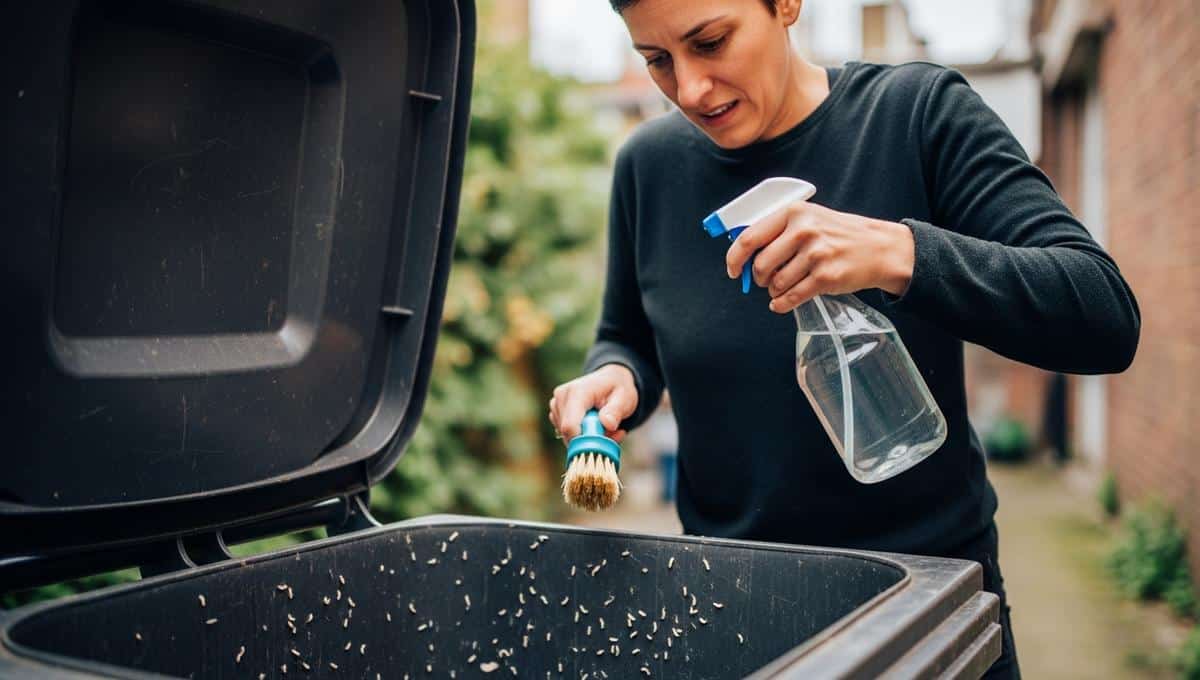
Opening your trash can only to find a writhing mass of tiny white larvae is an experience no one wants. Yet, this unpleasant surprise happens more often than you might think, especially during warm summer months. Understanding why maggots appear and how to eliminate them can save you from this distressing situation.
Why these larvae invade your trash bins
Flies are constantly searching for the perfect place to lay their eggs. Your garbage bin, filled with organic waste and food scraps, offers an ideal environment. In fact, a single fly can deposit up to 500 eggs in just a few days. These eggs hatch within 24 hours when temperatures rise above 20°C.
Warm weather accelerates this process dramatically. During summer, the cycle from egg to larva takes less than a day. As a result, what starts as invisible eggs quickly becomes a visible infestation. The larvae feed on decomposing matter, growing rapidly before transforming into flies.
Moreover, certain types of waste attract flies more than others. Meat scraps, fish remains, and dairy products are particularly appealing. Pet food left outdoors also creates similar problems. By recognizing these triggers, you can take preventive action before maggots appear.
« Prevention remains the most effective strategy against larvae infestations in household waste containers. »
The health risks you should know about
Beyond the disgust factor, these larvae can pose genuine health concerns. They carry bacteria from decomposing matter onto any surface they touch. Consequently, if they escape the bin, they may contaminate surrounding areas. Children and pets face particular risks if they come into contact with infested containers.
To readDressing organization: 7 simple tips to keep your closet tidy every daySome species of fly larvae can cause myiasis in rare cases. This condition occurs when larvae infest living tissue. Although uncommon in domestic settings, it highlights why swift action matters. Proper hygiene practices protect your household from these potential dangers.
Natural solutions to eliminate the problem
White vinegar stands out as one of the most effective natural remedies. Simply boil equal parts water and vinegar, then pour the mixture directly into the infested bin. The heat kills larvae instantly, while the vinegar disinfects the surface. This method works quickly and costs very little.
Salt offers another surprisingly powerful solution against maggots. Sprinkle a generous amount directly onto the larvae. The salt dehydrates them within hours, causing them to die. After treatment, sweep out the remains and wash the container thoroughly. Many households already have this simple remedy in their kitchen.
Essential oils provide a dual benefit for this problem. Lavender, eucalyptus, and peppermint repel flies effectively. Add 10 to 15 drops to your cleaning water when washing the bin. Not only does this deter future infestations, but it also leaves a pleasant scent behind.
- Boiling water with white vinegar kills larvae on contact
- Coarse salt dehydrates and eliminates infestations naturally
- Essential oils repel flies and prevent egg-laying
- Diatomaceous earth creates a barrier against crawling insects
- Freezing small amounts of organic waste before disposal reduces attraction
Chemical treatments for severe infestations
Sometimes natural methods prove insufficient for heavy infestations. In these cases, specific insecticides designed for larvae offer faster results. Look for products containing permethrin or pyrethrin as active ingredients. Always follow the manufacturer’s instructions carefully to ensure safety.
Bleach mixed with water creates a powerful disinfecting solution. Use one part bleach to ten parts water for effective cleaning. Pour this mixture into the empty bin after removing all waste. Let it sit for thirty minutes before rinsing thoroughly. This approach sanitizes while eliminating any remaining larvae.
Professional pest control services may become necessary for recurring problems. Experts can identify the source of persistent fly activity. They also provide long-term solutions tailored to your specific situation. Although this option costs more, it often proves worthwhile for stubborn infestations.
Prevention strategies that actually work
Regular cleaning forms the foundation of any prevention plan. Wash your garbage bin at least once every two weeks during summer. Use hot soapy water and scrub all interior surfaces. Dry the container completely before adding a new bag, since moisture attracts insects.
Double-bagging organic waste significantly reduces odors that attract flies. Wrap meat scraps and fish bones in newspaper before placing them in bags. This extra layer contains smells more effectively. As a bonus, it also prevents bag tears that expose waste directly.
To readMirrors stay fog-free with these 5 simple household tricksKeeping your bin in shade lowers internal temperatures considerably. Direct sunlight heats the container, speeding up decomposition and attracting maggots faster. Position your outdoor bins under a tree or overhang when possible. This simple change makes a noticeable difference during hot weather.
Adding baking soda to the bottom of your bin absorbs odors naturally. Sprinkle approximately 50 grams after each cleaning session. Replace this layer weekly for best results. Combined with other methods, this creates an environment far less appealing to egg-laying flies. Your bins will stay fresher between collections, reducing the risk of unwanted visitors dramatically.
Crédit photo © DivertissonsNous