
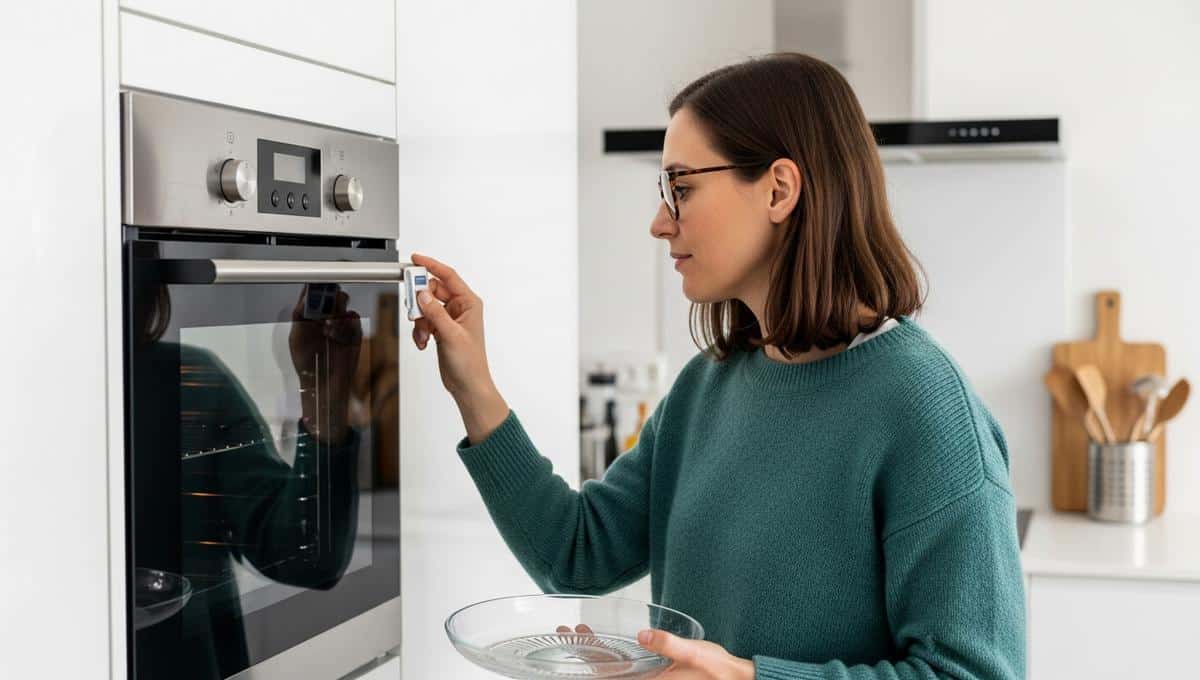
Every month, your energy bill tells a story. For many households, the electric oven plays a significant role in that narrative. Understanding how much power this kitchen appliance consumes can help you cook smarter and save money.
How much energy does your electric oven really use?
The typical electric oven uses between 2,000 and 2,500 watts per hour of operation. Yet this figure varies based on temperature settings and cooking duration. A standard baking session at 180°C consumes roughly 0.8 to 1 kWh of electricity.
Over a year, regular use adds up quickly. A family cooking daily might see their oven account for 5 to 10% of total household energy costs. Consequently, small changes in habits can lead to notable savings on your monthly bill.
Modern appliances with better energy ratings perform more efficiently. An A-rated model uses approximately 40% less energy than an older C-rated unit. Therefore, upgrading your equipment can pay for itself within a few years.
« The way you use your oven matters just as much as the oven itself when it comes to energy consumption. »
Understanding the different cooking modes
Convection mode circulates hot air throughout the cavity. As a result, food cooks faster and at lower temperatures. This method typically reduces energy use by 15 to 20% compared to traditional heating.
To readMirrors stay fog-free with these 5 simple household tricksThe grill function, in contrast, consumes power intensely but for shorter periods. For quick meals like toast or gratin, it proves quite efficient. Thus, matching the cooking mode to your recipe optimizes both results and consumption.
- Preheat only when truly necessary for the recipe
- Use residual heat by turning off the oven 5-10 minutes early
- Avoid opening the door during cooking to prevent heat loss
- Cook multiple dishes at once when possible
- Keep the oven clean for better heat distribution
Practical tips to reduce your electric oven consumption
Batch cooking represents one of the smartest strategies for energy savings. By preparing several meals at once, you maximize each heating cycle. Indeed, a full oven uses no more power than an empty one at the same temperature.
The size of your cookware also affects efficiency. Dishes that match the oven space allow heat to circulate properly. Moreover, dark-colored pans absorb heat better than shiny metal ones.
Glass and ceramic containers retain heat longer than metal alternatives. Because of this property, you can lower the temperature by 10 to 15°C while achieving the same results. Your food continues cooking even after the element turns off.
Regular maintenance keeps your appliance running at peak performance. A clean oven heats more evenly and responds faster to temperature changes. Additionally, checking door seals prevents warm air from escaping during use.
When should you consider alternatives?
For small portions, a microwave or air fryer uses far less energy. These compact devices heat food in a fraction of the time. Accordingly, they make sense for reheating leftovers or cooking single servings.
Slow cookers offer another efficient option for certain recipes. They use only 150 to 300 watts over several hours. Despite the long cooking time, total energy consumption often stays below that of an electric oven session.
Induction cooktops provide precise control for stovetop cooking. They transfer heat directly to the pan with minimal waste. Hence, combining various appliances based on the task leads to the best overall efficiency.
Reading energy labels and making informed choices
European energy labels now range from A to G for household ovens. The rating reflects energy use during standard test cycles. A model rated A uses roughly 0.7 kWh per cycle, while a G-rated unit may consume over 1.2 kWh.
Beyond the letter grade, look at the actual kWh figures on the label. Two ovens with the same rating can still differ in real-world performance. Furthermore, cavity size affects these numbers, so compare similar volumes.
To readStreaming subscriptions: how to pay less for Netflix, Disney+ and other services in 2025Pyrolytic cleaning features add convenience but consume extra power. The self-cleaning cycle reaches temperatures above 400°C for several hours. As a result, using this function sparingly helps control your annual energy use.
Smart features in newer models can also contribute to savings. Automatic shut-off and precise temperature sensors prevent waste. The electric oven market continues evolving toward greater efficiency, giving consumers better options each year.
Crédit photo © DivertissonsNous