
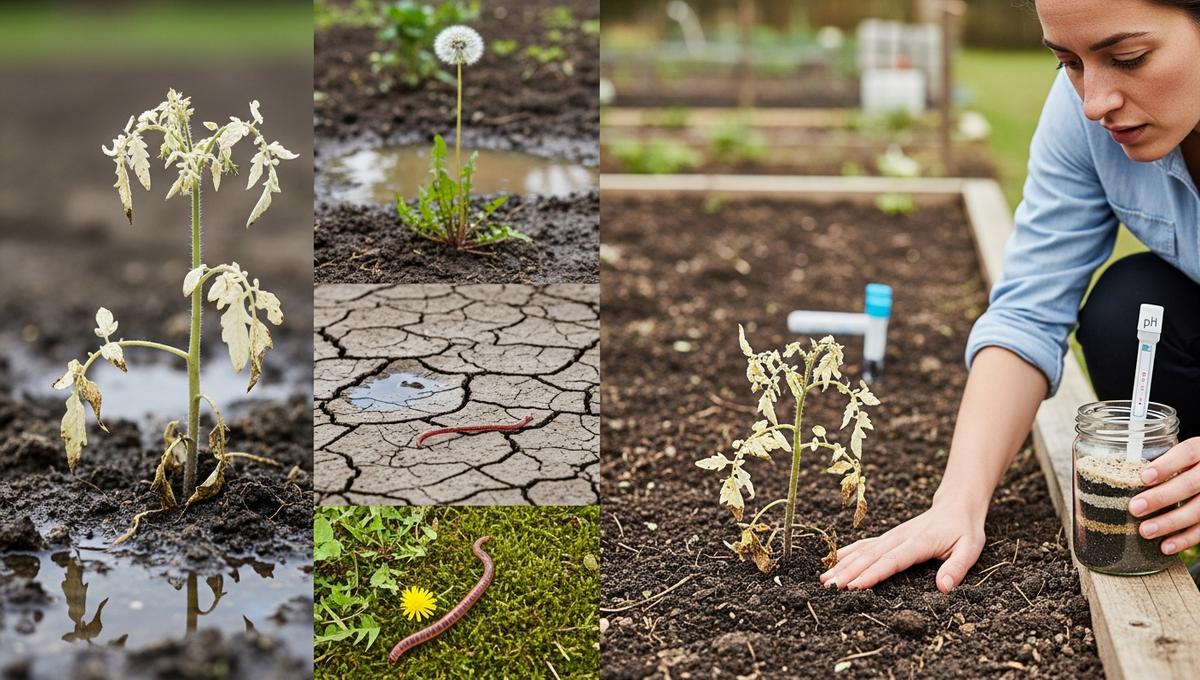
You step outside, eager to plant your first tomatoes. Yet something feels wrong with the ground beneath your feet. Understanding your vegetable garden soil quality can transform a disappointing harvest into an abundant one.
Why your garden soil might be failing you
Many gardeners face the same frustration each spring. Their plants struggle, leaves turn yellow, and yields remain poor. Often, the culprit lies hidden beneath the surface. Poor soil structure prevents roots from spreading freely.
Clay-heavy ground retains too much water. As a result, roots suffocate and rot develops quickly. Sandy earth, in contrast, drains far too fast. Nutrients wash away before plants can absorb them. Both extremes create hostile growing conditions.
Compacted layers block air and water movement entirely. Without proper drainage, even the best seeds fail to thrive. Testing your earth reveals hidden problems you cannot see with bare eyes.
« Healthy soil is alive with billions of organisms working together to feed your plants. »
Signs that tndicate poor soil quality
Several visible clues point toward troubled ground. Puddles that linger for days suggest drainage issues. Cracks during dry spells indicate high clay content. Pale, stunted plants often signal nutrient deficiencies in your vegetable garden soil.
Weeds can serve as natural indicators too. Dandelions thrive in compacted, acidic conditions. Moss growth suggests excessive moisture and shade. By observing these signs carefully, you gain valuable insight into your garden’s health.
Testing and analyzing your growing medium
Before making any changes, assess what you have. A simple jar test reveals soil composition quickly. Fill a clear jar with earth and water, then shake vigorously. After settling overnight, distinct layers appear.
To readMirrors stay fog-free with these 5 simple household tricksSand sinks to the bottom first. Silt forms the middle layer, while clay floats on top. Ideally, you want roughly equal proportions of each component. This balanced mix creates what experts call loamy vegetable garden soil.
- Sandy soil feels gritty and falls apart easily
- Clay soil sticks together and forms a ball
- Loamy soil holds shape but crumbles when poked
- pH levels below 6 indicate acidic conditions
- Earthworm presence signals healthy biological activity
Professional testing offers more precise data. Many local extension services provide affordable analysis. They measure pH, nutrient levels, and organic matter content. Armed with this information, you can create a targeted improvement plan.
Dolomite, a natural calcium amendment, proves particularly helpful for acidic soils. This mineral slowly releases calcium and magnesium over time. Gardeners with pH readings below 6 often benefit from its gentle correction.
Understanding pH balance for vegetables
Most edible plants prefer slightly acidic to neutral conditions. A pH range between 6.0 and 7.0 suits most common vegetables. Potatoes tolerate more acidity, while brassicas prefer slightly alkaline ground. Matching crops to existing conditions saves considerable effort.
Acidic earth locks up essential nutrients like phosphorus and calcium. Plants cannot access what they need, despite adequate amounts being present. Consequently, growth slows and harvests diminish. Regular pH testing prevents this invisible problem from recurring.
Practical methods to improve your garden ground
Transformation takes time, yet results prove worthwhile. Adding organic matter remains the single most effective strategy. Compost improves both sandy and clay soils simultaneously. It helps sandy ground retain moisture while loosening heavy clay.
Spread 3 to 4 inches of well-rotted compost across beds each season. Work it into the top layer gently with a fork. Avoid tilling too deeply, as this disrupts beneficial organisms. Over several years, structure improves dramatically.
Cover crops offer another powerful tool for renewal. Clover, rye, and vetch add nitrogen naturally. Their roots break up compacted layers while alive. After cutting them down, decomposing foliage feeds soil life abundantly.
Mulching protects your investment in vegetable garden soil improvement. Straw, leaves, or wood chips shield the surface from rain impact. They moderate temperature extremes and suppress weed competition. Thus, your plants enjoy more stable growing conditions throughout the season.
Building long-term fertility naturally
Quick fixes rarely deliver lasting results. Building truly productive earth requires patience and consistent care. Rotate crops each year to prevent nutrient depletion. Different plant families draw from and contribute varying nutrients.
To readStreaming subscriptions: how to pay less for Netflix, Disney+ and other services in 2025Heavy feeders like corn and squash should follow nitrogen-fixing legumes. This natural rotation reduces fertilizer needs considerably. Moreover, it breaks pest and disease cycles that build up over time. Your garden becomes more resilient with each passing season.
Dolomite applications work best when spread in autumn. This timing allows winter rains to carry minerals into the root zone gradually. Spring-planted crops then benefit from improved calcium and magnesium availability when they need it most.
Finally, protect vegetable garden soil from foot traffic and machinery. Designate permanent pathways between beds to keep growing areas loose. Even light pressure compacts wet earth surprisingly fast. With these strategies, your garden ground steadily improves year after year.
Crédit photo © DivertissonsNous