
Some days your tart shell crumbles; other days it shrinks. Still, the path to reliable shortcrust pastry is calmer than you think. As a result, a few small habits make the dough behave. This guide keeps stress low and results consistent.
The tiny detail most bakers forget
You likely mix well and measure. Yet the real hinge is temperature control. First, keep ingredients cold, and rest the dough before rolling. This pause relaxes gluten, so the base stays flat.
A widely used base is simple and precise. For example, many cooks work with 250 g flour, 125 g cold butter, and 80 g powdered sugar. Plus, add one egg yolk and a pinch of salt. As a result, that ratio supports shortcrust pastry with gentle sweetness.
Temperature, texture, and gluten
Cold butter creates tiny layers that crisp in the oven. So handle the dough quickly, with cool hands. Then flatten it into a disk and rest it in the fridge. Aim for at least 30 minutes.
« Handle the dough just enough; cold butter does the rest. »
Rubbing flour with butter first keeps strands short. In fact, this sablage reduces gluten links from the start. Powdered sugar dissolves fast, so the mix stays even. Therefore, your shortcrust pastry bakes with a fine crumb.
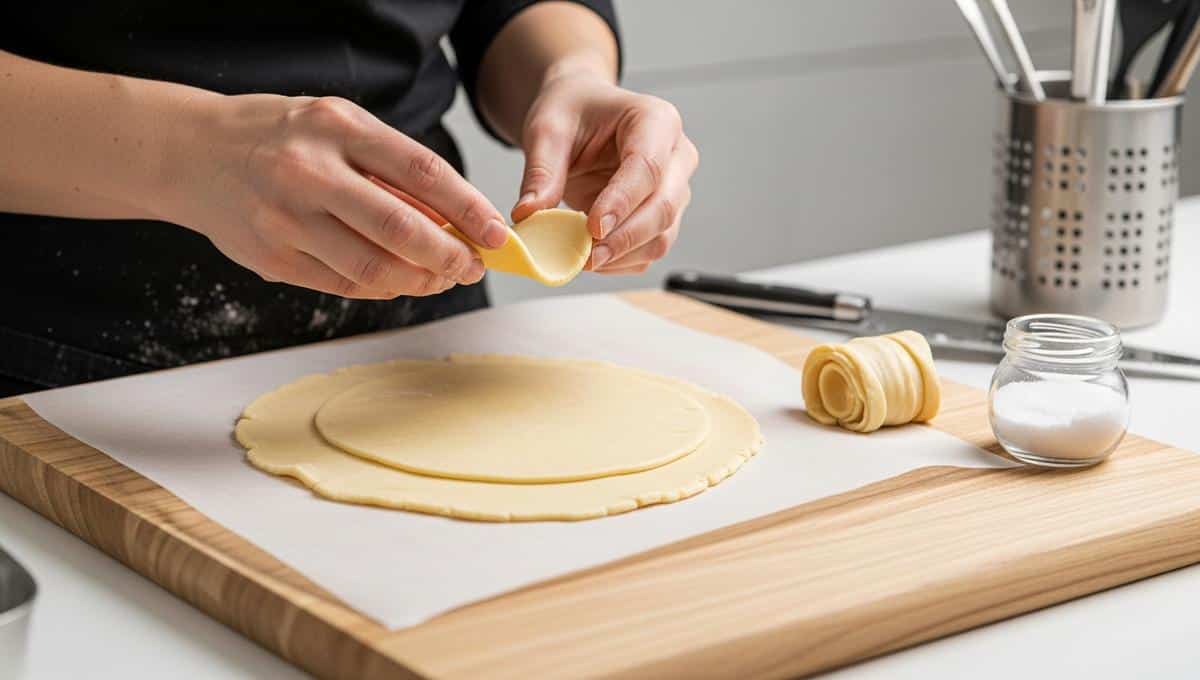
To readWinter plant boosts your landscape: add color and structure this winterAfter chilling, roll between baking paper for clean edges. Meanwhile, turn the sheet often, because that stops sticking and tears. Next, return the lined tin to the fridge for 15–20 minutes. This extra rest limits shrinking.
- Keep butter and water content cold from start to finish.
- Weigh ingredients with a scale for repeatable results.
- Use powdered sugar for a fine, even texture.
- Rest the dough before and after lining the tin.
- Roll between sheets to avoid extra flour and cracks.
From bowl to oven: a clear sequence
Dock the base with a fork, then line with paper. Afterward, add weights to keep the shortcrust pastry flat during the first bake. Use beans, rice, or metal beads. Work fast, as warmth softens butter.
Blind bake at 170–180°C until the sides set. Then remove the weights and bake again for 5–10 minutes. This dries the center and boosts crispness. However, watch edges, because sugar darkens quickly.
If the dough tears, press in a small patch. For tough results, reduce mixing next time. When it crumbles, add a few drops of yolk or milk. Finally, measure carefully, as small shifts change texture.
Flavor upgrades and smart swaps
Grate in lemon zest for lift, or add vanilla. Alternatively, swap 10–15% of the flour for almond meal. That change brings aroma and color. Spices like cinnamon warm fruit tarts nicely.
Need a wheat‑free base for guests? Instead, combine rice flour, corn starch, and almond meal. Keep fats cold, and rest longer for strength. This approach still echoes shortcrust pastry, with a lighter bite.
Troubleshooting and pro tips
Cracks along the rim happen in dry kitchens. So seal them with egg white, then finish baking the shortcrust pastry. For leaks, brush a thin cocoa butter or chocolate layer. It sets quickly and adds flavor.
Humidity softens baked shells overnight. Thus, cool fully, then store in a tin at room temperature. For make‑ahead, freeze raw tart shells for 1–2 months. Bake from frozen at 170°C for best shape.
To readCar windshield: 3 quick tips to defrost in minutes this winterA tart ring helps straight walls and even browning. Likewise, roll to 3–4 mm for small shells. Use a metal sheet for fast heat transfer. That support keeps shortcrust pastry crisp from edge to center.
Crédit photo © DivertissonsNous