
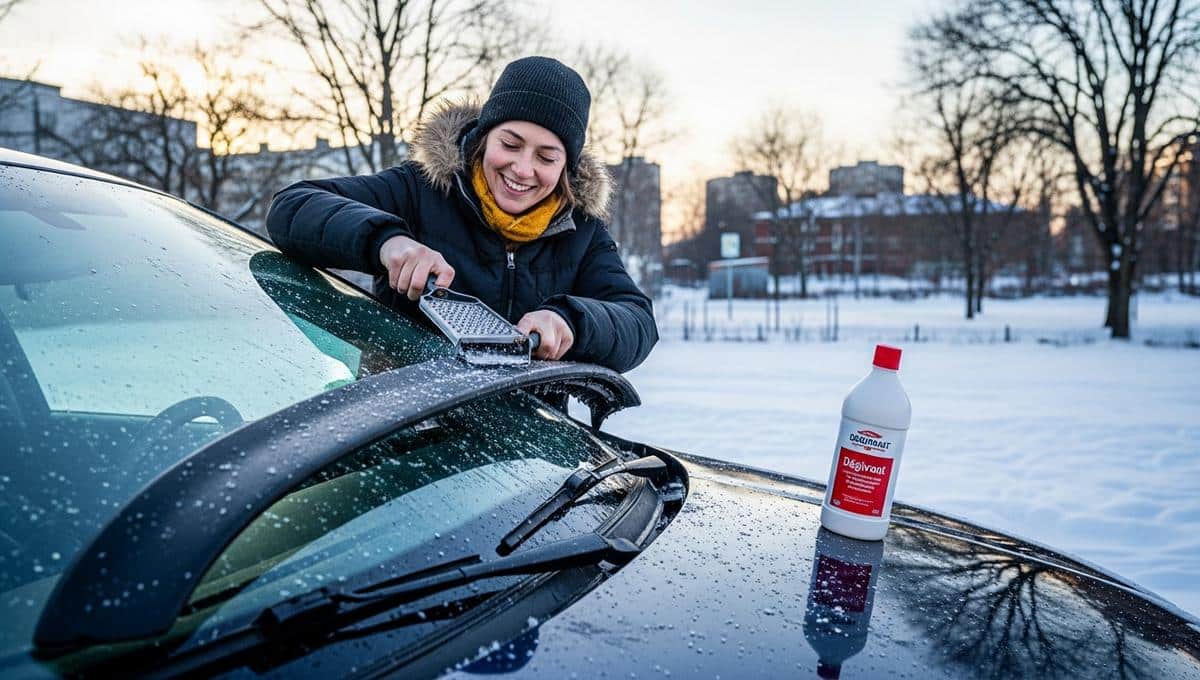
Cold mornings steal time and patience. When you must defrost the windshield fast, every minute counts. Here is what works in the real world without hurting your car.
Why frost forms and what really works
Frost happens when moist air meets glass that is colder than the air. Once the surface drops below 0°C, ice forms in thin, stubborn layers. Inside the cabin, breath and wet mats add humidity. Therefore, fighting moisture is as vital as adding heat.
On January 7, 2026, a French daily outlined three simple moves that fit this reality. Heat the glass, sweep off ice, and use a safe de‑icer. Do this in sequence, and you can defrost the windshield without stress. In short, pair patience with the right tools.
Start gentle heat, not shock heat, for a quick result. Aim warm air at the glass and wait 3–5 minutes. Meanwhile, brush loose snow so air can reach the surface. Boiling water, in contrast, risks cracks and should never touch cold glass.
« Use patience, not boiling water, on winter glass. »
Method 1: Use your car’s systems correctly
Start the engine and select the front defrost icon. Set fan speed high, temperature warm, and AC on to dry the air. Turn recirculation off so moist cabin air gets expelled. This balanced setup helps defrost the windshield while keeping stress off the glass.
To readWinter plant boosts your landscape: add color and structure this winterCrack one window slightly to vent steam, then wait a short moment. Lift the wipers only after the rubber frees from ice. Meanwhile, clear air inlets at the base of the glass. Do not leave the car unattended, since theft and local rules apply.
- Set defrost, warm air, and AC on, recirculation off.
- Brush snow before scraping, and lift wipers only when free.
- Keep a scraper and gloves within easy reach.
- Do not pour hot water on cold glass.
- Leave extra time on severe frost mornings.
Method 2: Make a safe de‑icing spray
Mix isopropyl alcohol and water at about 2:1 in a spray bottle. A 70% or 90% alcohol base works well in winter. Spray lightly from top to bottom, then scrape. As a result, the film softens fast and you can defrost the windshield without force.
AEXALT — Degivraex DV119 is a ready-to-use de-icer for glass and locks. The 650 ml spray works quickly and costs 13,15 €.
Keep any alcohol spray away from flames and hot surfaces. Store it inside the car when safe, as it resists freezing. Salt solutions and vinegar are poor ideas for clear vision. They can smear, so they do not help you defrost the windshield cleanly.
Method 3: Scrape smart and protect the glass
Choose a plastic scraper with a straight edge, not metal. Warm the glass first, then scrape in short upward strokes. Work in lanes from the driver’s side to the passenger side. Finally, use washer fluid rated for winter to rinse the residue.
Treat locks with a small burst of de-icer if they stick. You can slip a drinking straw over the nozzle to target keyholes. Gently lift wipers and pinch the rubber to remove ice. Then check that jets spray evenly before you pull away.
Extra tips to stay frost-free and safe
Moisture control is half the battle on cold days. Remove wet floor mats and shake out snow from boots. Clean the inside glass with an anti‑fog cloth. This lowers film buildup and helps defrost the windshield faster at dawn.
Park smart when a freeze is forecast overnight. If possible, face east to catch early sun. A dedicated cover or even a towel can block frost. In contrast, salt, hot water, and metal tools should stay far from the glass.
To readShortcrust pastry: perfect results depend on 1 small detail most bakers forgetPlan a small buffer of time on severe mornings. Check blades often and replace them every 6–12 months. Keep a scraper, de‑icer, and warm gloves in the door pocket. That way, you stay calm, keep vision clear, and can defrost the windshield without delay.
Crédit photo © DivertissonsNous