
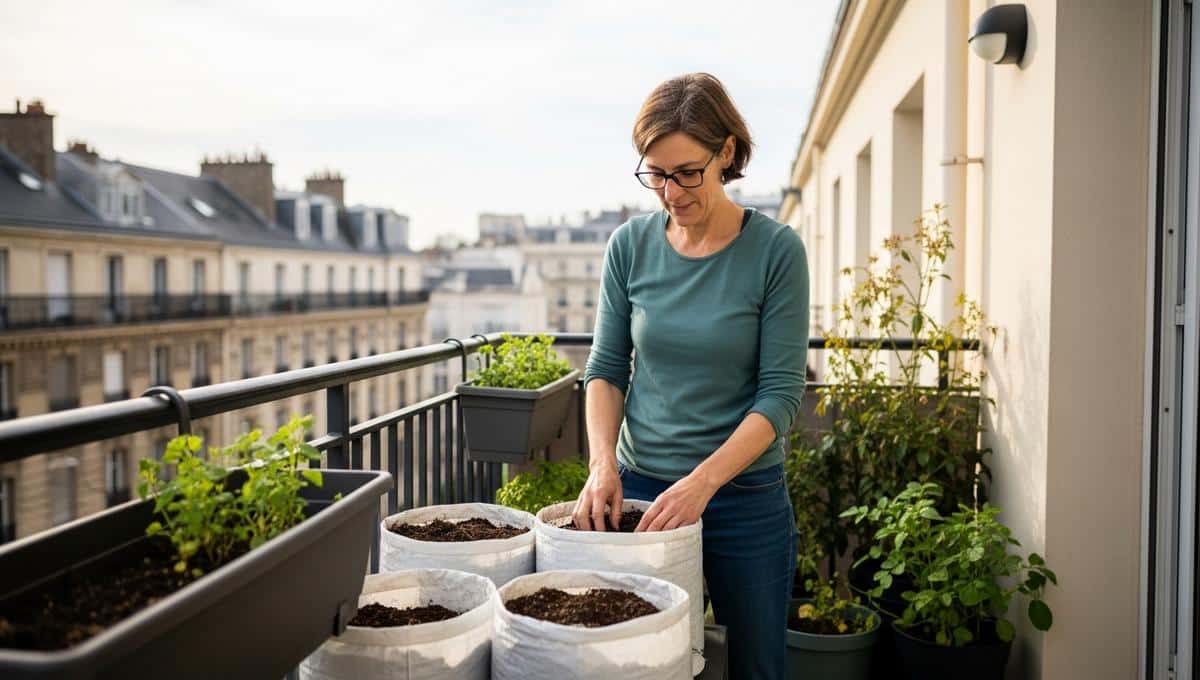
Instead, city balconies and narrow patios can feed you more than you think. With simple containers, you can grow potatoes without touching a garden bed. Thus, this guide shows the method, the timing, and the small daily habits.
The bag-and-bucket method that works at home
Containers mimic loose, deep soil while staying tidy. As a result, roots breathe, and tubers size up cleanly. You move them with the weather, which limits soil-borne problems.
Choose a sturdy grow bag or a pot with drainage holes. Then roll the bag down by half to start low and stable. Place seed tubers after they sprout short eyes, and label your potatoes.
Step-by-step setup for small spaces
Fill the base with a light mix of compost and fiber. Next, set a few chitted seed potatoes, and cover with a shallow layer. Water to settle, then keep the rim rolled down for airflow and light.
« Start small, repeat what works, and keep the mix airy. »
Water thoroughly, then wait until the top feels dry to the touch. Because containers drain fast, steady moisture avoids cracks and hollow hearts. Feed lightly once shoots appear, using a balanced, slow nutrient source.
As stems rise, unroll the bag and add more mix to hill them. This blocks light from tubers, which prevents greening and bitter taste. In due time, small new potatoes are ready once plants flower and pause.
- Choose disease-free seed and a clean, breathable container.
- Place bags in a bright, wind-sheltered corner.
- Add mix in layers as stems grow to keep tubers dark.
- Water deeply, then let the top dry before watering again.
- Note your planting date to plan harvest windows.
Troubleshooting, hygiene, and yield
Start with certified seed to reduce blight and viruses. Also, wash and dry containers between cycles to break disease carryover. Place them where they receive 6–8 hours of direct light. Because warmth speeds growth, shelter them from cold spring winds.
To readShortcrust pastry: perfect results depend on 1 small detail most bakers forgetThe Dtopbuyage grow bag comes in green, 10 gallons, 35 x 50 cm. Its volume supports staged hilling on a balcony without heavy lifting.
For the mix, blend compost with coarse material for drainage and oxygen. Moreover, a pinch of slow-release food helps steady growth through the bucket. Aim for a slightly acidic profile, and avoid compacted garden soil.
Timeframes vary by variety and temperature, but plan 70–120 days, about 3–4 months, to maturity. Therefore, set a reminder to plant earlier in cool regions. Monitor forecasts, and move containers under cover before hard frost.
Harvest, storage, and flavor
When foliage yellows and flops, stop watering for a week. Then tip the bag onto a tarp, and free your potatoes by hand. Handle tubers gently, as scuffs shorten storage and invite rot.
Cure the harvest in a dark, airy spot for several days. Afterward, keep them cool, dry, and shaded to protect flavor. Do not refrigerate, since cold can sweeten the flesh.
A balcony-to-kitchen routine you can repeat
Stagger plantings every few weeks to spread picking across the season. As a result, small batches fit cooking plans and reduce waste. You can replant immediately after a harvest, using fresh mix for more potatoes.
The Potato Grower – Bac Culture Pommes De Terre measures 295 x 295 x 236 mm in anthracite. Its boxed form tucks neatly on shelves and keeps the footprint tidy.
To readCar windshield: 3 quick tips to defrost in minutes this winterClean tools and gloves between batches to maintain container hygiene. Also, reuse water from rinsing vegetables to reduce waste on dry days. Spent stems and leaves can go to compost, far from any nightshades.
This method suits beginners, kids, and busy cooks who value fresh taste. Because setup is light and modular, you adjust it as life changes. Soon, the scent of steamed new potatoes can come from your own balcony.
Crédit photo © DivertissonsNous