
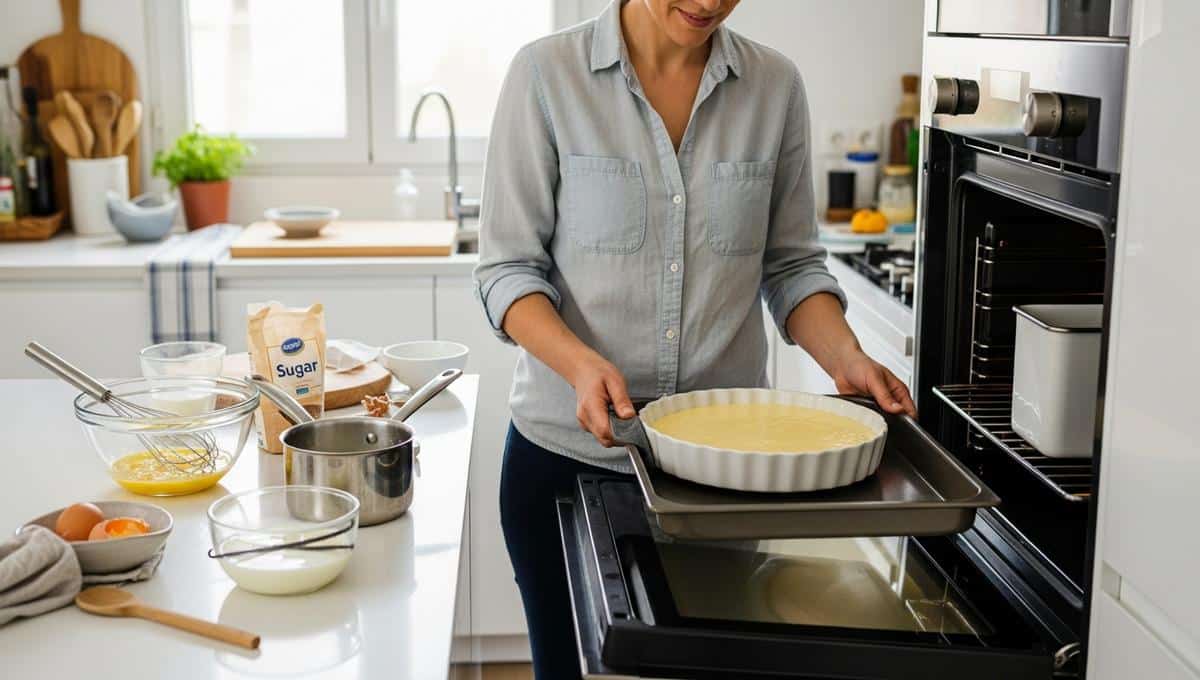
Some flavors take you straight home, no tickets needed. This gentle baked custard, known in France as œufs au lait, does exactly that. It began as Grandma’s recipe, and it still rescues busy afternoons.
Why Grandma’s recipe still works in a modern kitchen
Memory helps, yet taste seals the story. This dessert leans on four basics: milk, eggs, sugar, and a hint of vanilla. As a result, you can prepare it with pantry staples and little stress. The texture lands between pudding and flan, so every spoonful feels soft and kind.
Time matters on busy days. Thankfully, the prep takes about 10 minutes, and the oven finishes the job. Because the method is gentle, it suits beginners and seasoned cooks alike. In fact, it turns ordinary ingredients into a warm, steady treat.
From stovetop to oven: a calm, quick method
First, warm the milk with vanilla until it steams, not boils. Then whisk eggs with sugar until the mix looks pale and loose. Like many versions of Grandma’s recipe, you temper the eggs by adding warm milk slowly. Finally, bake the custard in a water bath for even heat.
« The quiet clink of spoons against porcelain can feel like a hug you can taste. »
For a classic vibe, you can coat the dish with light caramel. For a richer twist, swirl in melted dark chocolate before baking. However, avoid overmixing, or bubbles may toughen the surface. If you want a silkier finish, strain the custard through a fine sieve.
Home ovens vary, so trust both time and sight. The center should tremble slightly, while the edges set cleanly. Afterward, cool the dish at room temperature, then chill. For safety, refrigerate within 2 hours and enjoy within 3 days.
- Hands-on prep: about 10 minutes
- Oven time: roughly 30–40 minutes at gentle heat
- Key ratio: about 1 egg per 125 ml milk
- Texture cue: slight jiggle in the center when done
- Storage: refrigerate up to 3 days
Ingredients, tools, and smart swaps
Start with 4 eggs, 500 ml milk, and 80–100 g sugar, plus vanilla or citrus zest. Whole milk yields a creamier spoon, yet semi-skim works with a splash of cream. In addition, a pinch of salt sharpens the sweetness. That way, Grandma’s recipe remains honest, but flexible.
To readCeleriac and potato soup warms winter dinners with creamy, easy, budget-friendly comfortTaste shifts with sugar level. If you prefer light sweetness, aim for the lower range. For a deeper flavor, brown sugar adds a toffee note. Meanwhile, honey or maple can work, but reduce the quantity slightly.
On tools, keep it simple. You need a saucepan, a whisk, a heatproof dish, and a deeper tray for the water bath. For consistency, preheat your oven to 150–160°C or 300–325°F. Because gentle heat protects the eggs, the custard stays tender.
Dietary needs matter, so plan ahead. For lactose-free diets, use lactose-free milk with the same method. Plant-based options require tweaks; use extra thickener, or expect a looser set. Instead, you could serve small cups and chill longer for stability.
Health, budget, and the comfort of Grandma’s recipe
Affordability helps families keep traditions alive. Eggs, milk, and sugar remain budget-friendly in most markets. Consequently, this dessert fits weekly menus without strain. Per serving, the cost often rivals a simple yogurt.
Nutrition sits in a sensible place. There is protein from eggs and calcium from milk. Because sugar can add up, keep portions moderate and mindful. In that balance, Grandma’s recipe becomes a calm, satisfying snack.
Texture matters for kids, seniors, and sensitive eaters. The custard is soft, smooth, and easy to swallow. As a result, it can comfort during recovery or busy exam weeks. Add fruit on the side to brighten the plate without extra sugar.
Pro tips for silkier spoons and deeper flavor
Small steps shape big results. To prevent bubbles, whisk gently rather than vigorously. Then pour the mix through a sieve to catch stray foam. Finally, rest the batter a minute so air rises and escapes.
Heat control is your quiet ally. Place the dish in a tray and pour hot water halfway up the sides. Because the water bath buffers heat, edges do not overcook. Pull the custard when the center quivers and the top looks satiny.
To readBanana peels: 5 smart uses that save money at home and in the gardenServing choices change the mood. Warm portions soothe, while chilled cups feel clean and bright. For instance, add berries, a spoon of caramel, or a dusting of cinnamon. With that, Grandma’s recipe shifts from weekday snack to gentle celebration.
Planning ahead reduces stress. You can bake in the evening and chill overnight. Next day, portion into jars for lunch boxes or late breaks. If reheating, use low heat so the custard stays tender and kind.
Crédit photo © DivertissonsNous