
Winter can expose what summer hides. If your raspberry bush looks tired today, you’re right to worry. Early checks now can prevent a lost harvest later.
The January look test: when a plant is “on notice”
Start with a simple look test. Healthy canes show firm wood, tan bark, and tight buds. If a raspberry bush shows shriveled stems or peeling bark, act quickly. Moreover, gray canes with black specks often signal disease pressure.
Use the scratch test near the base. Gently scrape the bark to see the cambium. Bright green means living tissue and good prospects. However, brown or dry tissue points to winter kill and dieback.
Tell‑tale lesions and pests you can spot now
Lesions tell a story you can read. Long, sunken cankers around pruning cuts warn of cane blight on a raspberry bush. Small purple lesions at nodes suggest spur blight building up. In addition, oval pits with gray centers point toward anthracnose.
Act early, cut clean, and give canes room.
Pests leave clues too. Cane borer tips wilt suddenly and curve like hooks. By contrast, crown borer makes swollen galls near the base. Consequently, any stem with holes at nodes deserves removal today.
Actions to take this week to protect your crop
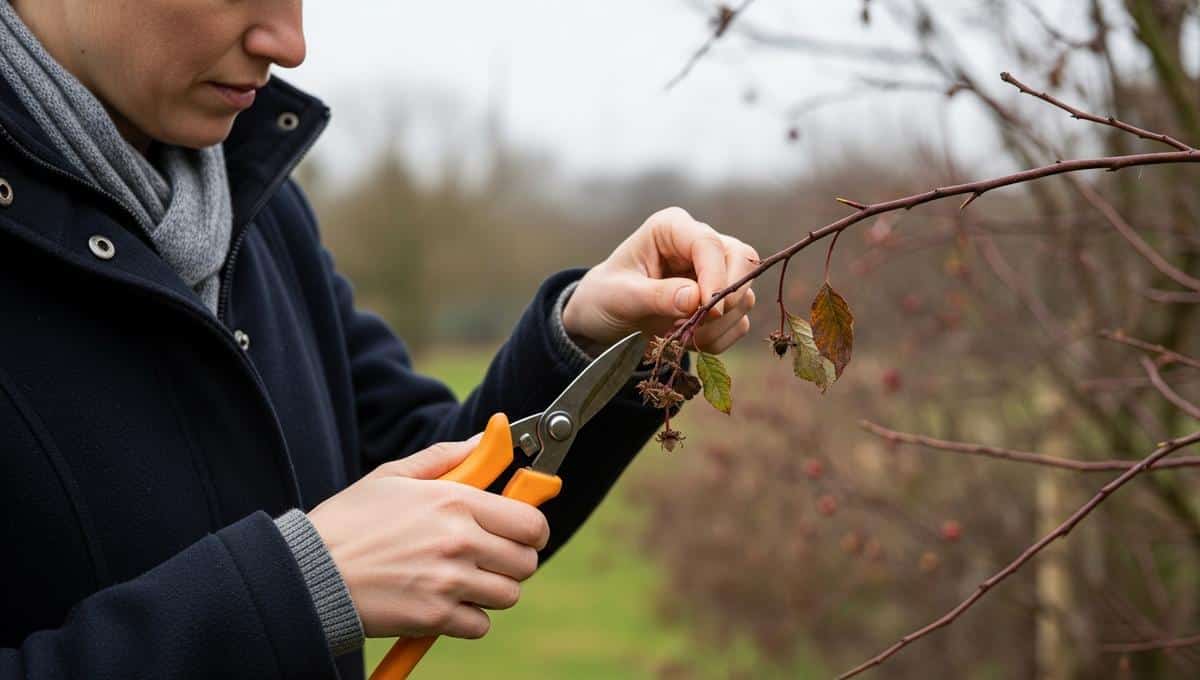
Triage first, then clean up the row. Cut dead canes at ground level, and bag them. Disinfect tools with 70% alcohol between plants. As a result, your raspberry bush avoids fresh infections during cool, wet spells.
- Sanitize pruners with 70% alcohol between plants.
- Remove all fallen leaves and shriveled fruit from the row.
- Keep cane spacing at 45–60 cm in the line.
- Tie canes to two wires set at 60–90 cm.
- Lay 5–8 cm of mulch, not on the crown.
Work on airflow immediately. Thin to leave 6–8 canes per linear foot of row. Then tie stems to a simple two‑wire trellis for stability. Therefore, light and wind can dry surfaces within hours after rain.
To readDog walk in the rain: skipping it harms your dog’s health and behaviorManage moisture with a clear plan. Water only when the top soil dries, about 2.5 cm per week without rain. Also, switch to raised rows on heavy ground for drainage. A waterlogged raspberry bush declines fast under persistent stress.
Soil, water, and mulch: build resilience that lasts
Check soil reaction before feeding anything. Aim for pH 5.5–6.5 to unlock nutrients. Thus, elemental sulfur can lower pH, while lime raises it safely. Meanwhile, compost adds biology without the salt load of harsh fertilizers.
Mulch does more than look neat in winter. It buffers roots from frost swings, and blocks splash‑borne spores. Apply 5–8 cm of clean wood chips or straw around the drip line. In turn, the raspberry bush faces fewer soil‑to‑leaf infections.
Pruning by type and timing: summer‑bearing versus everbearing
Know your cane ages to prune with confidence. Summer‑bearing varieties fruit on second‑year canes called floricanes. After harvest, remove those canes entirely at the base. Then keep strong first‑year primocanes to carry next year’s crop.
Everbearing types offer a simple fallback plan. For the easiest routine, mow all canes to the ground in late winter. Consequently, a single fall crop grows on new primocanes each year. For two crops, keep several sturdy canes through winter and tip lightly.
Set spacing that fits your site and time. Keep plants 45–60 cm apart, with rows 1.8–2 m apart. Also, prune in late winter while buds are still tight and dormant. With that rhythm, your raspberry bush rebounds and yields reliably.
To readRats: A common evening habit draws rats and insects to your home while you sleep, change it to keep them outCrédit photo © DivertissonsNous