
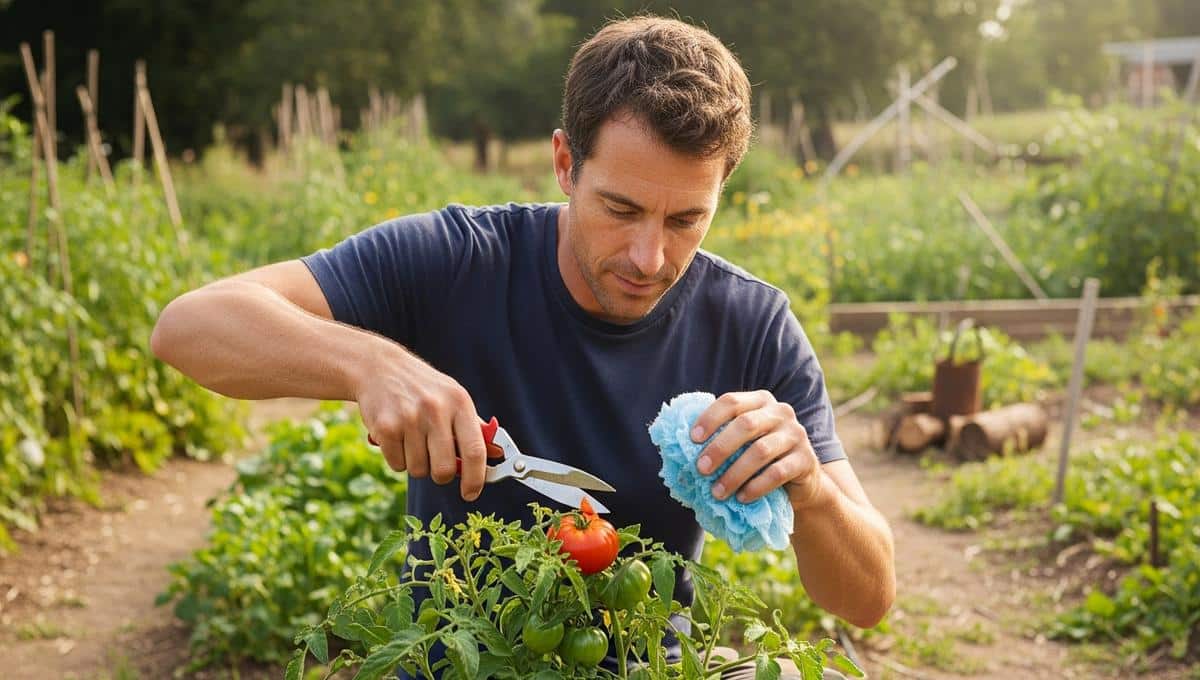
Some garden wins come from quiet habits, not gadgets. In peak season, one soaked cloth can protect your vegetable garden from unseen threats. The idea is simple, yet it changes daily work.
The soaked cloth that stops big problems
Keep a small cloth pre-soaked with sanitizer and wipe blades between plants. This fast swipe limits the jump of fungi and bacteria from one stem to the next. As a result, pruning, harvesting, and staking become safer. One minute of care can save weeks of growth.
Tomato blight, cucumber wilt, and soft rots often ride on dirty blades. However, a clean cut dramatically lowers infection chances. Because the cloth sits right in your path, you will use it without thinking. The payoff is fewer outbreaks and steadier yields.
Why disinfection beats guesswork in peak season
Symptoms show late, yet pathogens spread early in the vegetable garden. Therefore, waiting for spots or wilting leaves is a losing bet. Instead, act before each new plant or bed. The cloth makes that prevention easy and repeatable.
« A quick wipe between cuts is small work today that prevents big losses tomorrow. »
For field use, many growers favor 70% alcohol, which works fast and air-dries. A dilute bleach option—about 0.1% sodium hypochlorite—is effective, yet it can corrode metal. With either, keep a visible 30 seconds contact time when disease pressure rises. Then dry blades briefly to protect the edge.
Set it up in minutes: a field-ready routine
Preparation takes 3 steps: fold 1 cloth, soak it, and store it in a sealed tin or bag. Place it where your hand naturally reaches before a cut. Because it lives in your apron or caddy, the habit sticks. Your vegetable garden work then stays smooth, not stop-and-go.
- Pick 70% isopropyl alcohol or a mild bleach mix.
- Label the container and keep it out of sun.
- Wipe blades before each plant or row change.
- Allow brief contact time, then dry the edge.
- Refresh the cloth daily in hot or dusty weather.
Mind safety from the start. Alcohol is flammable, so keep it away from flames and hot tools. Also, wear thin gloves if your skin is sensitive. In fact, a small zip bag reduces spills and odors.
For busy days, set tiny triggers that prompt the wipe. For example, clean blades before tying vines, changing rows, or switching tools. Thus your hands learn a simple loop: cut, wipe, move. Over time, that rhythm protects the whole bed.
Alternatives, sensitive crops, and rainy days
Bleach solutions sanitize well, yet they pit steel faster. Therefore, rinse and dry tools after work if you use them. Hydrogen peroxide at 3% can serve in a pinch, though it may act slower. Meanwhile, avoid scented oils on blades, which can gum pivots.
To readVegetable garden: 7 proven moves that beat popular hacks and boost your harvestOn wet days, disease spreads faster across cuts and ties. So keep an extra cloth ready and shorten the refresh cycle. Because stakes and twine touch many stems, wipe them, too. This small step keeps a damp vegetable garden from tipping into trouble.
Smart details that lift results without lifting cost
Link the cloth to places where trouble starts. Before pruning tomatoes, clean blades and swap to a fresh wipe after any sick plant. As a result, one infection does not become ten. The same logic helps with peppers, eggplants, and herbs.
Give the cloth a home you cannot miss: gate hook, tool belt, or shed door. Then the cue is always in sight, even when you rush. Moreover, store a spare in your harvest crate for quick fixes. Little redundancies keep the routine alive on hard days.
Close the loop with end-of-day care. Dry blades, add a hint of oil to the pivot, and check nicks. Because you reset tools daily, tomorrow starts clean in the vegetable garden. That regular reset is quiet insurance hidden in plain view.
What to disinfect beyond blades
Think beyond pruners. Wipe grafting knives, harvest knives, stake tops, and tying tools. Also clean measuring sticks and seedling dibbers between trays. Each pass removes a bridge pathogens could cross.
Seed-starting gear deserves attention as well. Trays, labels, and scissors move from flat to flat quickly. Therefore, a fast wipe there reduces damping-off risk. Early success carries momentum into the field.
Safety notes and cost-saving tips
Keep the cloth away from children and flames. Because alcohol evaporates, top it up at the end of the day. If odors bother you, use a snap-lid tin that seals tight. Simple barriers keep good habits stress-free.
Rust is preventable with a minute of care. After sanitizing, flick off excess liquid and dry with a spare rag. Then add a drop of oil at the joint to protect the spring. Your tools will last longer and cut cleaner.
To readVegetable garden under snow: 7 little-known tips and a simple fleece that turn freezing cold into an ally this winterFinally, track what works. Note disease pressure, weather, and your wiping rhythm in a small log. Over weeks, patterns appear and guide small tweaks. Those tweaks turn a modest cloth into big, reliable gains.
Crédit photo © DivertissonsNous