
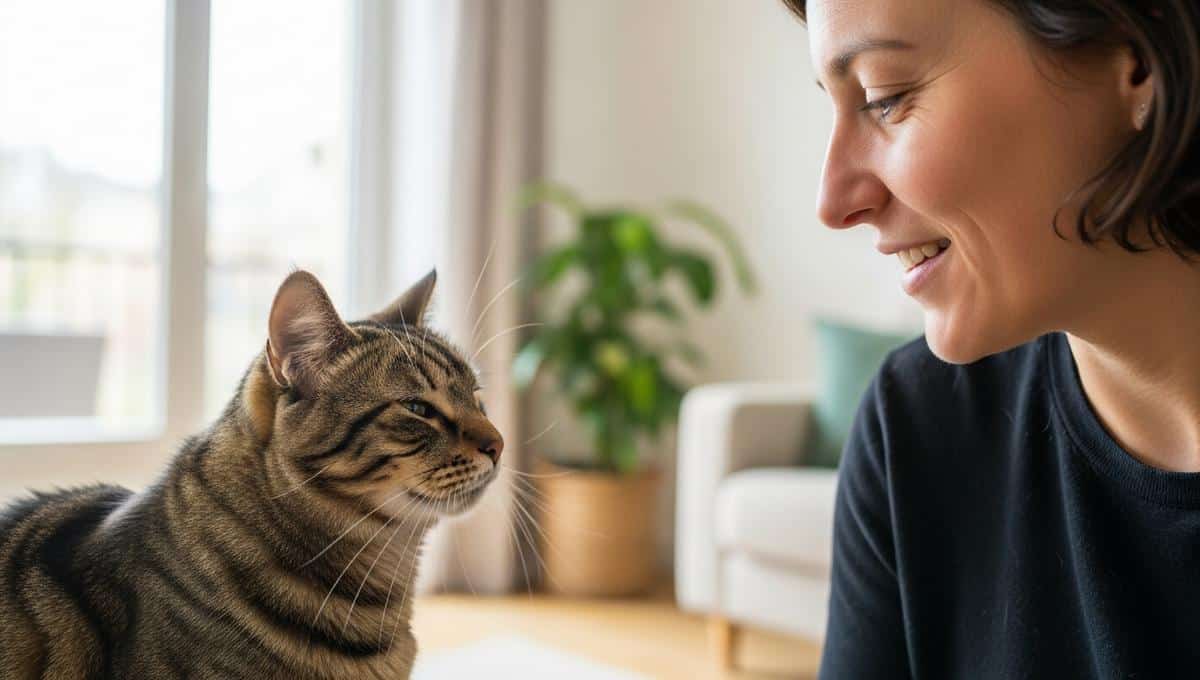
You talk, they blink, and the room feels calmer. For many guardians, talking to your cat is a daily ritual that steadies routines and deepens trust. Science and behavior insights back that feeling, yet the how and when truly matter.
Do cats like being spoken to? What the behavior says
Cats did not evolve to chat the way we do. Yet felines shape sounds for us: adult cats largely meow to humans, not to other cats. Studies suggest they recognize familiar voices and even their name. Thus, talking to your cat in a warm, calm tone becomes a reliable social cue.
Context guides the reply. During greeting, many cats raise their tail like a question mark and approach. They may trill, blink slowly, or rub your leg. As a result, a soft voice often pairs with touch and scent to confirm safety.
Kittens meow to their mother, then rely more on silent signals with peers. Humans fill that gap at home, so cats adapt. They learn what gets a door opened or a plate served. In brief, your words turn into predictable events.
« Speak softly, watch closely, and let your cat set the pace. »
How to speak so your cat actually listens
Start with their name, then pause two seconds. Also keep your voice light and slightly higher than usual. Many cats read rhythm more than words. When talking to your cat, pair phrases with a slow blink and relaxed shoulders.
To readAuxiliary heating: the most efficient type that actually saves energy in 2026Use short sentences and repeat key cues at the same time of day. For example, say “back soon” before brief exits, then follow through. Over time, predictability reduces stress. Here are 5 simple points to guide practice.
- Keep volume low and steady; avoid sudden shifts.
- Use one cue per action, and time it consistently.
- Mark calm moments with a slow blink and soft praise.
- Pair words with gentle gestures or a target spot.
- End chats before signs of restlessness appear.
Reading the reply: body language and sounds
Watch the ears, tail, and whiskers. Look for 3 signals: ears forward, tail up, whiskers soft. Therefore, keep chatting if the body stays loose. If you are talking to your cat and see a tail tip quiver near you, that signals friendly excitement.
Some replies are quiet. A slow blink is a social cue that says “I feel safe with you.” Try mirroring the blink to confirm trust. Soon, many cats will blink back and settle near you.
Vocal cues vary by cat. A trill or chirp often marks greeting and openness. A drawn-out meow can mean request or protest. Instead, a growl or hiss asks for distance and a pause.
When to hold back—and what to do instead
Silence helps during high arousal, like rough play or sudden fear. Pause speech, step sideways, and breathe. Then offer space and a path to retreat. When talking to your cat would raise tension, switch to calm stillness.
If your cat hides, reduce noise, sit low, and look away. After a moment, blink slowly and speak one short phrase. Because choice builds control, let them approach first. Reward calm with a treat or a gentle head rub.
Daily habits that make conversation meaningful
Routine turns sound into signal. Tie feeding, play, and grooming to specific words. Consequently, your voice predicts care and fun. Over weeks, talking to your cat maps onto a safe daily rhythm.
Match words with hand targets and scent. For instance, tap the mat before meals, then say your cue. Soon your cat will head to the spot on their own. Consistency reduces mixed messages and builds confidence.
To readClean walls and ceilings in minutes with this effortless technique that leaves them spotlessMind health and age. Hearing changes, pain, or cognitive shifts can alter replies. If talking to your cat suddenly fails to draw a response, seek a vet check. Therefore, gentle volume and clear timing support seniors and shy cats.
Crédit photo © DivertissonsNous