
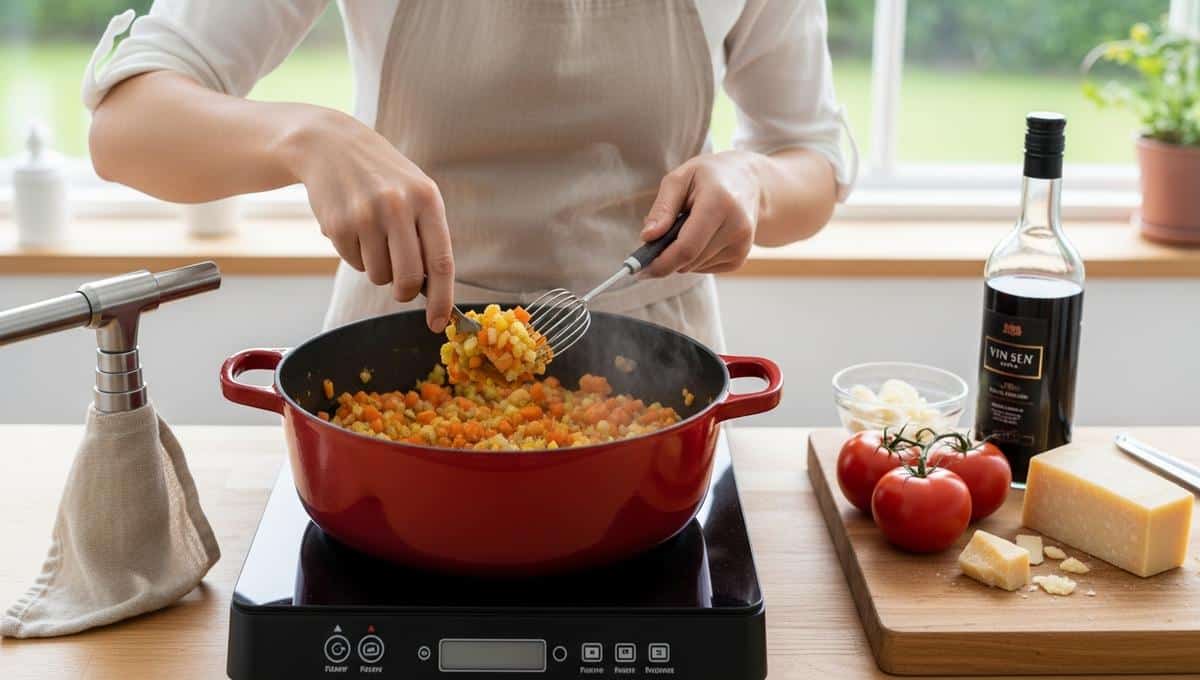
Home cooks chase comfort, yet weeknights demand speed. A great Bolognese sauce bridges both, offering depth, ease, and steady kitchen calm.
What chefs do differently, step by step
Chefs start by building flavor before the first tomato appears. They sweat a fine soffritto of onion, carrot, and celery until sweet and golden. Meanwhile, they brown meat in batches for deep fond. This patient start anchors the sauce.
Careful heat management drives both texture and taste. Low heat coaxes sweetness; high heat seals meat. As a result, juices reduce, not leak. That control shapes how the ragù hugs pasta.
Sequence matters more than you think. First the soffritto, then the meat, then the wine. Moreover, scrape and reduce before any tomato touches the pan. That order protects clarity and keeps flavors layered.
« Slow heat builds depth; haste costs flavor. »
Soffritto, browning, and deglazing: the flavor trinity
Add tomato only after aromas feel rounded and toasty. In fact, a measured hand prevents a sour edge. Many cooks enrich with milk for silk. This step softens a robust Bolognese sauce.
To readBudget shelf makeover with DIY Express elevates decor in minutesLet the pot burble gently for hours, not minutes, on a steady flame. Moreover, uncovered simmering concentrates body and scent. Stir every 20 minutes to protect the bottom. A tight lid traps steam and can thin flavor.
- Sauté a soffritto low and slow until sweet and golden.
- Brown meat in batches; leave space for even caramelization.
- Deglaze with dry wine; reduce by half for balance.
- Simmer uncovered 2–3 hours; stir every 20 minutes for safety.
- Finish with milk and butter; adjust salt only at the end.
Timing, ratios, and ingredients that move the needle
Time is the secret most people skip. Aim for 2 to 3 hours on a gentle simmer for Bolognese sauce. Consequently, collagen melts and flavors marry. Short cooks taste flat by comparison.
Balance meat cuts for nuance, not just sheer heft. Mix beef and pork 50:50 for roundness. However, a little pancetta, 50–80 g, adds depth. Grind size matters, so choose medium, not fine.
Use tomato as a partner, not the boss. For instance, limit purée to 400–500 g per kilo of meat. Then add 120–180 ml milk to mellow acidity. A modest 120 ml dry wine brightens without shouting.
Seasoning, umami, and finishing touches
Season in layers and taste often. Add salt early to the soffritto, then later to adjust. Moreover, tiny boosts help: a spoon of tomato paste, or a dash of fish sauce. Used sparingly, they deepen Bolognese sauce.
Finish the pot with a knob of butter for gloss. Alternatively, swirl in a ladle of pasta water to loosen. Parmesan rinds simmered early add gentle savor. Remove them before service, and stir freshly grated cheese.
Serving like a pro: pasta, portioning, and storage
Match the sauce to the right shape. Tagliatelle grip meat strands better than thin spaghetti. Also, cook pasta very al dente, then finish in the sauce. This move binds Bolognese sauce to each strand.
Reserve that starchy water before draining. Then loosen the pan with 60–120 ml as you toss. As a result, emulsified fat coats evenly. Serve hot bowls, and pass cheese at the table.
To readCats prefer owner-directed speech: talking to your cat in a gentle tone works bestThink beyond tonight, because flavor improves by tomorrow. Cool fast in shallow pans, then chill within 2 hours. Finally, freeze flat packs for up to 3 months. Reheat gently, and wake the Bolognese sauce with a splash of milk.
Crédit photo © DivertissonsNous