
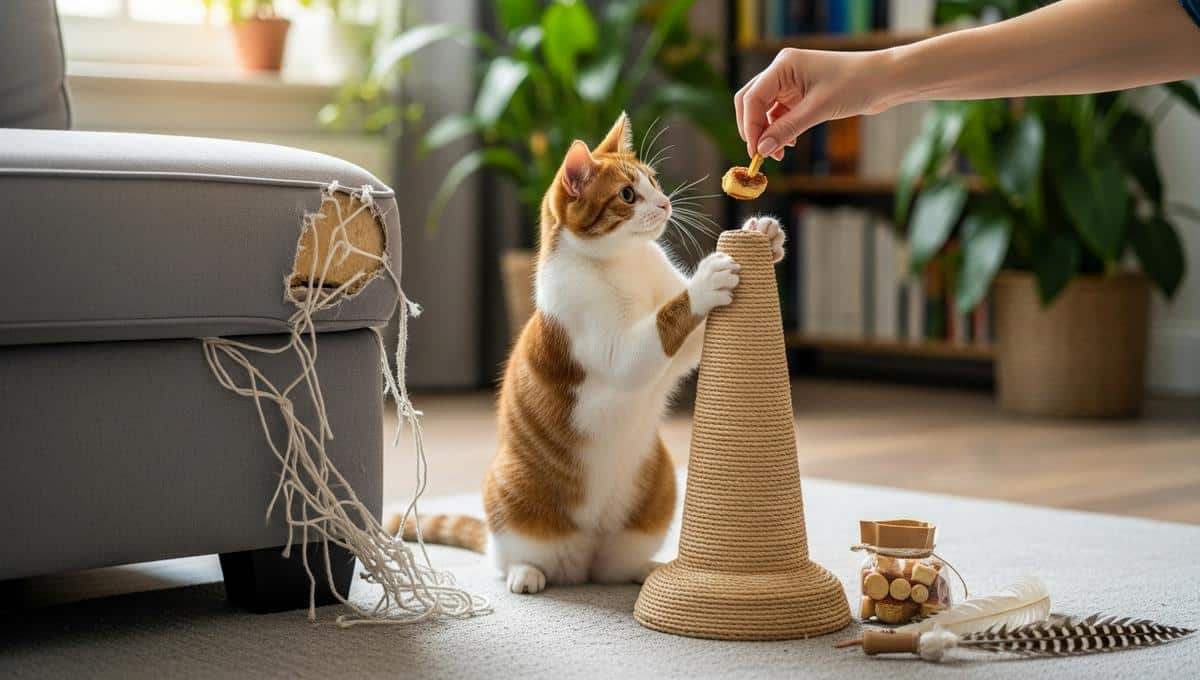
Your couch looks loved, but not by you. Every thread tells the story of a cat doing what cats do. Yet you can protect fabric and meet your pet’s needs.
Why cats scratch, and why your furniture pays
Scratching is normal feline behavior, not disobedience. It maintains claws, stretches muscles, and deposits scent signals from the paws. Therefore, it helps cats feel secure in their territory. When needs go unmet, frustration and damage can spread to multiple rooms.
Cats target sturdy, visible spots at social hubs, sometimes the side of the couch. New smells, guests, or a move can raise marking, because stress amplifies the urge to scratch. Texture matters a lot, and many cats prefer sisal, cardboard, or rough-weave fabric. So the fix begins with giving better choices where your cat actually lives and rests.
Scolding or sprays of water often backfire and increase anxiety. Instead, reward every “good scratch” on approved surfaces with treats or play. Place legal posts right next to the spots your cat already scratches. Do not punish, since fear breaks trust and slows learning.
« Scratching is a need, not naughtiness; meet the need and the damage fades. »
Set up irresistible legal scratching zones
FELIWAY — Optimum (Diffuseur) releases feline pheromone messages that promote calm at home.
Use it in the rooms with the most scratching; over several weeks, many cats show fewer stress-related marks. Always plug it away from covered outlets, and replace refills as directed.
Offer one scratching post per cat, plus one extra, so sharing never becomes conflict. Choose tall, stable posts that allow a full-body stretch and firm resistance. Therefore, anchor bases or wedge posts to avoid wobble, which cats dislike. Place vertical posts near sleeping spots and household pathways to catch natural routines.
- Put a post beside each “problem zone” to capture existing habits.
- Reward the first scratch on the new surface within two seconds.
- Refresh interest with catnip or silver vine once or twice weekly.
- Rotate cardboard pads when they flatten; retire worn gear promptly.
- Track progress with quick photos to spot patterns and wins.
Protect and manage while training
While training takes hold, protect the spots that attract claws, including the couch arm. Clear furniture guards, washable throws, and double‑sided tape reduce the payoff from scratching. Because many cats dislike sticky or slick textures, they often shift to legal posts nearby. Remove these barriers gradually as new habits stabilize.
Keep nails dull enough to limit damage between sessions. Trim every 10–14 days, pairing each snip with a treat for calm handling. Soft nail caps can help some cats for short periods, especially in rentals. Avoid declawing, since it is painful, risky, and behaviorally disruptive.
Play reduces stress and burns energy that often fuels scratching bursts. Schedule two daily play sessions of 5–10 minutes with a wand toy, then feed. Consequently, your cat rests and grooms instead of roaming for targets like the couch. End each session with a small snack to close the hunting cycle.
Reduce stress that fuels scratching
Stable routines, predictable feeding, and quiet rest zones lower arousal. Provide high perches and hiding places so your cat can choose distance. In multi‑cat homes, separate food, water, and litter to reduce friction. As a result, territorial scratching usually declines without conflict.
FELIWAY — Classic Spray helps reassure cats during changes and travel.
Spray on carriers or cleaned, marked areas, and allow it to dry before contact. Do not spray onto the scratcher you want to attract, since you want that zone to feel naturally inviting.
Placement strategies and training that stick
Put scratchers where behavior happens: near doors, windows, and seating, including the couch corner. Then add a horizontal cardboard pad in hallways for variety and quick use. Because scent matters, rub a little catnip on new gear for the first week. Move posts a few centimeters at a time if you need to refine placement.
Guide your cat to the post right after waking, stretching, or play. Say a cheerful marker word when claws touch the legal surface, then deliver a treat. Therefore, your timing links the action and the reward in your cat’s mind. Over days, increase the number of scratches before each reward.
To readCats prefer owner-directed speech: talking to your cat in a gentle tone works bestIf damage persists, look for pain or mobility issues, such as arthritis or paw discomfort. A vet exam can rule out medical drivers of restless behavior and over-marking. Give your plan 2–4 weeks, and track results before changing tools. With steady support, your cat can scratch well and your couch can finally breathe again.
Crédit photo © DivertissonsNous