
You expected clean clothes, not a puddle and a blinking light. When a washing machine refuses to drain, stress rises fast, yet most clogs are simple to clear. With care and a few household tools, you can restore flow and avoid bigger damage.
Safety first and a quick diagnosis
Start by cutting power and closing the water valve, as safety comes before speed. Because standing water can spill, place towels on the floor and a shallow basin near the service hatch. Listen for clues during the last cycle; a humming pump, gurgling sounds, or slow draining each point to different spots. Also note any error code, as it often indicates where the blockage sits.
Most clogs begin with small debris entering the drain path of the washing machine. Coins, hairpins, lint, and fabric threads gather in the filter and around the pump. Therefore, a systematic approach works best: clear the filter, check the pump turbine, and verify the hose. If water smells stale, trapped residue likely feeds bacteria inside the drain circuit.
Accessing the filter and pump without flooding
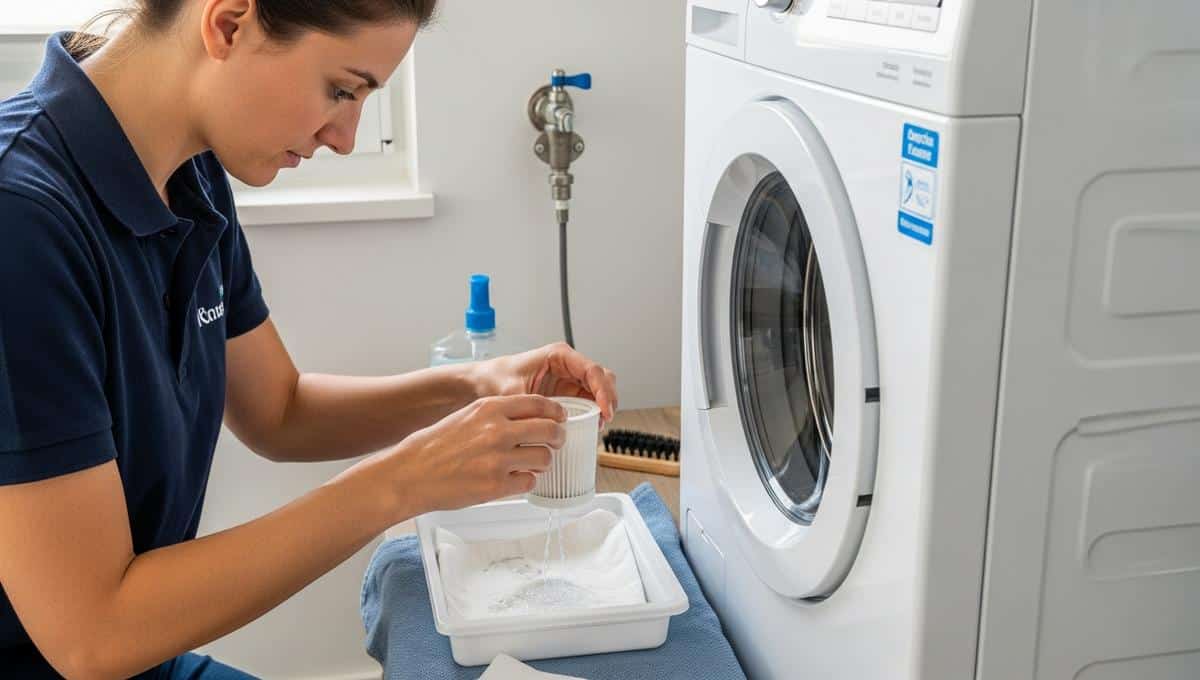
Open the maintenance flap and slide a basin underneath. Many machines include a small drain tube; pull it out and release water slowly to reduce mess. Then unscrew the filter cap carefully, as residual water may still pour out. Clean the filter under hot water and remove visible lint, threads, and foreign objects.
« Small obstructions cause most drain failures; patient cleaning usually restores full flow. »
Shine a light into the pump housing and locate the pump impeller. Gently rotate it; it should move freely with slight resistance. If jammed by a rubber band or a button, remove the item with tweezers. After re-seating the O-ring and tightening the cap, run a brief drain to confirm the washing machine empties as expected.
Hoses, drawer, and drum: clear the path
Next, focus on the drain hose, as this long run loves to trap sludge at bends. Detach the hose from the trap or standpipe and flush it with hot water. A soft snake or flexible brush clears compacted lint safely. Also check for kinks or a crushed section, since restricted flow can mimic a clog inside the machine.
- Cut power and close the water valve.
- Place a basin and towels under the access hatch.
- Open the small drain tube to release water slowly.
- Rinse the filter under hot water and brush lint.
- Spin the pump impeller by hand to confirm movement.
Then pull out the detergent drawer and wash every channel. Dried powder and softener gel form hard deposits that narrow the feed and return paths. Soak parts in warm water, brush residue, and clear the small spray jets at the top of the cavity. Refit the drawer only when all pieces are fully dry.
To readBudget shelf makeover with DIY Express elevates decor in minutesLook around the drum and the door seal for trapped socks, labels, and pet hair. Because the bellows collects grime, wipe it with a cloth and mild soap. After reassembly, run an empty maintenance cycle at 60 °C to dissolve grease and biofilm. This hot rinse often restores fresh smells and helps the washing machine drain more freely.
When to suspect the pump or a sensor issue
If the pump hums but water does not move, the turbine may be damaged or the motor weak. In that case, manual spinning may feel rough or uneven. Therefore, replace the faulty pump or seek professional service before it fails mid-cycle. For safety, avoid electrical tests unless you are trained.
Repeated over-sudsing can also confuse water-level sensing and stall draining. As a result, the cycle may pause or loop without progress in the washing machine. Reduce detergent and choose a cycle that fits the load weight and soil level. If symptoms persist despite cleaning, a technician can test components quickly.
Simple habits that prevent future clogs
Empty pockets before every wash, since coins and keys migrate straight to the filter. Use a mesh bag for small items like baby socks or lingerie. Because hard water and low-temperature cycles build residue faster, alternate with warmer washes when fabrics allow. Finally, wipe the door seal after laundry day to keep moisture in check.
Right-size your detergent, as too much foam carries lint into the drain path. Choose a quality powder or a measured liquid dose, then increase only for very dirty loads. Once a month, run an empty hot maintenance cycle at 60 °C to clear soap film and oils. Keep the door and dispenser slightly ajar so the washing machine can dry between cycles.
Set a reminder to clean the filter every 2–3 months, or sooner if you have pets. Rinse the drawer and the rubber seal monthly for consistent flow. Check the drain hose once a year for kinks, cracks, or heavy buildup. With these habits, small actions protect your floors, your clothes, and your nerves.
To readCats prefer owner-directed speech: talking to your cat in a gentle tone works bestCrédit photo © DivertissonsNous