
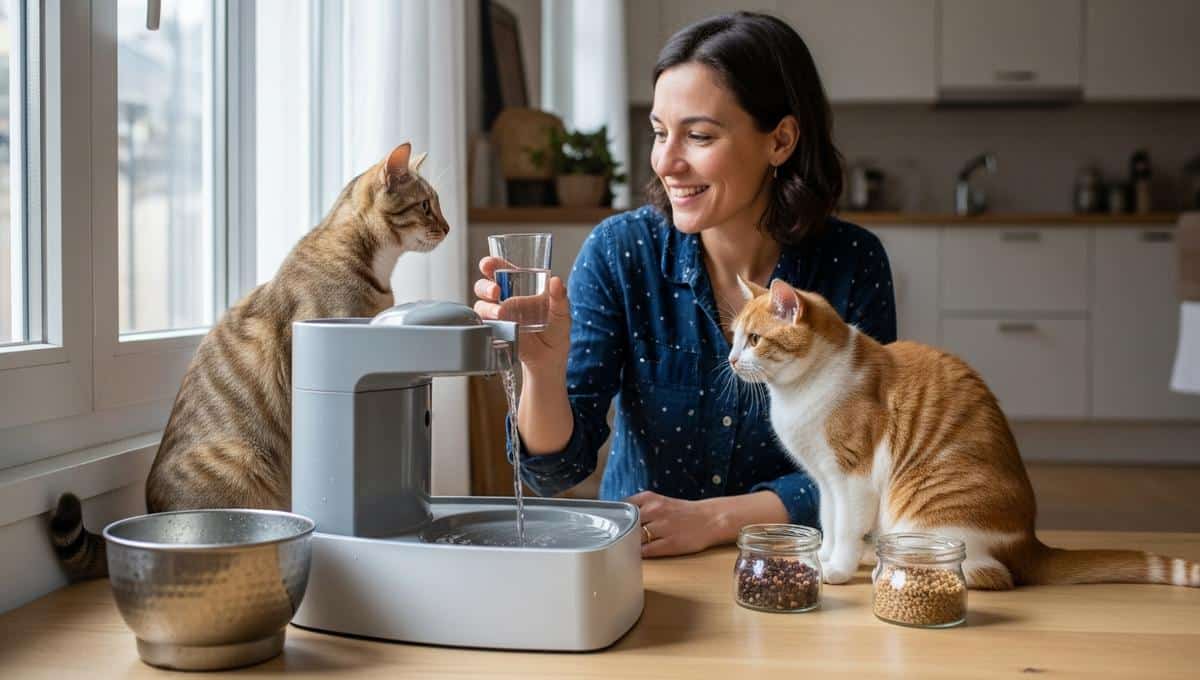
Many cats sip less water than their bodies need. As a result, small daily habits can change hydration more than gadgets. This report weighs bowls, fountains, and feeding tweaks to protect kidneys and the urinary tract.
Why bowl drinking often falls short
In the wild, felines meet much of their fluid through prey. Therefore, a low thirst drive persists indoors and a plain bowl may not tempt cats. Chlorine smells, room noise, and stale water further reduce interest. Placement near food or litter can also deter drinking.
Shape and texture matter, too. Wide, shallow dishes limit whisker stress and help steady sipping. In contrast, scratched plastic can trap odors and bacteria; glass or stainless steel stay neutral. Fresh, cool water placed away from busy paths invites more visits.
Do pet fountains really solve it?
Moving water attracts many pets, yet a fountain is not a cure-all. Some cats drink more when a gentle stream mimics a brook. Others ignore the hum, or they dislike new hardware on their turf. Cost and upkeep also influence real-world success.
« Flowing water helps some felines drink more, yet consistency matters. »
You still need a cleaning routine. Parts gather biofilm quickly, especially with dusty rooms or shedding seasons. Aim to wash parts every 3–7 days and replace filters about every 2–4 weeks.
Track outcomes instead of guessing. Check urine clump size if you use clumping litter, and note daily refills. Total fluid needs often sit near 50–60 mL/kg/day, roughly ~200–240 mL/day for a 4 kg cat, including food moisture.
- Offer fresh water in more than one quiet spot
- Use wide, shallow bowls made of steel or glass
- Rinse and refill daily to limit off smells
- Clean fountains weekly; change filters on schedule
- Feed wetter meals to boost total intake
Food as the strongest lever
Moisture in meals drives the biggest change. Wet food often contains 70–80% water, so every bite hydrates. For many cats, this single switch reduces urinary concentration and strain.
To readBudget shelf makeover with DIY Express elevates decor in minutesTry gradual shifts if your pet prefers kibble. Add a spoon of warm water or broth without onion, garlic, or salt, then increase slowly. Short, frequent meals can raise daily sipping because the bowl stays interesting. Therefore, mealtime becomes a hydration cue.
Watch sodium and phosphorus claims on labels. Therapeutic diets are designed for specific conditions and need veterinary guidance. Instead, focus on digestibility, moisture, and steady weight to support long-term kidney health.
Placement, routine, and behavior cues
Environment shapes daily choices. Provide 2–3 water stations, and keep them away from food, litter, and busy doors. Many cats prefer quiet corners with space to stand sideways. A small mat prevents splashes and helps tracking.
Households with multiple pets need redundancy. Separate resources prevent guarding, which can block access at peak times. Rotate bowls during laundry day and sanitize them in hot water. Also, refresh water every morning to limit chlorine taste.
How to choose and maintain your setup
Pick gear that fits your routine. Select dishwasher-safe parts, a removable pump, and a low-noise rating for night comfort. For cats, a gentle stream or ripple often works better than a tall jet.
Mind minerals and scale, especially in hard-water regions. Rinse parts after each wash, and descale with diluted vinegar monthly. Replace worn tubing and seals so flow stays smooth and quiet.
Hygiene is a habit, not a weekend project. Set calendar reminders to wash bowls and change filters on time. When traveling, use a gravity dispenser and ask a sitter to refresh water midweek.
Signals that warrant a veterinary check
Hydration changes can flag disease, not just habits. Call your clinic if you see more frequent urination, straining, or blood in the litter. Sudden thirst, weight loss, vomiting, or lethargy also require prompt testing.
Clinics can run urine specific gravity, chemistry panels, and blood pressure checks. Early action protects kidneys and lowers the risk of blockages. Finally, ask about diet adjustments and stress management at the same visit.
Practical takeaways for everyday homes
Start simple and measure results. Offer fresh water in several calm spots and clean contact surfaces on a schedule. Because small wins add up, track refills and litter clues for a month.
Build hydration into feeding. Serve wetter meals, then fine-tune texture and temperature until your pet finishes calmly. Consider a fountain if you can commit to cleaning and filter changes.
To readCats prefer owner-directed speech: talking to your cat in a gentle tone works bestEvery household is different, and routines evolve. Choose the tools you will maintain, not the flashiest gadget. With steady care, most cats can meet daily fluid goals and stay comfortable year-round.
Crédit photo © DivertissonsNous