
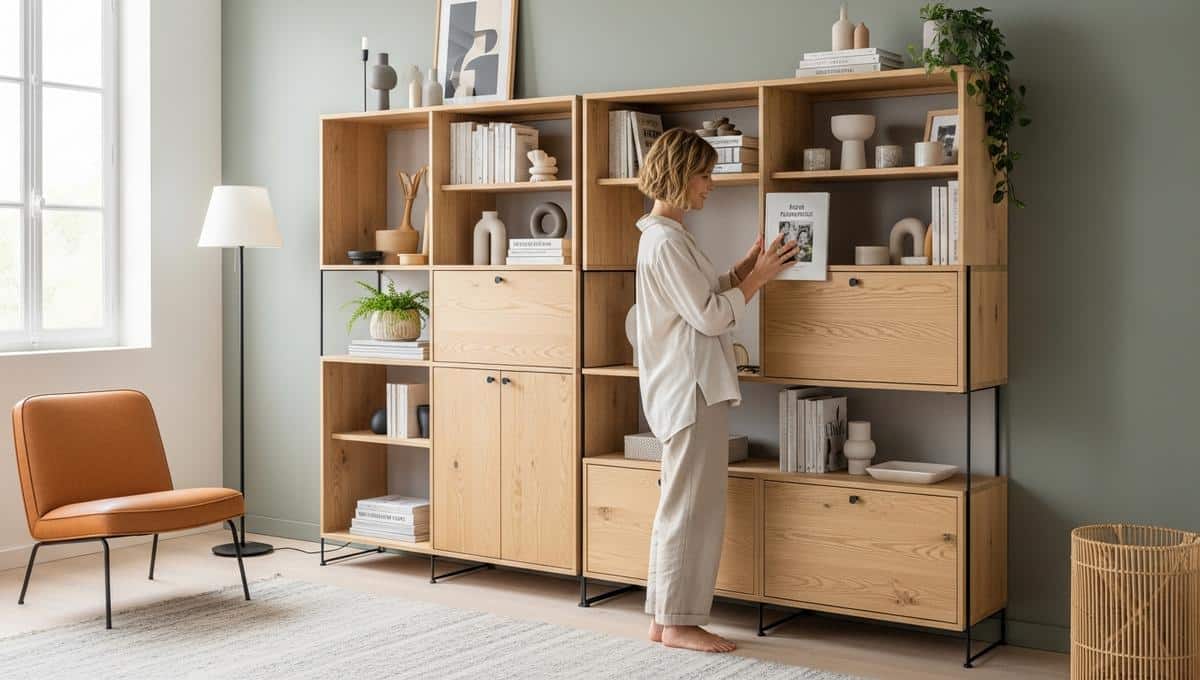
In 2026, designers across Europe say the once‑ubiquitous low sideboard is losing ground. Households want storage that climbs the wall, saves floor space, and adapts to busy routines, and that shift is redefining trendy furniture. Here is how taller cabinets and modular storage walls quietly take over living rooms, dining corners, and compact studios.
Why the low sideboard is stepping aside in 2026
Small homes and hybrid living push storage to work harder, and height is the easiest win. A modern highboard or a slim cabinet frees circulation at floor level while adding two or three extra shelves within the same footprint. As a result, plates, linens, tech, and even files fit in one tall unit. In short, 2026 favors vertical storage over sprawling credenzas.
Open‑plan rooms also change the equation. A taller piece helps zone space without blocking light, while its top remains at a comfortable height for lamps or art. Meanwhile, a low buffet often feels lost against high ceilings and wide walls. With a highboard, you create an anchored visual line and gain useful height.
Modular cabinets bring even more flexibility. You can start with a base element and add a hutch, a narrow tower, or a glazed unit for glassware. Therefore, the same family of pieces can move from entryway to dining room, then to a home office. That adaptability sits at the heart of today’s trendy furniture.
« The right storage doesn’t just hold things; it reshapes how you live in a room. »
How to choose the right replacement
Begin with what you store today, not a vague wish list. If you host often, prioritize deep shelves and a protected spot for fragile items. If you work from home, choose a cabinet with hidden cable pass‑throughs and adjustable shelves. Then, measure door swings and walkway width, because tall pieces need safe clearances.
To readAuxiliary heating: the most efficient type that actually saves energy in 2026BestMobilier — Come – buffet bas – effet bois – 2 portes, 1 tiroir et 1 niche – 150 cm brings a clean, media‑friendly profile. For rooms that still demand a low line, its 150 cm width and mixed storage keep consoles, remotes, and books tidy.
- Map your storage by category before you shop.
- Check wall anchoring options for tall units.
- Confirm shelf adjustability for dishes and files.
- Plan cable routing for routers and speakers.
- Test door clearance and traffic flow in tight spots.
Finish choices do heavy lifting in busy spaces. Fluted wood softens light, while matte lacquer hides fingerprints in family homes. Glass doors display ceramics yet keep dust off. For balance, choose slim metal legs to raise mass from the floor and keep cleaning easy, a detail that often seals the appeal of trendy furniture.
From dining room to micro‑studio: where the highboard shines
In a dining zone, a tall cabinet stacks plates, serving bowls, and table linens without spreading across the wall. In a living area, a highboard can flank the TV and hold routers at eye level, so you reduce bending and cable clutter. And in a studio, one narrow tower doubles as pantry by day and bar by night. That performance‑per‑square‑meter is why many consider it the smart face of trendy furniture.
Oviala — Dario offers a clean silhouette that suits a bright dining corner or a compact hall. Its balanced design pairs neatly with woven chairs or a metal table base.
Bedrooms gain, too. A shallow cabinet frees floor area around the bed, yet it stores sweaters and boxes upright. Because shelves sit higher, you see everything at a glance and fold faster after laundry day.
Sustainability and safety come to the fore
Material choices matter when furniture grows taller. Look for solid or engineered wood from certified sources, and seek low‑VOC finishes for healthier indoor air. For longevity, metal hinges and full‑extension runners reduce repairs and noise. As a result, the best trendy furniture feels sturdy today and ages well over years.
Oviala — Marius brings a calm look that works in soft, neutral schemes. Its practical layout fits mixed storage, so seasonal items and daily essentials share the same footprint without fuss.
Practical setup: sizing, anchoring, and flow
Measure the wall in three places: floor, eye level, and near the ceiling, since older walls sometimes lean. Then, note skirting boards and sockets that affect depth. Aim for at least 60–75 cm of clear walkway in front, so doors open without bumping chairs or knees. For glass doors, confirm they do not reflect direct sunlight into seating.
Secure tall units with wall fixings rated for the surface, whether brick, plasterboard, or concrete. Consequently, you prevent tipping risks in homes with children or pets. If you plan to hide tech, route power first and mark grommet locations before assembly. That planning step keeps wiring safe and preserves the look of your trendy furniture.
To readClean walls and ceilings in minutes with this effortless technique that leaves them spotlessStyle follows function once the layout is set. Group objects by height to calm the eye, and leave some negative space on shelves. If you love color, pick one accent repeated twice across the cabinet to knit the display together. Finally, keep a microfiber cloth in the top drawer so weekly care takes seconds, not hours.
Crédit photo © DivertissonsNous