
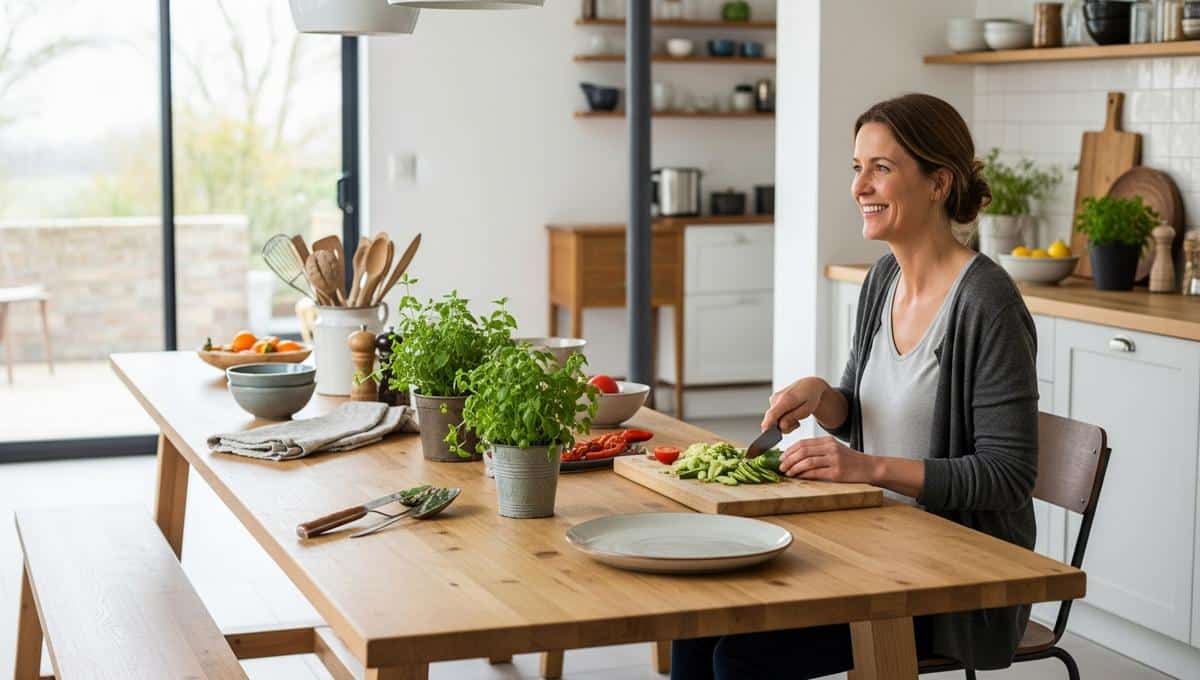
Across design forums and family chats, one debate keeps returning: should you keep the island or reclaim open space in the kitchen? A recent French home story sparked fresh reflection by showing how a different piece of furniture brought warmth back to daily life. For many households, this choice blends emotion, budget, and safety.
Why removing an island can feel right
Islands promise storage and showpiece looks, yet they can block movement and eye contact. When you trade that block for a table, people naturally face one another. Thus, conversation rises and noise drops. In fact, circulation improves when you keep a clear path of 36 inches/90 cm around key zones.
Seating height matters for comfort. Bar stools often cut chats short, while a table at 29–30 inches/74–76 cm invites longer meals. As a result, kids linger, do homework, and share stories. The room starts working for life rather than display.
The social effect of a table in the heart of the home
Families often describe the same change: less hovering, more gathering. Instead of perching in a line, people sit in a circle and share dishes. Also, a single table doubles as prep bench and craft station. Light spreads better too when large cabinetry no longer blocks sightlines.
« Conversation returned the day the island left, and dinner slowed down to a human pace. »
Designers quantify the shift. A low table can add 10–15% more usable surface for mixed activities across the day. Meanwhile, the room sounds softer because stools no longer scrape at counter height. This social reset can anchor a kitchen to everyday needs.
Flow, safety, and the hidden costs many overlook
Big islands look practical, yet cooking on them raises issues. When a cooktop sits in the center, you must plan a hood, power, and clearances. Also, ducting through ceilings adds cost and noise. For many apartments, a table near a wall outlet is simpler and safer for little hands in the kitchen.
- Keep a 36–48 inch walkway where people pass most.
- Plan the sink–hob–fridge triangle with legs of 4–9 feet each.
- Use heat-resistant trivets to turn a table into a safe prep zone.
- Choose rounded edges to protect kids at mealtime and playtime.
- Test movement with painter’s tape before buying new furniture.
Numbers reveal trade-offs. A custom island with utilities often starts near $3,000–$6,000 before surfaces, ventilation, and lighting. By contrast, a sturdy table plus a slim sideboard can land far lower. Therefore, you free budget for quality pans, better lighting, or acoustic panels.
To readHydrangeas covered in blooms this spring start with one simple winter pruning stepStorage can still thrive without a block in the middle. Consider a long sideboard, a high-capacity drawer stack, or a shallow pantry with pull-outs. Also, a rolling cart offers seasonal flexibility for baking or holiday prep. A lighter footprint keeps cleaning easy and reduces tripping risks in tight homes.
When an island still earns its spot
Some rooms do need a central anchor. Large spaces with multiple cooks benefit from a compact, purposeful block. However, sizing is crucial: allow 40–48 inches clearance on busy sides. If the gap shrinks, bumps and spills rise fast.
Special tasks can justify the footprint. For example, pastry lovers enjoy a cool stone slab with drawers for tools. As a result, cleanup is fast and flour stays contained. Even so, test a smaller mobile station before committing to full utilities.
How to make the switch with confidence
Start with tape on the floor and a weekend trial. Map the previous island and your proposed table; then walk, carry bags, and unload dishes. Also, time how long common tasks take. If you bump elbows, adjust the plan before spending.
Next, choose a table that works hard. A finish that resists heat and stains stands up to daily prep. Thus, you get the function of a workbench without the bulk. Add a bench on one side to slide in more guests without new chairs.
Finally, design the wall gear to hold what the island once stored. Peg rails, magnetic strips, and deep drawers keep tools at hand without clutter. Meanwhile, a narrow console at 15–18 inches depth can hide mixers and small appliances. This setup preserves rhythm while keeping the room calm.
To readOutdoor materials that age badly and waste your money: 5 to avoid in 2026Crédit photo © DivertissonsNous