
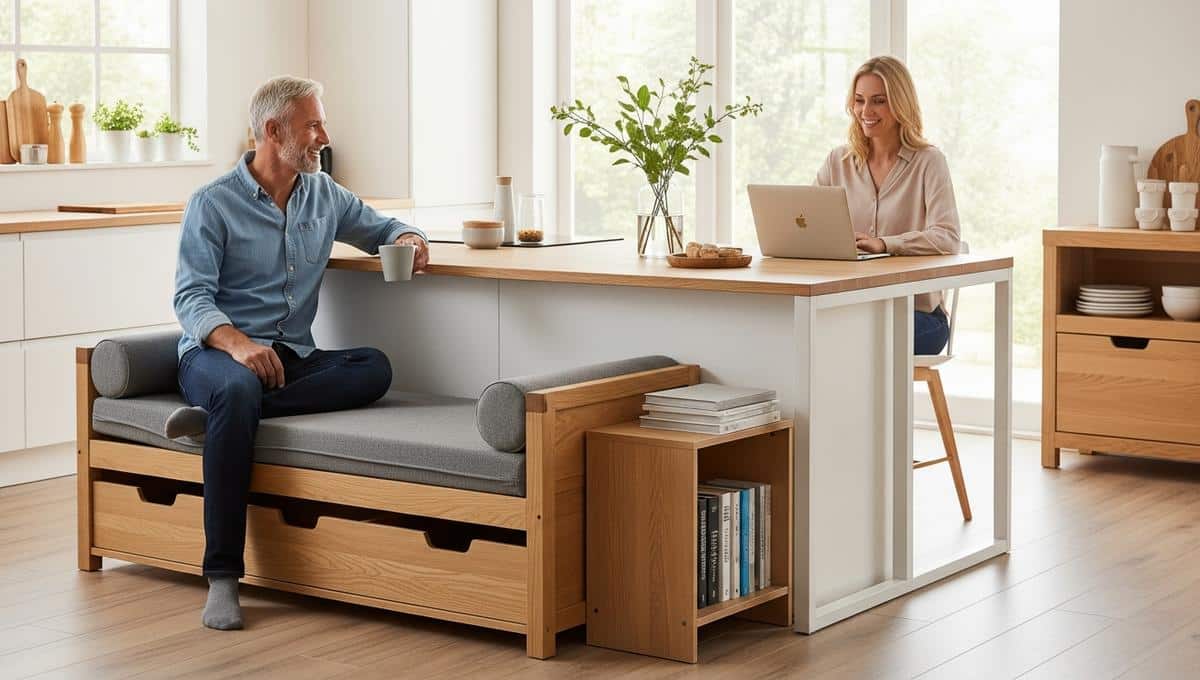
Bar stools had a great run, yet many homes now crave user-friendly furniture that actually fits daily life. As kitchens evolve in 2026, comfort, safety, and easy care drive choices more than showpiece silhouettes.
Are bar stools losing their shine in 2026?
Design pages still love a tall perch, yet real kitchens tell a different story. People cook, work, and help with homework at the same counter; therefore, stable seating with back support wins. In many homes, tall stools sit unused because they feel wobbly or awkward. By contrast, lower, supportive chairs keep people at the table longer.
The French home-advice press points to a clear shift: pick what serves the routine, not the photo. In practice, that means fewer precarious bar stools and more flexible, comfortable solutions. Materials matter too; thus, wood with rounded edges, soft textiles, and wipeable finishes gain ground. For families and renters, that change reads as relief rather than trend fatigue.
What replaces the classic perch?
Several options step in, and each one focuses on simple, everyday wins. Counter-height chairs with low backs match kitchen islands without towering over them. Built-in breakfast bars and compact banquettes bring storage, stability, and warmth. As a result, the conversation shifts from style labels to user-friendly furniture that welcomes longer sits.
« Comfort now sets the brief: seats that hold up to real meals, real laptops, and real weeknights. »
Height is the first decision. Kitchen counters usually sit around 90 cm, while classic bars are about 105 cm. For counters, look for seat heights near 60–66 cm; for bars, it is closer to 74–76 cm. Leave roughly a hand span between the seat and the underside of the counter for knees.
How to choose seating that actually works day to day
Start with comfort you can measure. You want a gentle lumbar curve, a stable base, and a footrest that meets your leg, not your shin; consequently, you sit straighter and stay longer. If floors are uneven, adjustable glides help keep the seat level. As needs change, user-friendly furniture with stackable or foldaway options saves space without drama.
- Test seat height against your counter before you buy.
- Check wobble: four points of contact should touch the floor.
- Favor rounded edges and a footrest you can reach.
- Pick finishes that wipe clean in seconds.
- Try a backrest; backs usually extend dwell time.
Think about how people actually move in your kitchen. Pathways near the fridge and oven need clearance; therefore, a slimmer footprint often beats a plush but bulky seat. Swivel can help in tight spaces, although it should not swing into cabinet doors. When in doubt, tape out the footprint to scale and walk it.
Maintenance should be painless. Fabrics with stain protection, sealed wood, and powder-coated metal handle splashes and crumbs. Rattan and cane bring texture; however, they need gentle cleaning and occasional dusting in the weave. If you cook often, smooth, closed surfaces make the nightly wipe-down faster.
Real-world pairings that beat the old bar stool setup
Nunuhai — Set of 2 rattan bar stools 68 cm (Bar stools; H68 cm; €195.49) offers a warm, natural look with a versatile mid-height seat. The pair suits counter-level nooks and small kitchens; therefore, they bridge the gap between high bars and dining chairs without overpowering the room.
To readHydrangeas covered in blooms this spring start with one simple winter pruning stepLayout matters as much as the seat. Pair two counter chairs at the island for quick breakfasts, and keep a folding bench nearby for gatherings. Because kids and guests turn naturally toward the cook, a low back keeps sightlines open. In turn, this kind of user-friendly furniture helps the kitchen feel social instead of cramped.
Safety, ergonomics, and small-space smarts
Good ergonomics start at the feet. A reachable footrest reduces pressure on the lower back; thus, you avoid the “perch and fidget” effect. Slightly wider seats improve balance without hogging floor space. For tall users, a deeper seat pan helps thighs rest evenly.
Stability deserves attention, especially on hard floors. Look for a broad base, cross-bracing, or a discreet anti-tip profile; as a result, the seat stays put when someone shifts weight. Felt pads cut noise and protect floors. Meanwhile, a matte finish hides scuffs better than gloss.
Finally, think long term. Pieces that assemble cleanly and tighten with standard tools stay solid for years. Replaceable glides and removable covers extend service life, which supports budgets and the planet. With user-friendly furniture as your filter, you avoid one-season buys and build a calmer kitchen routine.
From fast breakfast to long evening: getting the mix right
A two-height setup can serve the day. Keep a couple of counter chairs for quick tasks, then use a compact table nearby for longer meals. Because each zone does one job well, people sit where they are most comfortable. Consequently, meals feel less rushed and screen-free time lasts longer.
Back support still pays off. A low, curved back stabilizes posture without blocking views. If you prefer an open stool, add a cushion with a non-slip base; in many cases, that tiny detail adds twenty more minutes of comfort. This is where user-friendly furniture proves its value without stealing attention.
What this means for 2026 kitchens—and your next move
Trends come and go, yet weeknight reality sets the rule. In 2026, fewer households want teetering height and more want calm, supportive seating. Therefore, counter-level solutions, compact banquettes, and convertible sets make practical sense. Choose finishes you can clean fast and shapes that invite conversation.
Renters can act without drilling. Slim counter chairs tuck under most islands, and lightweight pieces move easily during a lease. For hosts, a folding console that becomes a dining table covers holidays and game nights. Because plans change, modular parts keep options open.
To readOutdoor materials that age badly and waste your money: 5 to avoid in 2026Homeowners can commit to built-ins or hybrid layouts. A narrow breakfast ledge with two counter chairs handles coffee and laptops, while a small round table extends the space for guests. By treating every seat as user-friendly furniture, you align design with daily care, noise control, and posture. In the end, your kitchen works harder, looks quieter, and welcomes everyone without fuss.
Crédit photo © DivertissonsNous