
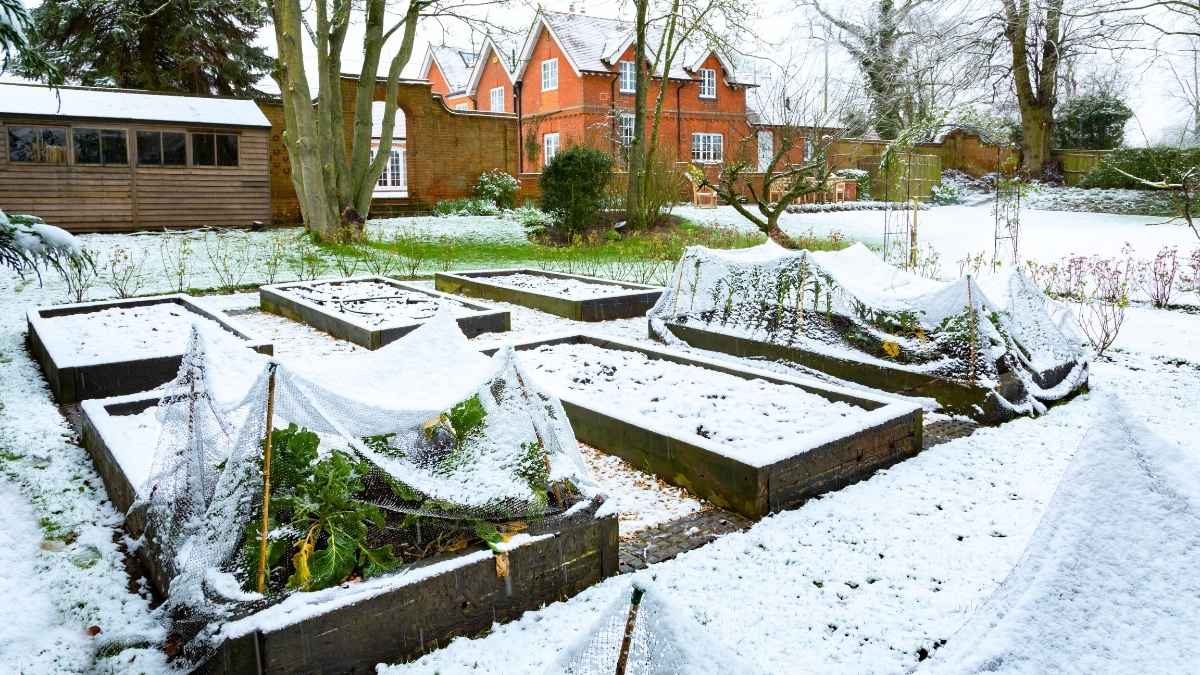
Winter arrives, and your vegetable garden looks silent under snow. Yet that cold can be turned into a quiet ally with simple moves. Here is how to protect crops while keeping soil life active.
Snow, a shield more than a threat
Snow acts like a natural blanket that traps air. As a result, it limits sudden freezes at the soil surface. In many cases, the vegetable garden benefits when you leave this cover in place. Keep paths clear instead, and mark rows to avoid trampling.
Wet accumulations can snap cabbage leaves and young branches. Gently shake plants to shed excess weight before night. However, avoid digging or raking frozen beds. Use a board to step on, so pressure spreads as you move.
Smart protection layers: mulch, cloches, and timing
Organic mulch keeps the topsoil buffered and alive. Moreover, dry leaves, straw, or shredded stems protect roots from thermal shocks. Do not bury collars, so humidity can escape. On frost‑free afternoons, check moisture under covers and adjust lightly.
« Cold is not the enemy of a well-prepared plot. »
Small cloches, tunnels, and cold frames add a calm microclimate. Open them on sunny breaks to release condensation. This rhythm limits rot on salads and herbs. It also hardens plants for the next chill.
The discreet power of winter fleece
A winter fleece (voile d’hivernage) is a light fabric. It lets rain and light through, while cutting wind. Thus leaves lose less heat and stress. Over tender rows, it can keep air beneath a few degrees warmer in the vegetable garden.
- Fix edges well, so gusts cannot lift the fabric.
- Keep it slightly arched, preventing wet leaves from touching.
- Brush off snow gently and reset the anchors after squalls.
- Combine it with mulch to stabilize day‑night swings.
- Store it dry and folded, away from sharp tools.
Voile d’hivernage with no brand specified offers a plain, effective shield. No variants or price are attached; it simply protects tender rows while letting light and rain pass.
To readFork trick keeps cats and birds away from your vegetable garden seedlingsLift the fleece on mild days to ventilate. Then dry it before folding to avoid mildew. Pair it with a generous mulch for stable soil temperature. Avoid leaf contact when foliage is wet, to reduce disease.
Harvest timing and hardy choices
Leave carrots, leeks, and parsnips in place under mulch. During short thaws, harvest only what you need. This steady pace preserves quality and reduces waste in the vegetable garden. Keep a hand fork by the bed for quick pulls.
Choose tough winter staples like kale, savoy cabbage, mâche, and spinach. If a brutal snap arrives, add a second layer over the most tender trays. Meanwhile, avoid walking between rows when soil is glassy. Use boards or fixed paths to protect structure.
Seven low-tech moves for cold waves
From the season’s field notes, here are 7 tips that change outcomes. Leave snow as a shield, and brush only heavy loads. Build thick mulch, and set windbreaks where gusts funnel. Then add a cover, and plan harvests by the week for a resilient vegetable garden.
Raised or well‑drained beds stay safer after sleet. Therefore, surface water runs off instead of freezing around collars. As a result, tools bite soil cleanly, and roots breathe. Keep a simple log for your vegetable garden, and note dates, lows, and what worked.
Finally, watch forecasts 24–48 hours ahead and stage your actions. For example, close covers before dusk, and pin fleece before wind rises. Then clear slush from paths at midday, reducing night ice. Small, early moves keep the vegetable garden steady through winter.
To readThis gardener ditches plastic in his vegetable garden and replaces it with what he already had at homeCrédit photo © DivertissonsNous