
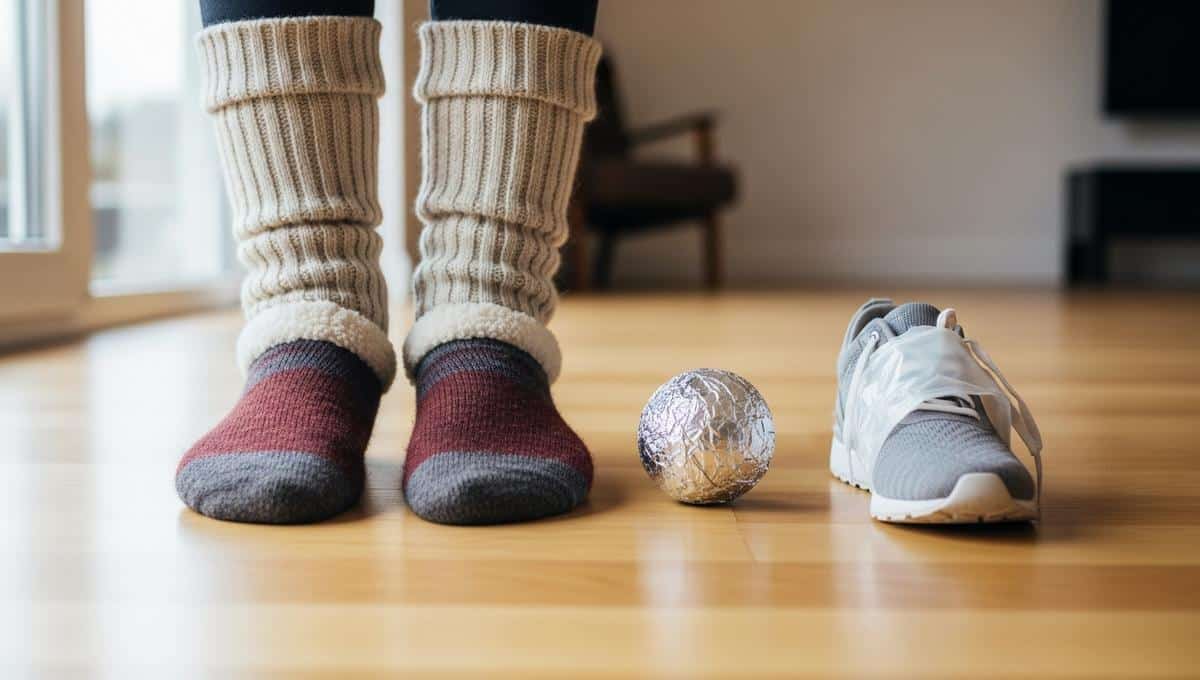
When icy wind bites, even short errands feel daunting. Many are tempted by viral tricks for the fight against the cold, including the buzz about aluminum foil around socks.
Does aluminum foil around your feet really keep you warm?
At first glance, the idea seems clever and cheap. A shiny surface reflects heat, so it must help, right? Recent French fact-checking examined this seasonal hack with care. The verdict is more nuanced than a quick yes or no.
To understand why, consider three ways the body loses heat: conduction, convection, and radiation. Foil mainly reflects radiation, not the other two. Inside a shoe, conduction to the ground and convection in the shoe space matter more. Thus, a thin metal layer brings limited benefit in everyday walking.
Moisture changes everything. Sweat soaked into socks increases heat loss fast, and foil can trap that dampness. Then feet feel colder, not warmer, as evaporation chills skin. In fact, tighter boots or layers further reduce circulation, which lowers warmth.
« Aluminum foil is no shortcut to warm feet; dry layers and circulation win. »
What the science says about heat, sweat, and circulation
Water conducts heat far better than air, so wet socks drain warmth quickly. Moreover, a thin foil wrap can crinkle and rub, creating hot spots or blisters. By contrast, breathable fabrics move vapor away from skin. That difference often decides the fight against the cold at toe level.
To readAuxiliary heating: the most efficient type that actually saves energy in 2026Warm feet rely on small air pockets in fabric, not metal contact. Also, cramped toes struggle to stay warm because blood flow drops. As a result, any hack that tightens the fit works against you. Instead, think about drier fabrics and space for toes to wiggle.
- Prioritize dryness over any reflective gadget.
- Keep room in your shoes for blood flow.
- Use layers that manage moisture well.
- Change into fresh socks when they get damp.
- Test your setup indoors before long outings.
Safer ways to warm your feet outdoors
Start with a smart sock system. Use a thin, wicking liner under a mid-weight wool sock for balance. Two layers let moisture move while holding warm air near skin. This simple setup beats a foil wrap in most daily scenarios.
Shoes matter as much as socks. Choose a wind-resistant upper and a grippy, insulating sole. Moreover, a roomy toe box prevents compression and preserves warmth. If you add a reflective insole, choose a product designed for footwear, not kitchen foil.
Movement helps more than most quick fixes. Periodically wiggle toes and flex ankles to boost blood flow. Meanwhile, plan short indoor breaks to dry out if needed. That routine supports a steady fight against the cold without risky shortcuts.
Where aluminum foil still has a place
Emergency “space blankets” use reflective film to reduce radiant heat loss. They can help during brief, still moments, especially if wind cuts through layers. However, feet inside shoes face different physics and moisture demands. That is why foil shines in emergencies, not in daily commuting.
For shoes, a DIY foil wrap often causes friction, damp buildup, and noise. Consequently, it rarely improves comfort over time. Purpose-built insoles and liners solve the same problem with fewer downsides. As always, test changes at home before a long winter trek.
Key takeaways for a smarter winter routine
There is comfort in simple, verified habits. Keep feet dry, maintain circulation, and trap warm air with good fabrics. Therefore, think of foil as a reflective surface, not a substitute for insulation. That mindset supports a steadier fight against the cold from street to trail.
Focus on controllable basics that matter daily. Dry socks, a breathable mid-layer, and a roomy fit carry you far. Plus, plan for breaks and carry a spare pair in a zip bag. These steps make winter walks calmer and safer.
Aluminum foil can look clever, yet context is everything. In fact, science favors materials that manage moisture and preserve air pockets. Moreover, warmth comes from blood flow and smart layering, not a reflective wrap alone. Use reflective tech where it was designed, and skip it where it hinders.
To readClean walls and ceilings in minutes with this effortless technique that leaves them spotlessWinter demands patience, not gimmicks. So test your kit, adjust one change at a time, and listen to your feet. Finally, small choices add up to lasting comfort in the daily fight against the cold. Warmth follows preparation, and preparation beats any quick fix.
Crédit photo © DivertissonsNous