
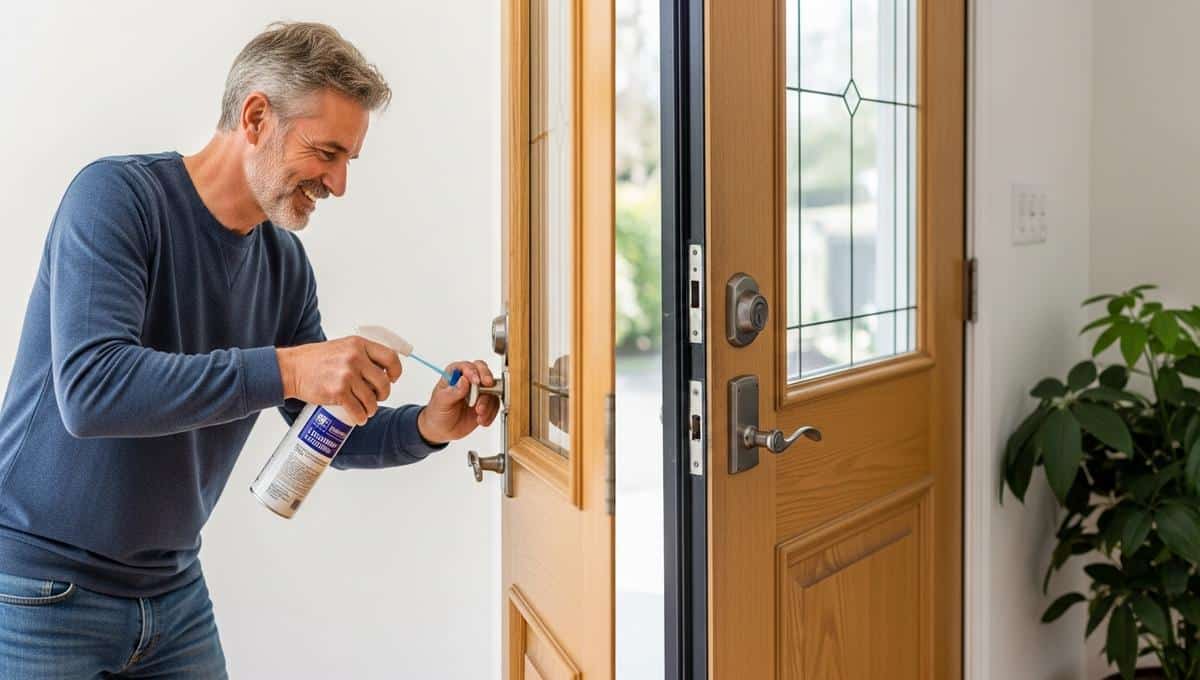
When a lock sticks, daily life stalls at the doorstep. Yet a few simple habits can keep your door smooth, safe, and silent. With the right products and timing, you avoid wear, noise, and costly call-outs.
How regular care keeps your door secure
Small particles and moisture slowly clog the keyway and weaken parts. Therefore, plan quick maintenance at every 6 to 12 months, or after storms. A gentle clean and a targeted lube often restore crisp rotation. As a result, you reduce strain on pins, springs, and the cam.
Graphite powder lubricant suits cylinders because it stays dry and clean. Sprinkle a pinch on the key, insert it, and turn 3 to 5 seconds to distribute.
Because graphite does not attract dust, the mechanism runs freely for months. Thus, you avoid residue that gums up a precision lock.
Before any product, wipe the key and the faceplate. Next, tighten loose screws on the handle set and strike. Misalignment forces the latch and raises friction. Consequently, doors feel “tight” and users over-twist the cylinder.
« A clean keyway and a square door reduce most jams before they start. »
Cleaning the keyway without harming the mechanism
Start with a soft brush and a dry cotton swab. Then clear visible debris from the key slot and the strike plate. Avoid water inside the cylinder, since humidity breeds rust. If grit persists, a short blast of air helps without residue.
Never use aggressive solvents inside the cylinder. Instead, choose products made for precision metal parts. Wipe any runoff to protect paints and seals. In short, clean first, lubricate second, test third.
- Test the key both sides after each step
- Tighten hinge screws to correct door sag
- Protect exterior hardware from direct rain
- Carry a spare key cut from the original
- Note unusual sounds to act early
Lubrication that protects pins, springs, and weather seals
Use the right lube in the right place for steady results. A small dose reaches internal parts; too much traps dirt. Therefore, dose lightly and cycle the key to spread. This method preserves the delicate tolerances inside a front-door lock.
To readShortcrust pastry: perfect results depend on 1 small detail most bakers forgetDry silicone spray reduces friction on sliding points and seals. Apply a fine mist on the latch, bolts, and the door gasket, then wipe the excess.
Because the film dries fast, dust does not stick and water beads off. Hence, the handle feels smoother while weather strips last longer.
Hinges deserve care as well, since drag there feels like a bad cylinder. So add 1–2 drops of light lubricant to each hinge knuckle. Then open and close the door several times to settle it. Consequently, the latch aligns cleanly with the strike.
Choose a certified A2P model when replacing high-risk hardware. These grades signal tested resistance to forced entry and drilling.
Match the cylinder length to the door to avoid protrusion. Thus, the upgraded lock improves security without adding strain.
Alignment, keys, and early-warning signs to act on
If the key binds at the first turn, watch door geometry. For example, seasonal swelling can shift the latch by a few millimeters. Therefore, adjust the strike plate or plane the edge slightly. After correction, rotation becomes consistent and quiet.
Worn keys chew up internal parts over time. Also, deep scratches hold grit that moves into the cylinder. Replace damaged keys from the original blank, not a copy of a copy. As a result, the pattern remains precise and kinder to the mechanism.
When to repair, when to upgrade, and why certification matters
Grinding noises, rough half-turns, or a key that pulls metal dust are red flags. In that case, stop forcing and assess calmly. A trained locksmith can service pins or swap a cylinder fast. Therefore, you avoid a snapped key and a late-night emergency.
Weather exposure accelerates corrosion on coastal or humid sites. Consequently, choose finishes and seals suited to your climate. A covered escutcheon limits rain in the keyway and reduces ice. Thus, winter mornings start without a stubborn turn.
Budget time for a quick test each month, especially on entries you use least. Also, teach family members to signal sticking or unusual clicks. This shared habit catches issues while fixes are simple. Hence, your lock remains predictable, even under daily use.
When security needs increase, favor proven standards and proper installation. Above all, pair reinforced plates with a solid core door. The goal is balanced protection rather than a single strong point. Therefore, regular care and the right hardware work hand in hand for a reliable lock.
Graphite powder lubricant (Lock lubricant; sold in a tube with applicator) serves best for dry, precise internals. Apply sparingly on the key, cycle several times, and tap away excess.
Use it during seasonal checks or after dust-heavy work nearby. Consequently, the cylinder keeps its crisp feel and steady tolerances.
Use a fine oil made for locks when the manufacturer specifies it. Place a minimal drop on the key blade, not directly into the cylinder.
Then turn gently to spread and wipe any overflow. Thus, you lubricate only the moving stacks and avoid sticky buildup.
A dry silicone spray supports door furniture and weather seals around the opening. Mist lightly on the latch, bolts, and gasket, then buff with a cloth.
Because it dries clear, dirt stays away and the door closes quieter. Therefore, everyday operation feels smooth without attracting grime.
A certified A2P cylinder or multipoint set aligns with recognized safety standards. Choose the level that matches your exposure and insurance terms.
Combine it with proper strike reinforcement and correct sizing. In practice, this upgrade raises resistance while keeping routine use easy.
Crédit photo © DivertissonsNous