
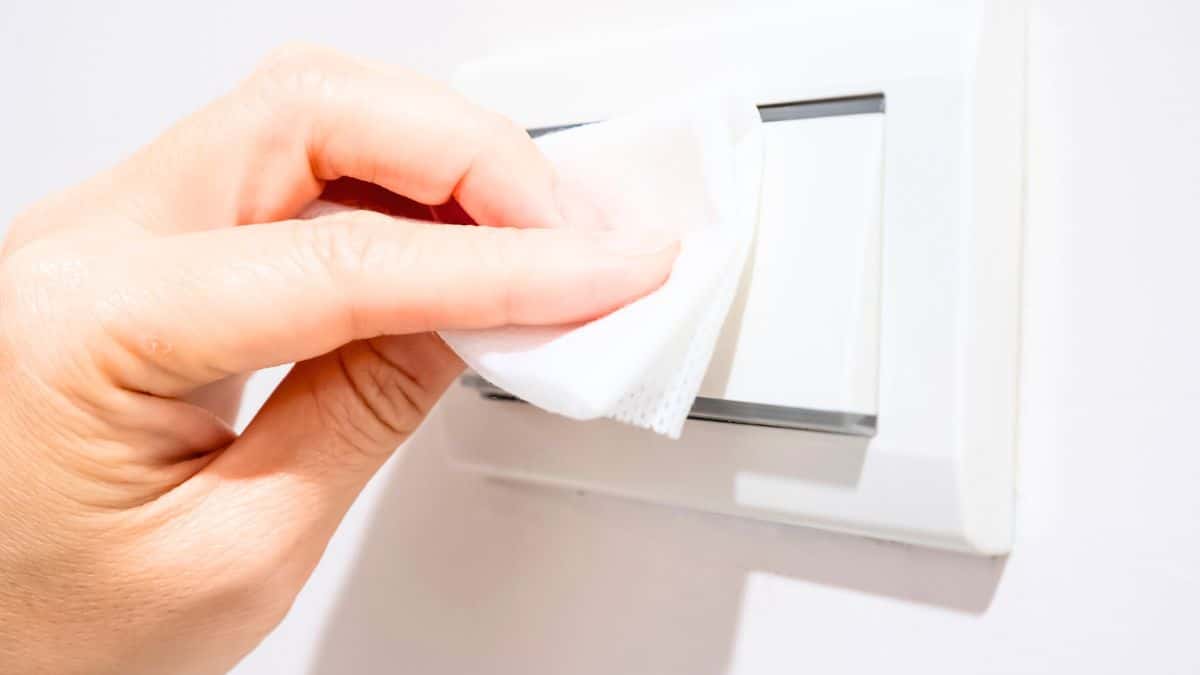
Your light switches carry daily fingerprints, dust, and unseen germs. When you clean a switch with care, your room looks brighter and feels healthier. Here is a practical, safe routine that respects sensitive plastics while tackling stubborn grime.
Safety first and smart prep before you start
Before you clean a switch, think safety and moisture control. Turn the light off; cut power at the breaker if you will remove the cover. Use a barely damp microfiber cloth, not a soaked sponge. Never spray directly onto the switch or into gaps.
White vinegar (vinaigre blanc): Mix 50/50 with warm water for quick degreasing.
Wring the cloth well; wipe edges gently to avoid seepage.
A simple routine that fits busy days
Start by dusting with a dry microfiber. Then wipe the plate with mild soapy water, and clean a switch face with light pressure. Next, buff dry with a soft towel to stop halos. Finally, disinfect contact points if needed.
« Small, steady care keeps grime from turning into repairs. »
Baking soda (bicarbonate de soude): Make a paste: 3 tsp soda + 1 tsp water.
Tap, wait 2 minutes, then buff; rinse your cloth after.
Stain types and targeted fixes
Marseille soap (savon de Marseille): Shave a chip into 200 ml warm water.
Foam on the cloth, not the switch; wipe in small circles.
- Cut power if you remove the faceplate
- Use minimal liquid and a wrung cloth
- Work from edges toward the center
- Dry immediately with a soft towel
- Never spray directly onto electrical parts
Greasy fingerprints respond to light soap or diluted vinegar. As a result, residue lifts without scratching the plastic. For quick refreshes, clean a switch plate once a week in high‑touch rooms. Keep motions short and gentle to protect the finish.
To readShortcrust pastry: perfect results depend on 1 small detail most bakers forgetHousehold alcohol (alcool ménager): Use at 70% for hygienic touch‑ups.
Apply with a cotton pad; let it act 30 seconds.
Tough marks, paint smears, and yellowed plastic
Old paint flecks need patience, not force. If you must remove them, clean a switch first with soap, then try a tiny drop of solvent on the stain only. Test on a hidden corner, since some plastics haze fast. Ventilate well, and stop at the first sign of dulling.
White Spirit: For small paint spots, use one tiny drop on a pad.
Test first; ventilate well and stop if plastic dulls.
Finishing touches, disinfection, and maintenance habits
Dry all edges and the rocker with a fresh cloth. Then clean a switch crevice with a gentle tool, not a knife. You can use a cool hair dryer for 10 seconds to evaporate moisture. In busy homes, repeat this quick care midweek.
Cotton swab (coton‑tige): A swab reaches seams and screw heads.
Lightly moisten; rotate to lift grime without forcing.
Good habits prevent buildup and save time. Schedule rooms by traffic: hallway, kitchen, then bedrooms. If kids share a space, clean a switch plate there more often. Set a small kit aside so the job takes under 3 minutes.
To readCar windshield: 3 quick tips to defrost in minutes this winterCrédit photo © DivertissonsNous