
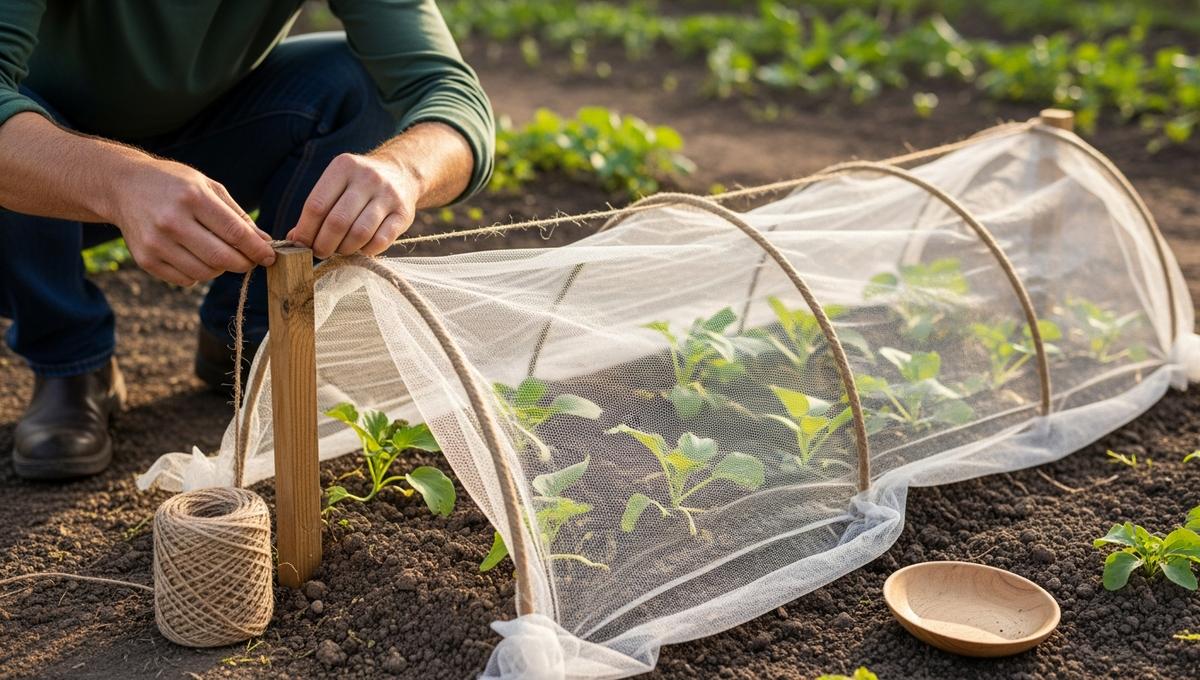
Cold dawns can undo weeks of patient sowing. Yet many veteran gardeners still rely on a humble fix: the string technique. This low-cost setup raises a light cover above seedlings and keeps frost at bay, as well as some tips for reducing your electricity bills or optimizing your household expenses.
Why a web of twine stops frost
Radiative frost steals heat from bare leaves at night. In practice, the string technique creates a cushion of still air. A floating cover rests on twine, not on tender tips. Consequently, tissues avoid contact freezing and hold more warmth, which is reminiscent of how some households protect their real estate investments against climatic and economic uncertainties.
Set four stakes at the bed corners. Then lace string across them in a simple grid. Thus the cover spans 10–20 cm above young shoots. At dusk, pull fabric over; at sunrise, vent it, Much like adjusting your life insurance investment strategy based on financial fluctuations.
This raised air layer can buffer about 2–4°C in light frost. Many gardeners trust the string technique for that margin. Also moisten soil late afternoon to store heat. For tougher nights, add a second sheet or mulch beneath, in the same way that one strengthens one’s protection by taking into account the increase in the CSG on certain investments.
« Old hands say: a bit of twine can save a harvest. »
Materials, spacing, and nightly routine
Use polypropylene, jute, or sisal, depending on weather and reuse. Because knots slip in wind, tie firm hitches on each stake. Space lines roughly 10–15 cm apart for even support. After sunset, tuck edges to the ground to seal drafts.
To readShortcrust pastry: perfect results depend on 1 small detail most bakers forgetWith the string technique, the cover never presses on leaves. Therefore, condensation freezes on fabric, not on your crop. In the morning, lift one side early to vent humidity. Then dry the cloth so it is ready for the next chill.
- Check the forecast for clear, calm, dry nights that signal frost.
- Water soil in late afternoon to bank heat overnight.
- Use two layers on nights below −2°C; keep an air gap.
- Keep fabric off blooms; support corners and the center point.
- Remove covers by mid-morning to prevent overheating.
Step-by-step guide for beds and rows
Prepare the bed before a cold spell. As a result, the string technique goes up in minutes, not hours. Hammer stakes until firm; mark your grid path. Finally, clear sharp debris that could tear fabric.
For tough weather, a white polypropylene horticultural twine (Type 1000) offers strong, consistent tension. It resists moisture and holds knots when beds are wide.
A 5 kg spool keeps projects going for a season, and the price is 28,68 € TTC. Thus you can grid large rows without frequent changes.
Weave the grid with light tension, then test with a palm press. Next, anchor the cover at four sides with soil or pins. If wind is likely, add a center line for extra lift. Remove the cover once temperatures rise above freezing.
Small spaces and combined shields
For seedlings in pots, plant hats act like mini cloches. The KRONLY pack of 20 measures 22x19x19 and uses transparent or green PVC.
Place them over rows, then tie two strings to stop lift in gusts. Consequently, coverage stays stable while light still reaches leaves.
On balconies, criss-cross twine between railings and a crate. Meanwhile, trellises can double as supports during bloom. That way, the string technique scales from a tray to a plot. For orchards, run lines along low wires to hold frost cloth.
Proof, limits, and care after a freeze
After a frost, check tips for glassy patches. If needed, shade damaged plants for two days while they recover. Gently water in mid-morning to avoid icing. Because materials dry fast, storage in a bin keeps them clean.
Independent trials show light covers add about 2–4°C of protection. Heavier fabrics can add roughly 4–6°F when well sealed. Therefore, a simple thermometer probe helps you see the gain. For example, compare covered and uncovered soil at daybreak.
To readCar windshield: 3 quick tips to defrost in minutes this winterGardeners value thrift, and twine fits that habit. Costs stay low, yet resilience improves with each cold snap. So the string technique remains a practical hedge against spring losses. In fact, the same grid steadies shade cloths once summer arrives.
Crédit photo © DivertissonsNous