
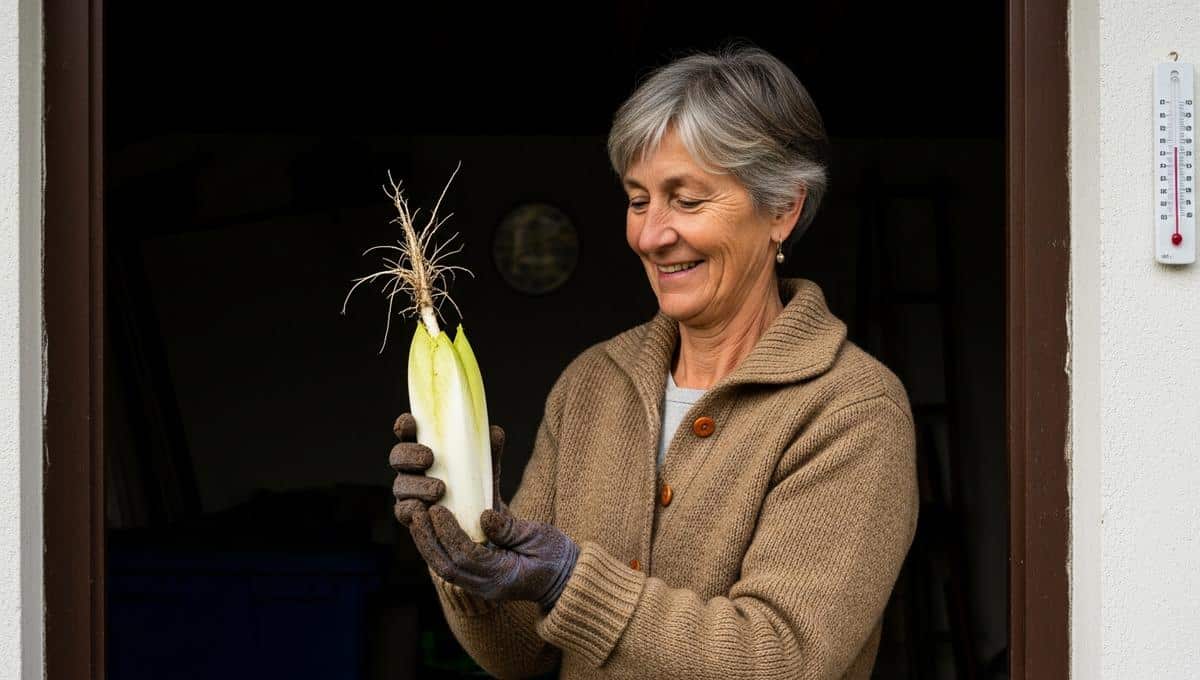
Every winter, gardeners eye a tender prize: endives grown at home. Recently, a France Bleu segment with Jean‑Yves Meignen revived a classic method without fuss.
What the radio gardener advises this season
On France Bleu Drôme Ardèche, Meignen, known for the Abbaye de Valsaintes, sets a clear plan. First, raise chicory in the ground, or buy prepared roots. Then, force the roots in darkness to form compact endives. This approach suits balconies, garages, and small sheds, tout comme certains systèmes de chauffage économiques.
Many gardeners start now, after the first chills. On the plot, mark plants and lift them on a dry day. Keep the necks intact, because damaged crowns rot. Moreover, nursery roots make the project with endives faster, un peu comme l’achat de matelas déjà prêts à l’emploi pour gagner du temps.
Darkness is the secret, Meignen insists. Store roots upright in moist sand or leaf mold. Aim for 12–18°C and keep the box 100% dark. After 3 to 4 weeks, tight endives form without turning green, idéales pour accompagner un tiramisu maison allégé.
« Grow in darkness, keep it moist, and let patience work. »
Choosing roots, timing, and varieties
Varieties matter, yet the method stays the same. Classic Witloof types give dense heads and mild bite. Hybrid lines bring uniform size, which helps in small spaces. For flavor, Meignen suggests cool forcing to keep endives crunchy.
To readShortcrust pastry: perfect results depend on 1 small detail most bakers forgetTrim foliage to two centimeters, and cut long roots to 20–30 cm. Next, pack them tightly, but leave crowns exposed. Water once to settle, then only if the medium dries. This restraint prevents hollow or bitter endives.
- Lift roots on a dry day to limit damage
- Keep crowns just above the substrate line
- Seal out light but allow slight air movement
- Water sparingly; damp, not soggy, is the goal
- Harvest when heads feel firm and closed
The forcing method step by step
Choose a container that blocks light, like a bucket with a lid. Alternatively, bury a crate and cap it with a board. Vent a little, since stale air favors rot. With that balance, endives build without stress.
Temperature guides speed and taste. At 10–12°C, heads grow slowly, yet stay sweet. At 16–18°C, growth quickens, but watch for bitterness. Therefore, check daily, and harvest endives at the size you prefer.
Harvest by twisting the head at the collar. Then cut the remaining stump to stop regrowth. Some roots give a second, smaller flush. Still, most gardeners replant chicory each year for reliable endives.
Pit, bucket, or crate: which setup works best?
A cellar is handy, yet not required. In a garage, wrap the container in jute for stable heat. Balcony growers can use a foam box under a table. However, protect from rain, or the heads of endives turn loose.
Hygiene helps more than products. Clean tools, rinse crates, and discard soft roots. Thus, you prevent gray molds that spoil a batch. A small fan on low also keeps endives drier.
Taste, nutrition, and low-waste habits
These pale heads are rich in fiber and potassium. They fit many plates, from salads to quick gratins. Because forcing uses little water, the method stays frugal. Moreover, you can compost trimmings and reuse the sand for endives next winter.
Costs remain modest when you start with garden chicory. Otherwise, roots from a nursery remain affordable. Many local markets carry them in late autumn. Therefore, timing your purchase saves both effort and waste.
To readCar windshield: 3 quick tips to defrost in minutes this winterFinally, record your dates, temperatures, and yields. Such notes turn first trials into a steady winter habit. Over seasons, small tweaks refine your setup. In the end, your homegrown endives will match your kitchen rhythm.
Crédit photo © DivertissonsNous