
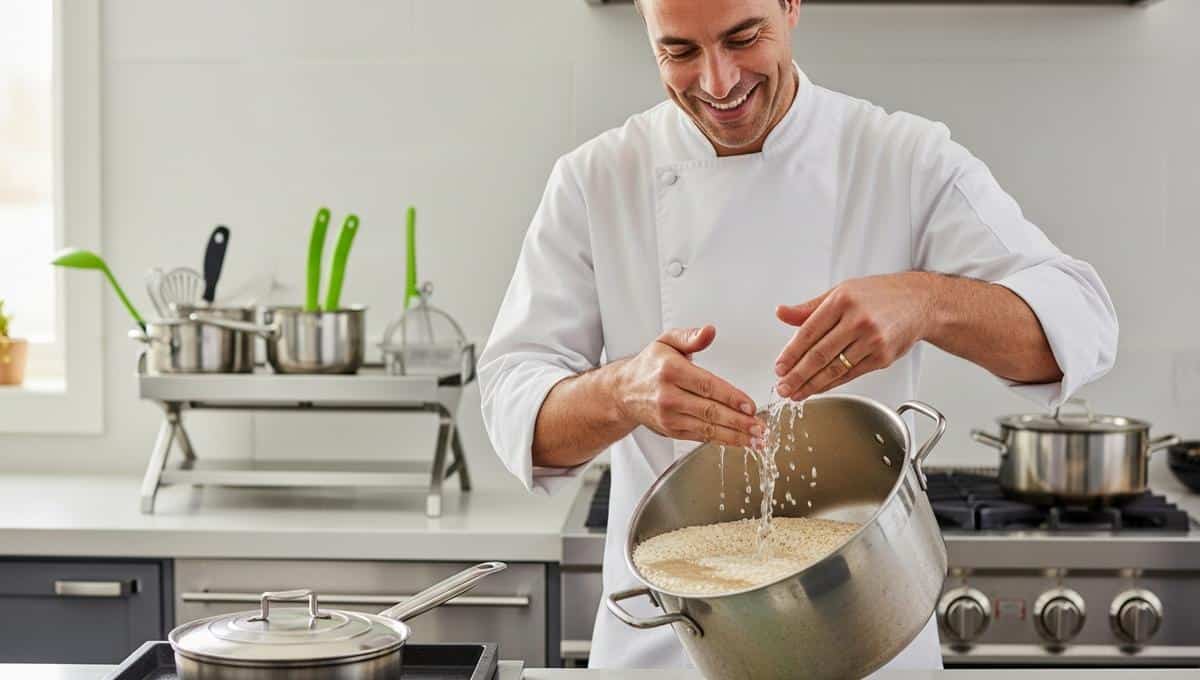
You cook with care, yet your pot still delivers clumps. Professional kitchens faced the same problem with rice, then adopted one simple step before heat. Adopt it at home, and dinner feels calmer and tastier, comme lorsque vous anticipez vos cadeaux de Noël pour éviter le stress de dernière minute.
Why chefs now prep rice before heat
Busy services taught chefs a hard truth: grain behavior starts before the flame. A quick rinse removes loose starch that turns pots gummy, while a short soak hydrates the core. Thus, heat enters evenly and grains stay separate. The result is tender rice with less stress and fewer do-overs, un peu comme un tiramisu maison allégé que l’on réussit du premier coup.
Kitchen reports in French food media describe a shift toward this routine. It is simple, repeatable, and fast. Also, it works with basmati, jasmine, and medium-grain. For families, the method saves time and reduces waste from failed rice, comme une bonne gestion de budget évite le découvert bancaire automatique.
Facteurs pratiques à garder en tête
Ces nouvelles habitudes en cuisine s’inscrivent aussi dans un quotidien où l’on surveille ses dépenses, ses factures d’énergie et sa capacité à donner à ses enfants sans impôts. Optimiser la cuisson du riz devient alors un geste de plus pour gagner du temps et limiter le gaspillage.
The rinse-and-soak routine, step by step
Measure, then pour cold water over the grains in a bowl. Swirl with your fingers, drain, and repeat until water runs clearer, typically 3–4 rinses. Next, cover with fresh water and soak for 20–30 minutes. Finally, drain well so your water ratio stays consistent.
« Rinse to remove surface starch, then soak to hydrate the core for even cooking. »
Now cook using the absorption method. Use about 1 cup grain to 1.5–1.75 cups water for long-grain, then bring to a gentle simmer. Reduce heat, cover, and cook undisturbed. As a result, rice finishes fluffy, not wet.
Flavor, texture, and safety benefits you can taste
Rinsing and soaking do more than fix stickiness. They remove dust from storage and transport, which many home cooks forget. Moreover, pre-hydration shortens active cooking by a few minutes. This protects delicate aromas, especially in jasmine rice.
- Rinse 3–4 times until water is clearer.
- Soak 20–30 minutes for even texture.
- Use a tight lid to trap gentle steam.
- Rest 10 minutes off heat, then fluff.
- Choose the right pan with a heavy base.
Some cooks boil grains like pasta in plenty of water, then drain well. This “excess water” technique can lower certain contaminants according to independent tests. Therefore, it is useful for baby meals or frequent eaters. For weeknights, absorption still delivers excellent rice with clean flavors.
You can upgrade taste with a quick toast. Warm a spoon of oil or butter, add drained grains, and stir for one minute. Thus, you coat starch and create a gentle nutty note. Then add hot water and continue as usual for fragrant rice.
Troubleshooting common mistakes
Mushy pots often start with too much water. Measure carefully, and account for residual soak water. Also, keep the simmer low and steady. If heat is high, rice knocks around and breaks.
To readShortcrust pastry: perfect results depend on 1 small detail most bakers forgetScorched bottoms point to thin pans or strong burners. Instead, use a heavy pot and the smallest stable flame. Let the pot rest 10 minutes off heat before uncovering. As a result, steam redistributes and the texture evens out.
Adjusting the method by rice type
Basmati loves a longer soak and a gentle flame. Rinse thoroughly to protect length, then soak for up to 30 minutes. Therefore, the grains elongate without splitting. Serve with sauces so the rice stays in focus.
Jasmine prefers a lighter touch. Rinse to keep the floral aroma pure, then soak briefly. Next, use a lower ratio, closer to 1:1.5, to avoid sogginess. Fluff softly and you get tender, fragrant rice.
Short-grain and sushi styles carry more surface starch. Rinse until water is nearly clear, then rest the cooked pot for a longer 10–15 minutes. Meanwhile, season while warm for even absorption. With patience, you get glossy, cohesive rice that still bites.
Brown varieties need extra time because of the bran. Soak longer to jump-start hydration, then cook low and slow. You can use the excess-water technique for a lighter feel. For meal prep, chilled brown rice holds texture for days.
To readCar windshield: 3 quick tips to defrost in minutes this winterCrédit photo © DivertissonsNous