
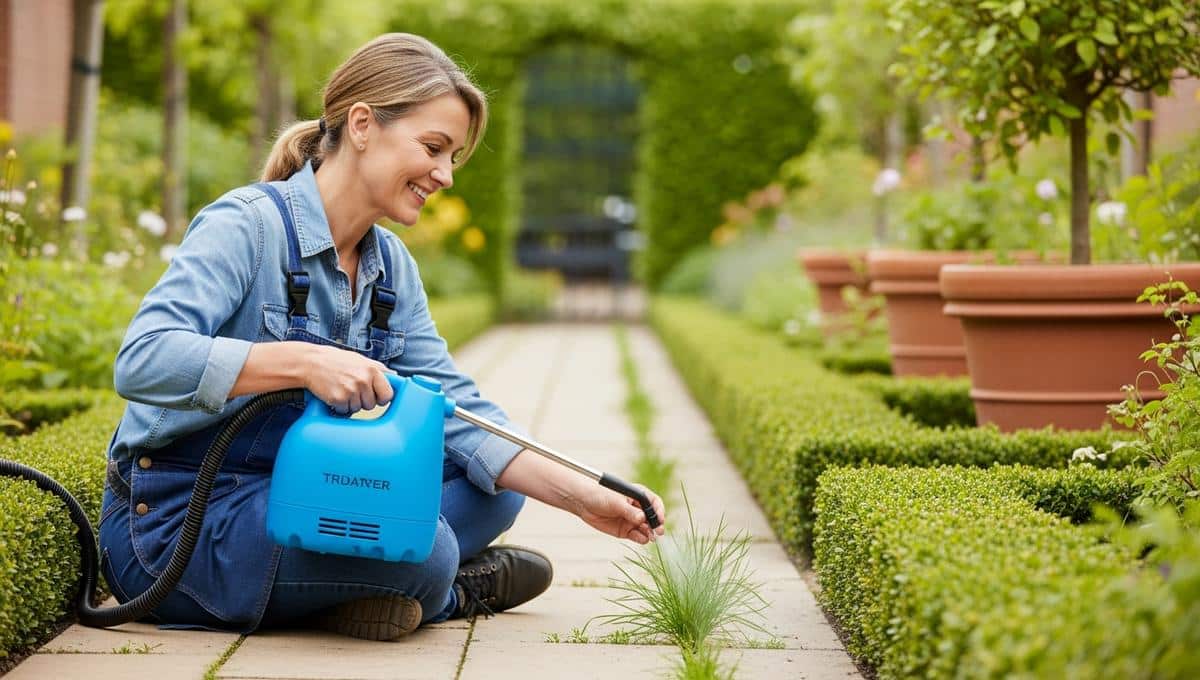
Can a splash of white vinegar replace half your shed? Many readers ask whether it can handle a full garden routine, especially in busy periods like Noël 2025. So, here is what careful testing and clear rules reveal.
White vinegar: how it really works
From the 20 Minutes Maison test, household vinegar at 8% acidity works as a fast leaf burner. It acts by dehydrating tissues on contact. Because it is non‑selective, it can scorch any plant it touches. Use in the garden only with a precise, directed spray, tout comme vous respecteriez les règles pour éviter un contrôle fiscal.
Results are best on young weeds in paths and gravel. In warm, dry weather, leaves wilt quickly. Yet roots usually survive, so regrowth is common. That is why it is poor at deep beds or a vegetable garden, où l’on préfère consacrer son budget à un bon tiramisu maison allégé plutôt qu’à des traitements inefficaces.
Paths, pots, and patios: field test results
During trials on paving joints, small seedlings browned within hours. Larger dandelions bent but returned days later. A second pass helped, yet crowns still pushed new leaves. In a tight city garden, that means spot work, not blanket spraying, un peu comme on réserve un arrêt de travail à des situations ciblées, pas à tout.
« Vinegar is a contact burn: it scorches leaves, not roots. »
Adding salt or soap, as some blogs advise, may worsen damage. Salt lingers and harms soil life for months. Soap improves wetting yet spreads the spray beyond the target. Instead, keep such mixes away from any edible corner of your garden.
Safety, soil life, and the law
Safety matters because this is still household vinegar, not a magic potion. Also, wear gloves and protect eyes, since splashes sting. In France, agencies have reminded users that vinegar is not an approved herbicide. Therefore, keep uses to cleaning and spot control around the garden.
- Read the label and use products for their intended purpose.
- Never mix vinegar with bleach or ammonia.
- Avoid spraying near drains, ponds, or waterways.
- Test on a small area before broader use.
- Keep bottles out of reach of children and pets.
Soils and paving host microbes that support roots. High acidity stresses them, especially in repeated doses. As a result, reserve vinegar for hardscapes and immediate edges. That choice limits splash into beds and protects the garden soil web.
To readCar windshield: 3 quick tips to defrost in minutes this winterWind drift and run‑off also matter on driveways. So, spray close to leaves and avoid rain events. Rinse metal fixtures, since acid can bite. Nearby ornamentals suffer leaf burn from even small mist.
Smarter alternatives and proven uses
There are lighter options for path weeds in summer. Hot water, manual tools, or a flame weeder give quick wins. Moreover, mulch then slows new seeds. Thus, your garden stays tidy with fewer sprays.
Marque — Vinaigre blanc ménager (8 % d’acidité minimum) (Condiment/Produit ménager ; 1 litre) — moins de 35 €[8]. In practice, used sparingly on paving, one bottle covers a small garden area for seasonal touch‑ups.
Where vinegar shines is cleaning. For example, descale watering cans, brighten terracotta, and degrease pruners. Do use a 1:1 mix with water for most wipes. Instead, never mix with bleach, and store away from garden seeds and tools.
Practical guide: doses, timing, care
So, timing counts for every treatment. Choose a sunny, dry window and spray in the late morning. Leaves should stay dry for hours. That way, modest doses do the job on the garden edges.
Aim the nozzle within 10–15 centimeters. Besides, wipe overspray from stones to avoid marks. Protect wood and metals, then wait for a visible change. If needed, repeat a week later on the same garden patch.
To readVinegar on garden beds sterilizes soil and kills plants for monthsTherefore, think bigger than weeds to cut work. Dense planting, sharp edging, and regular hoeing shrink the seed bank. Meanwhile, keep vinegar for small, quick fixes. Used this way, it supports a calmer garden routine.
Crédit photo © DivertissonsNous